Allen-Bradley MPL-A330P-HJ74AA Servo Motor Troubleshooting Guide
Time:2026-08-28 Browse: 13
Allen-Bradley MPL-A330P-HJ74AA servo motor troubleshooting should start with the fault timing and feedback behavior rather than immediately replacing the motor. An encoder-related fault can originate from the feedback cable, connector, System Configuration, electrical interference, or the motor's encoder circuit.
MPL-A330P-HJ74AA Servo Motor Fault Symptoms
A feedback problem can appear in several different ways.
The servo drive may report an encoder fault, refuse to enable the axis, show unstable actual position, or generate a following error during motion.
The timing of the failure is particularly useful:
Fault immediately after enable
Fault during acceleration
Fault during deceleration
Intermittent fault during machine movement
Stable operation at standstill but unstable feedback during motion
Position feedback suddenly disappearing
Repeated feedback faults after cable movement
These patterns help narrow the Fault Diagnosis before components are replaced.
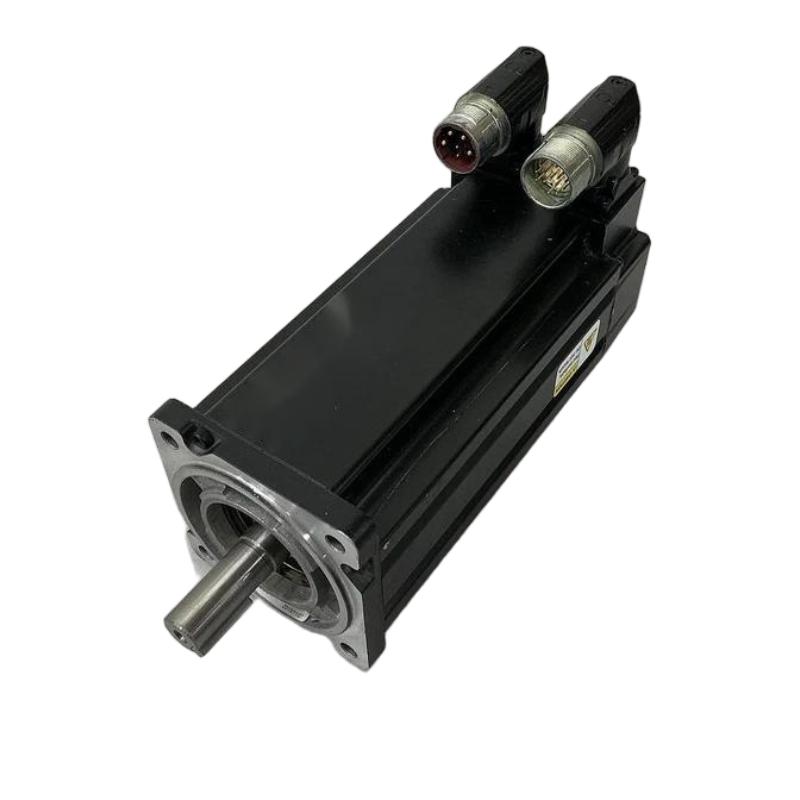
MPL-A330P-HJ74AA Feedback Fault Diagnosis
A practical troubleshooting sequence is:
Fault timing → drive diagnostic → System Configuration → connector → feedback cable → signal behavior → motor encoder
This approach prevents a good servo motor from being replaced because of an external wiring problem.
Start by recording the exact drive fault and the operating condition when it occurred. A fault that appears only during acceleration should be investigated differently from one that appears immediately at power-up.
Allen-Bradley MPL-A330P-HJ74AA Connector Inspection
The feedback connector should be inspected before performing invasive testing.
Look for loose engagement, damaged locking components, contaminated contacts, cable strain, crushed insulation, and excessive bending near the connector.
One useful field observation is whether the fault changes when the cable is repositioned during a controlled diagnostic check. If moving the cable causes the feedback status to change, the cable or connector becomes a stronger suspect.
Avoid deliberately flexing the cable aggressively. The purpose is to identify an existing intermittent condition without creating additional damage.
MPL-A330P-HJ74AA Encoder Signal Troubleshooting
The HJ74AA uses a 2000-line incremental encoder. During Troubleshooting, feedback behavior should be compared with commanded motor movement.
With the motor stationary, the feedback should remain stable.
During slow rotation, the feedback should change smoothly.
During acceleration, the feedback should continue tracking the commanded motion without unexplained dropouts.
If the feedback is stable while stationary but disappears during acceleration, investigate cable movement, connector strain, electrical interference, and vibration before assuming encoder failure.
MPL-A330P-HJ74AA System Configuration Faults
A configuration mismatch can produce symptoms that look like a hardware failure.
Verify that the configured motor and feedback type correspond to the actual MPL-A330P-HJ74AA installed on the machine.
This is especially important when replacing an older motor or copying an axis configuration from another machine. Similar MPL-Series motors may share mechanical characteristics while using different electrical or feedback configurations.
A correct System Configuration should therefore be confirmed before performing motor-level repair.
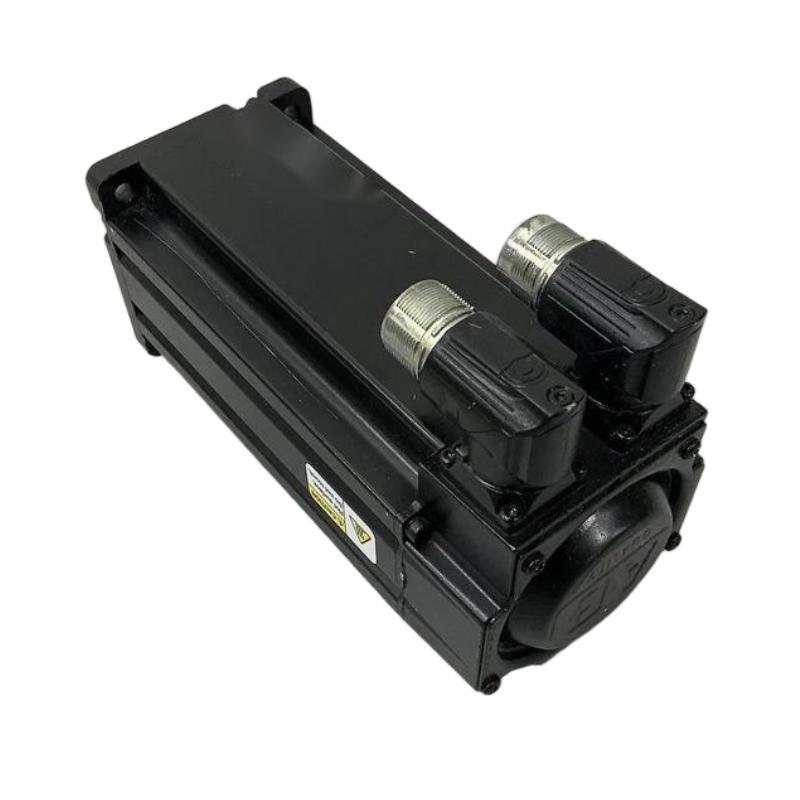
Real Case: MPL-A330P-HJ74AA Intermittent Feedback Fault
In one field troubleshooting case, an MP-Series axis operated normally at low speed but generated a feedback fault during acceleration.
The first suspicion was the encoder because the fault appeared repeatedly under dynamic operation. However, the diagnostic behavior showed that the feedback remained stable when the motor was stationary.
The technician then inspected the feedback cable routing and found that the cable was being pulled against the connector as the motor assembly moved.
After the cable routing was corrected and connector strain was removed, the feedback remained stable during repeated acceleration tests.
The important part of this Fault Diagnosis was the failure pattern. Because the feedback was stable at standstill and failed during movement, the investigation focused on the dynamic cable path instead of immediately replacing the motor.
MPL-A330P-HJ74AA Servo Motor Repair Approach
If the evidence points to a damaged feedback cable, replace the cable with the correct compatible assembly rather than modifying the feedback wiring without proper documentation.
If the problem is caused by incorrect configuration, correct the motor and feedback parameters and repeat the commissioning test.
If the feedback circuit remains faulty after the cable, connector, and configuration have been verified, the motor encoder or drive feedback interface may require further testing.
For confirmed motor-side failure, replacement is generally more appropriate than attempting an improvised internal repair on the servo motor.
MPL-A330P-HJ74AA Troubleshooting Logic for Field Engineers
The most useful rule is simple:
Do not replace the motor until the fault has been isolated to the motor.
A servo fault is a system-level problem until proven otherwise. The motor, feedback cable, connector, servo drive, controller, and mechanical system all participate in the motion-control loop.
Following this diagnostic logic makes MPL-A330P-HJ74AA Troubleshooting more efficient and reduces unnecessary component replacement.
Long-Tail Keywords for MPL-A330P-HJ74AA Troubleshooting
This Troubleshooting Guide covers Allen-Bradley MPL-A330P-HJ74AA troubleshooting, MPL-A330P-HJ74AA encoder fault, MPL-A330P-HJ74AA feedback fault, MPL-A330P-HJ74AA Fault Diagnosis, MPL-A330P-HJ74AA servo motor repair, MPL-A330P-HJ74AA encoder troubleshooting, MPL-A330P-HJ74AA servo drive fault, MPL-A330P-HJ74AA feedback signal problems, and Allen-Bradley MP-Series servo motor troubleshooting.