Siemens Uses Digital Twin Technology to Optimize a 100 MW Renewable Hydrogen Plant in Portugal
Time:2026-10-10 Browse: 0
Siemens and Galp Advance Digitalized Hydrogen Production
Siemens announced on October 8, 2026, that it is collaborating with Portuguese energy company Galp Energia to digitalize the GalpH2Park renewable hydrogen project in Sines, Portugal. The first phase of the project is designed around a 100 MW hydrogen production facility, with operations targeted to begin toward the end of 2026.
The collaboration brings Siemens' industrial software and digitalization capabilities into a large-scale renewable hydrogen production environment. At the center of the solution is the Hydrogen Performance Suite (HPS), which combines a physics-based digital process twin, process modeling, data analytics, real-time visualization, and optimization capabilities.
The project illustrates how digital technologies are becoming increasingly important in process industries where energy consumption, equipment performance, production scheduling, and operating costs are closely connected.
Renewable hydrogen production involves more than installing electrolyzers and supplying electricity. Plant operators must coordinate electrical infrastructure, process equipment, instrumentation, cooling systems, water treatment, gas handling, and supporting utilities. These systems need to operate within defined technical and safety limits while responding to changes in electricity availability and production requirements.
Digital process models can help operators understand how these elements interact. By connecting process information with analytical models and operational data, a digital twin can provide additional insight into operating conditions and help evaluate possible improvements.
For a project of this scale, the objective is to improve decision-making throughout the facility rather than simply display equipment status on a screen.
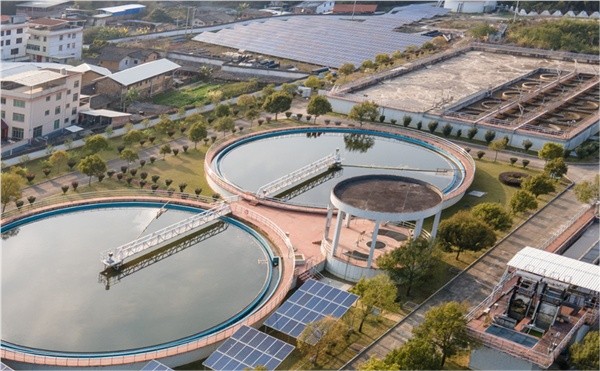
What Is the GalpH2Park Project?
GalpH2Park is a renewable hydrogen project in Sines, an industrial and energy center on Portugal's Atlantic coast. Siemens is supplying software capabilities intended to support the operation and optimization of the facility's first 100 MW phase.
The planned production capacity is up to 15,000 metric tons of renewable hydrogen per year. The project is also expected to reduce greenhouse gas emissions by approximately 110,000 metric tons of CO₂ equivalent annually on a Scope 1 basis.
These figures describe the project's stated production capacity and expected emissions benefit. Actual production, energy consumption, and emissions performance will depend on operating conditions, electricity supply, equipment availability, and the final operating profile.
The project is relevant to industrial automation because hydrogen plants depend on the coordination of electrical and process-control systems. Electrolysis converts water into hydrogen and oxygen using electricity. The process requires controlled operating conditions, reliable instrumentation, appropriate protective systems, and the management of supporting equipment.
Depending on the plant design, automation may coordinate water supply, electrolyzer operating parameters, temperature, pressure, cooling, gas handling, and balance-of-plant equipment. The exact control architecture and division of responsibilities depend on the selected process technology and engineering design.
For operators, the challenge is to maintain safe and stable operation while managing variable renewable electricity and the economics of hydrogen production.
Hydrogen Performance Suite and the Digital Process Twin
The Hydrogen Performance Suite is the central digital component identified in Siemens' announcement. It is designed to provide operators with a consolidated view of plant performance and support continuous operational improvement.
A digital twin is a digital representation of a physical asset or process. In industrial applications, it can combine process models, engineering information, operational measurements, and analytical tools to help explain how a plant behaves.
The GalpH2Park solution uses a predictive digital process twin based on physics-based modeling. Unlike a simple dashboard that displays measured values, a physics-based model represents selected relationships governing process behavior. When connected to live plant data, it can help operators compare modeled expectations with actual operating conditions.
The quality of the resulting insight depends on the accuracy of the model, the reliability of its input data, and how well the model represents the installed equipment and operating conditions.
Real-Time Data and Process Visibility
Industrial plants generate large amounts of operational information through sensors, controllers, electrical equipment, and supervisory applications. However, data availability alone does not guarantee that operators can easily interpret the relationships between process conditions and plant performance.
A digital process twin can organize relevant information into a model that supports operational analysis. For example, engineers may investigate how changes in production rate, energy input, or operating conditions influence overall efficiency.
The Hydrogen Performance Suite is intended to integrate the digital twin with live plant information and external data, including information from grid operators and energy markets. This broader view can help operators assess production decisions in relation to energy availability and market conditions.
The purpose is to turn complex operational data into actionable information, supporting decisions that consider both the process and its energy environment.
Predictive Modeling and Operational Decisions
Predictive modeling allows engineers to explore how a process may respond to different operating conditions. In a hydrogen facility, such analysis may help evaluate production schedules, energy consumption, and the interaction between plant operating requirements and electricity availability.
The model does not eliminate uncertainty. Predictions depend on input quality, model assumptions, operating constraints, and the extent to which the model has been validated against real plant behavior.
A practical implementation should therefore distinguish between measured values, calculated estimates, and recommended operating changes. Operators need to understand why a recommendation has been produced and whether it is appropriate for the current conditions.
For process industries, the most useful digital twins are those that support engineering judgment while remaining consistent with established control, safety, and operating procedures.
How Process Automation Supports Renewable Hydrogen Production
Renewable hydrogen facilities combine electrical systems, process equipment, instrumentation, and supervisory software. Industrial automation provides the structure needed to coordinate these components.
Instrumentation and Field Data
Field instruments measure operating variables such as temperature, pressure, flow, and liquid level. Depending on the process, additional measurements may include water quality, gas composition, electrical parameters, and equipment condition.
These measurements provide the information required by control systems and digital applications. Instrument selection, calibration, installation quality, and maintenance are essential because inaccurate measurements can undermine both process control and model-based analysis.
PLC and DCS Control Architecture
PLCs are commonly used for machine-level and equipment-level control, while distributed control systems (DCSs) are widely used for coordinated control across complex continuous processes. The appropriate architecture depends on the plant's design, functional requirements, equipment interfaces, and operating philosophy.
In a hydrogen facility, control functions may be distributed among package controllers, PLCs, process control systems, electrical control equipment, and supervisory applications. Interfaces must be engineered carefully so that commands, measurements, alarms, and equipment states are exchanged consistently.
The digital twin is a complementary layer. It can analyze process information and support optimization, but it should not be assumed to replace the underlying control system or protective functions.
Real-time control, safety instrumented functions, and higher-level optimization have different responsibilities. A well-designed architecture maintains those boundaries while allowing authorized information exchange between systems.
SCADA, Historian, and Analytics Integration
SCADA and historian platforms help collect, display, and retain operational information. They support trend analysis, event investigation, production reporting, and maintenance planning.
When data from these systems is integrated with a digital twin, engineers can compare current behavior with historical patterns and model expectations. This may help identify deviations that warrant further investigation.
The effectiveness of the integration depends on data quality, time synchronization, consistent tag naming, communication reliability, and suitable access controls. Organizations should also define how long operational data is retained and how it is protected.
Energy Optimization and the Economics of Green Hydrogen
Electricity is a major operating consideration in renewable hydrogen production. The cost and availability of electricity can influence when a plant operates, how much hydrogen it produces, and the overall cost of the resulting product.
Siemens estimates that its Hydrogen Performance Suite can deliver energy savings of up to 15%. This is a company-reported potential benefit, not a guarantee that every hydrogen facility will achieve the same result. Actual savings depend on the baseline process, energy procurement arrangements, plant design, operating strategy, and implementation.
Digital optimization can support several areas of decision-making.
Production Scheduling
A plant may need to balance production targets with variations in renewable electricity supply and external operating requirements. A digital model can help evaluate alternative operating schedules and estimate their effects on production and energy consumption.
The final schedule must remain within the technical limits of the equipment and respect applicable operating procedures.
Energy Procurement
Electricity prices and availability may change throughout the day. When operational data is considered alongside information from energy markets and grid operators, plant managers can evaluate the potential cost implications of different production plans.
This does not mean the software can guarantee lower electricity prices. Instead, it can provide a more complete information base for planning and decision-making.
Equipment Performance
A digital twin may help engineers investigate differences between expected and observed performance. For example, a persistent deviation could justify checking instrument calibration, equipment condition, process settings, or the assumptions used by the model.
The analysis should be treated as a diagnostic aid rather than proof of a specific equipment fault. Maintenance teams must confirm findings through appropriate inspection and testing.
Why Digital Twins Matter for DCS and Process Control Projects
Digital twin technology is relevant beyond hydrogen production. Similar approaches can support chemical processing, refining, pharmaceuticals, power generation, water treatment, and other industries where process behavior depends on multiple interacting variables.
For DCS engineers, a digital twin can provide an additional analytical layer above the basic regulatory control functions. A DCS maintains the process within configured operating limits, while a process model may help evaluate performance, identify deviations, and explore optimization opportunities.
These functions can complement one another, but integration requires a clear understanding of system responsibilities.
Engineers should identify which data is read by the digital twin, whether recommendations are advisory or capable of initiating approved changes, and how those changes are authorized. Any automated optimization that affects operating setpoints must be evaluated against process constraints, protective functions, and site-specific procedures.
A digital twin also needs a lifecycle plan. Equipment modifications, instrument replacements, process changes, and software updates can affect model accuracy. Regular verification helps ensure that the digital representation remains aligned with the real plant.
Cybersecurity and Reliability Considerations
Connecting process systems with analytics platforms creates additional requirements for cybersecurity and operational governance.
Industrial control networks should be segmented according to risk, with controlled communication paths between field control, supervisory applications, engineering systems, and higher-level analytics environments. Remote access should be restricted and monitored, and user privileges should be aligned with operational responsibilities.
Data connections should be designed so that the digital twin does not create unnecessary exposure for the underlying control system. Where appropriate, analytics can use controlled data access rather than unrestricted connectivity to production equipment.
Reliability is equally important. Operators need procedures for handling missing data, communication interruptions, model errors, and software maintenance. If the digital twin becomes unavailable, the plant's essential control functions should continue according to the engineered operating philosophy.
Model recommendations should be traceable and reviewed according to their operational impact. This is particularly important in facilities where changes in pressure, temperature, gas handling, or electrical conditions can affect process safety.
What Industrial Automation Suppliers and Buyers Should Learn
The GalpH2Park project highlights how industrial automation increasingly combines traditional control equipment with process modeling, analytics, and optimization software.
For automation suppliers, system integrators, and industrial buyers, the project reinforces the importance of interoperability. A digital solution must work with the installed instrumentation, controllers, communication infrastructure, supervisory software, and engineering data.
When evaluating a process automation project, organizations should consider:
Compatibility with existing PLC and DCS platforms.
Availability and quality of process data.
Integration with SCADA, historian, and analytics systems.
Model validation and performance-monitoring procedures.
Cybersecurity requirements and network architecture.
Operator training and responsibility for optimization decisions.
Long-term software maintenance and engineering support.
Measurable performance indicators for energy and production.
Procurement decisions should be based on the actual project specification rather than broad technology labels. A digital twin may provide significant value, but only when its functions address a defined operational need and its performance can be evaluated against a credible baseline.
The Future of Digital Process Optimization
Renewable hydrogen projects face the combined challenges of production efficiency, energy costs, equipment reliability, and emissions reduction. These challenges make process automation and operational data increasingly important.
Siemens' collaboration with Galp Energia demonstrates how digital twin technology is being applied to a large-scale renewable hydrogen project. The Hydrogen Performance Suite combines process modeling, live data, visualization, and optimization to help operators understand plant behavior and evaluate operating decisions.
The reported potential for energy savings of up to 15% makes the project particularly relevant to industrial energy management, although actual results will depend on implementation and operating conditions.
For PLC, DCS, and process automation professionals, the broader lesson is that digitalization is becoming an extension of control engineering rather than a separate activity. Reliable instrumentation, well-designed control systems, consistent data, cybersecurity, and validated models remain the foundations of effective optimization.
As industrial facilities pursue more efficient and lower-carbon operations, digital twins may become an increasingly valuable tool for turning process data into practical engineering insight. Their success will depend not only on software capabilities but also on sound system integration, disciplined validation, and the experience of the people operating the plant.