Allen-Bradley 1606-XLB240E/A Power Supply Output Voltage Fault Troubleshooting Guide
Time:2026-08-07 Browse: 10
Allen-Bradley 1606-XLB240E/A Power Supply Fault Diagnosis Overview
Allen-Bradley 1606-XLB240E/A output voltage faults are commonly caused by overload conditions, wiring resistance, or incorrect load distribution. In many industrial PLC systems, a low 24 VDC output is incorrectly diagnosed as a PLC Controller failure, while the actual problem is the power supply circuit.
The Allen-Bradley 1606-XLB240E/A is a 24–28 VDC, 240 W power supply designed for industrial automation applications. When abnormal voltage appears, the correct Troubleshooting approach is to analyze the complete power path instead of immediately replacing the Module or PLC hardware.
Allen-Bradley 1606-XLB240E/A Low Voltage Fault Symptoms and Analysis
A typical 1606-XLB240E/A Fault Diagnosis begins with observing system behavior.
Common symptoms include:
PLC Controller repeatedly restarting.
Communication Module losing connection.
Sensors producing unstable signals.
HMI screen shutting down randomly.
DC voltage dropping during machine operation.
In one real maintenance case, a packaging machine showed intermittent PLC communication faults. The engineer measured the power supply output:
Normal idle voltage: 24.3 VDC
Voltage during actuator movement: 20.1 VDC
PLC reset frequency: 3–5 times per shift
The initial suspicion was an Ethernet communication issue, but signal analysis showed that the controller rebooted whenever a group of pneumatic valves activated.
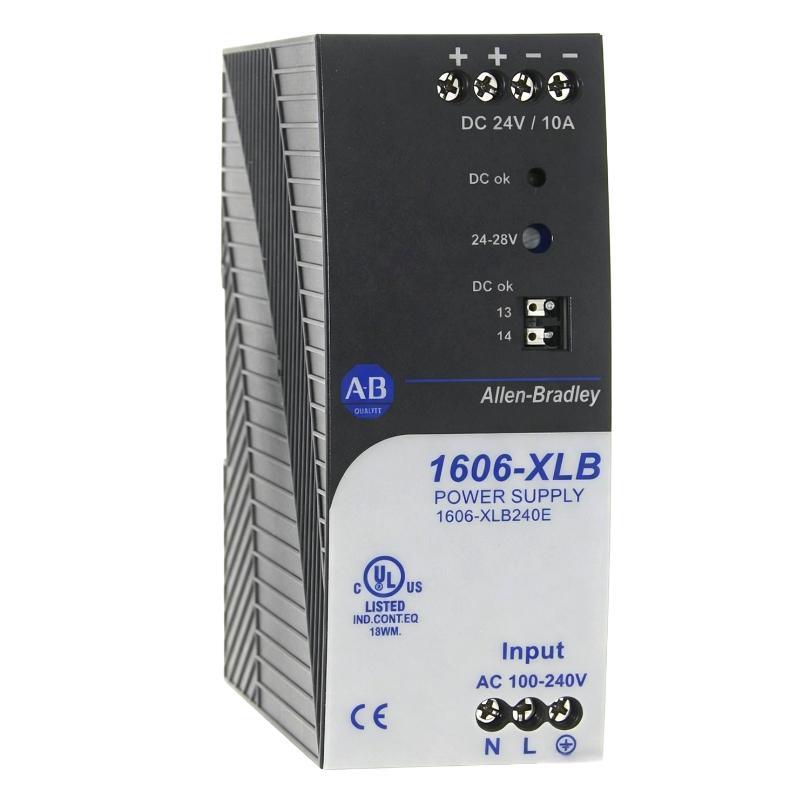
Allen-Bradley 1606-XLB240E/A Power Supply Root Cause Investigation
The troubleshooting process should follow a logical diagnostic path:
Load Measurement
Measure the total DC current consumption.
If the current approaches the rated output limit, the power supply may enter protection mode.
Cable Inspection
Long DC cables can create voltage drops.
For example:
Power supply output: 24.1 VDC
PLC terminal input: 21.8 VDC
This difference indicates cable resistance or insufficient conductor size.
Grounding Verification
Poor grounding can create:
Sensor noise.
Communication instability.
False PLC alarms.
Allen-Bradley 1606-XLB240E/A Power Supply Repair Actions
After identifying the root cause, corrective actions depend on the failure pattern.
Typical repair solutions include:
Redistribute 24 VDC loads.
Replace damaged DC cables.
Separate inductive devices from PLC power circuits.
Improve cabinet grounding.
Replace the power supply if internal output regulation fails.
In the previous field case, the final repair was not replacing the PLC Controller. The engineering team separated valve power circuits from the PLC supply line and added proper load distribution. After correction, the 24 VDC voltage remained above 23.8 VDC during machine operation and the communication fault disappeared.
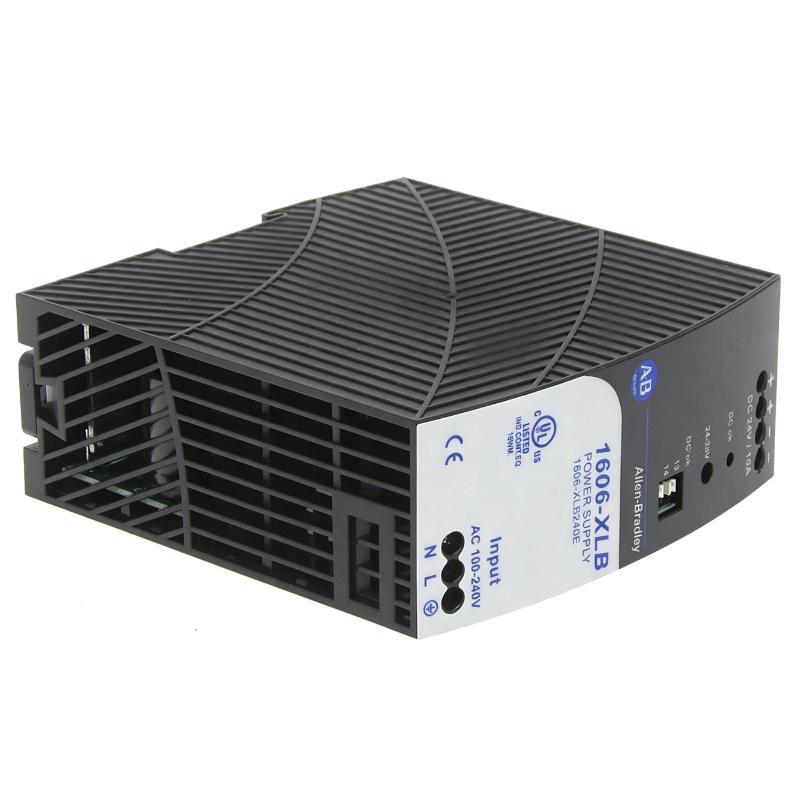
Allen-Bradley 1606-XLB240E/A Troubleshooting Strategy for Long-Term Reliability
A professional Fault Diagnosis process should record electrical data instead of relying only on alarm messages.
Recommended maintenance records:
Input voltage trend.
DC output measurement.
Load current value.
Temperature condition.
PLC restart history.
The most effective troubleshooting approach is understanding how the Power Supply interacts with the entire System Configuration. The 1606-XLB240E/A should be evaluated as part of the automation power network, not as an isolated component.