Schneider Electric Beijing Plant Uses AI and Digital Technologies to Accelerate Carbon Reduction Eff
Time:2026-08-11 Browse: 14
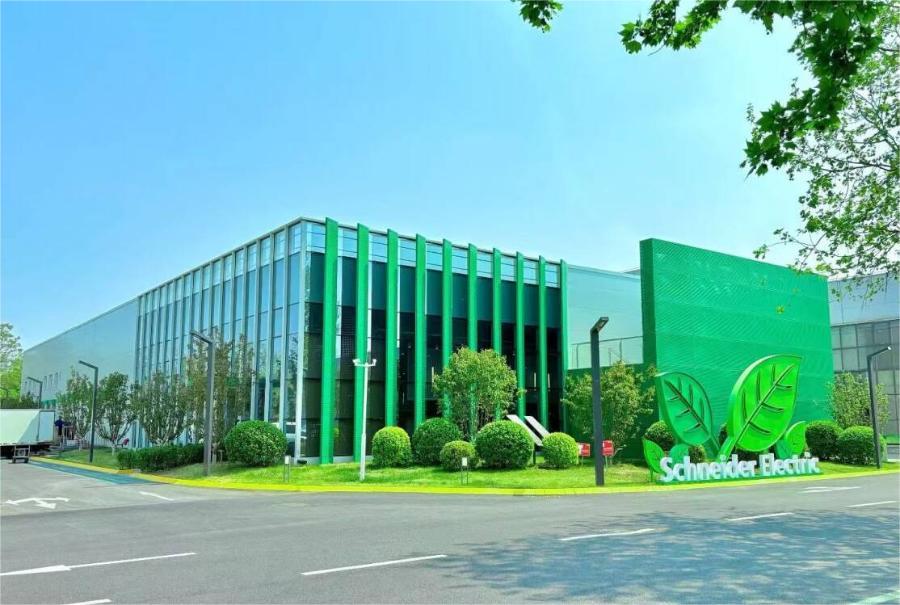
Schneider Electric’s Beijing industrial site has become a benchmark for AI-driven sustainability practices, combining digital transformation, automation technologies, and low-carbon engineering to reduce carbon emissions across the industrial value chain.
As global industries accelerate their transition toward low-carbon operations, industrial automation companies are increasingly using artificial intelligence (AI), digital platforms, and advanced manufacturing technologies to improve energy efficiency and reduce greenhouse gas emissions. Schneider Electric’s Beijing plant is one example of how smart manufacturing technologies can support sustainable industrial development.
During a recent visit to the Schneider Electric Beijing industrial site, the company demonstrated how AI technologies are being integrated into product design, supplier management, manufacturing processes, and equipment lifecycle management.
AI Helps Replace SF6 Gas and Reduce Carbon Emissions
Sulfur hexafluoride (SF6) has long been used in electrical equipment such as switchgear because of its excellent insulation performance. However, SF6 is a powerful greenhouse gas, with a global warming potential thousands of times higher than carbon dioxide.
To reduce environmental impact, Schneider Electric has been developing solutions that replace SF6 with dry air insulation technology. Because dry air has lower insulation performance compared with SF6, achieving the same electrical performance requires more advanced engineering and optimization.
At the Beijing plant, Schneider Electric applies simulation technology and AI-assisted design tools to accelerate product development and optimize equipment performance. According to the company, these technologies have helped reduce SF6-related Scope 3 emissions by 41%, equivalent to approximately 700,000 tons of carbon dioxide emissions.
Digital Carbon Management Improves Supply Chain Sustainability
Beyond its own manufacturing operations, Schneider Electric is focusing on reducing emissions throughout its supply chain.
The company has developed a digital carbon management platform that integrates data tracking, analysis, and AI-based tools to help suppliers monitor and manage their carbon emissions.
Through this platform, suppliers can better understand their carbon footprint, identify improvement opportunities, and implement energy-saving measures. Schneider Electric reported that participating suppliers have achieved a 57.7% reduction in carbon emission intensity.
As Scope 3 emissions from suppliers represent a major part of the industrial value chain’s carbon footprint, digital carbon management has become an important approach for large-scale industrial decarbonization.
AI Optimization Improves Manufacturing Efficiency
In the production process, Schneider Electric applies AI algorithms to optimize key manufacturing operations.
At the Beijing plant, vacuum interrupter production accounts for around 20% of total energy consumption, while the brazing process represents a significant portion of product energy usage.
By using AI reinforcement learning models trained with both real production data and simulation data, the factory can identify optimized process parameters in a digital environment.
After process optimization, Schneider Electric achieved shorter insulation holding times, with reported improvements including a 30% reduction in heat preservation duration, a 67% increase in production capacity, and a 61% improvement in overall energy efficiency.
These improvements demonstrate how industrial AI can support smarter production scheduling, energy management, and process optimization.
Digital Lifecycle Management Supports Equipment Recycling
Schneider Electric is also applying digital technologies to equipment lifecycle management.
For medium-voltage equipment containing SF6, improper recovery during equipment retirement can create additional greenhouse gas emissions. To address this issue, the Beijing plant has established a digital lifecycle management platform for ring main units.
The platform supports improved product design, recycling management, and reuse strategies, helping reduce emissions during equipment disposal and supporting a circular economy model.
Data Integration Becomes the Foundation for Industrial AI Applications
The successful application of AI in industrial environments depends heavily on high-quality data integration.
Schneider Electric explained that the Beijing plant first centralized data from different production and management systems into a unified digital platform. Large AI models are used for processing complex industrial data, while smaller AI models and specialized intelligent agents support decision-making in specific manufacturing scenarios.
Over recent years, the plant has implemented more than 50 digital technology solutions, many of which focus on data collection, system integration, and intelligent analysis.
For industrial automation applications, reliable data connectivity between equipment, control systems, and enterprise platforms is becoming a critical foundation for achieving energy optimization and sustainable manufacturing.
Schneider Electric Expands Global Net-Zero Manufacturing Strategy
Schneider Electric launched its Zero Carbon Project in 2021 to support its key suppliers in reducing emissions. The initiative initially targeted 1,000 core suppliers and aimed to achieve significant carbon intensity reductions by 2025.
In 2026, Schneider Electric upgraded the program to Zero Carbon Project 2.0, expanding coverage to 1,500 suppliers and strengthening cooperation across the global supply chain.
The company’s Impact 2030 sustainability program also sets long-term goals, including reducing Scope 1 and Scope 2 carbon emissions by 90% compared with the 2017 baseline and reducing Scope 3 emissions by 25% compared with the 2021 baseline.
Industry Outlook: AI and Automation Drive Sustainable Manufacturing
The transformation of Schneider Electric’s Beijing plant highlights a growing trend in industrial automation: sustainability is increasingly connected with digitalization.
From intelligent control systems and industrial software to AI-based optimization and lifecycle management, automation technologies are becoming essential tools for manufacturers seeking higher efficiency and lower environmental impact.
For industrial equipment users, system integrators, and automation partners, the combination of AI, digital platforms, and energy-efficient technologies will continue to shape the future of smart factories and green manufacturing.