Schneider Electric Launches Industrial Automation Modernization as a Service for PLC and DCS Systems
Time:2026-08-12 Browse: 12
Published: June 2026 | Industry: Industrial Automation, PLC, DCS, Software-Defined Automation
Schneider Electric Introduces a New Approach to Industrial Automation Modernization
Industrial automation is entering a new phase as manufacturers look for practical ways to modernize aging PLC and DCS infrastructure without interrupting production. In June 2026, Schneider Electric announced a new Industrial Automation Modernization as a Service offering, developed with HPE infrastructure technology.
The new approach combines Schneider Electric's EcoStruxure Automation Expert with HPE SimpliVity hybrid cloud infrastructure. Instead of requiring manufacturers to replace existing automation systems through a large-scale modernization project, the model is designed to support incremental upgrades alongside existing PLC and DCS installations.
This announcement is significant because many industrial facilities still depend on automation platforms that were installed years or even decades ago. These systems may continue to provide reliable control, but they can also create challenges when manufacturers need modern cybersecurity, advanced analytics, remote management, cloud connectivity, artificial intelligence, or additional computing capacity.
The new service-based approach attempts to address this gap by separating automation software and computing infrastructure from the traditional idea of a fixed hardware platform.
For industrial operators, the change could influence how future PLC modernization, DCS migration, control system upgrades, and automation engineering projects are planned and financed.
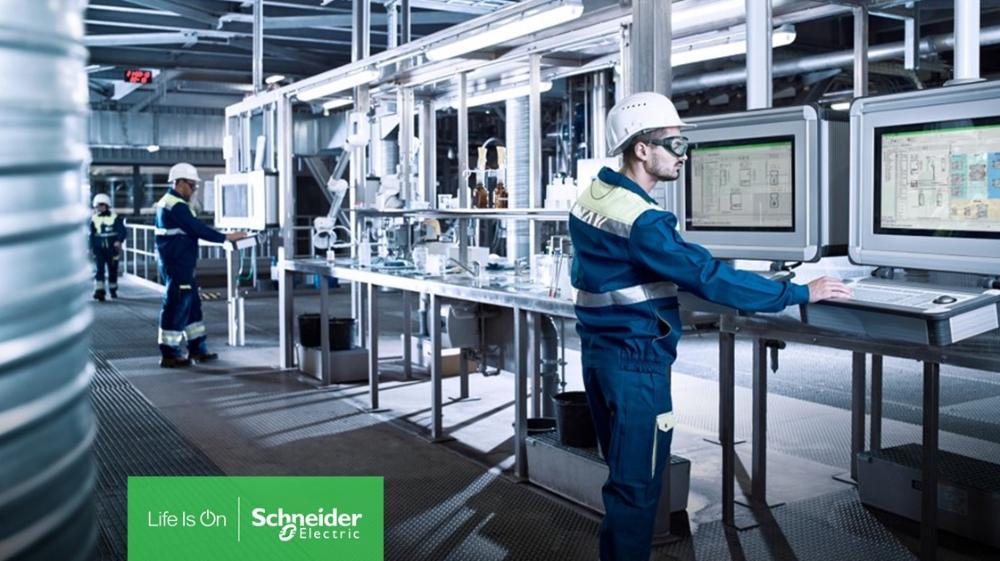
Why Industrial Automation Modernization Is Becoming More Important
A modern manufacturing facility depends on multiple layers of automation technology. PLCs control machines and production equipment, while DCS platforms are commonly used for continuous and process applications. SCADA and HMI systems provide operators with visualization and monitoring capabilities, while industrial networks connect controllers, sensors, drives, instruments, and higher-level software.
The challenge is that these technologies do not always age at the same speed.
A PLC may still be operational while its engineering software becomes difficult to maintain. A DCS may continue controlling a process safely while its hardware platform becomes increasingly expensive to upgrade. Industrial computers may require replacement, while control applications remain dependent on older operating environments.
This creates what many automation engineers describe as technical debt.
Replacing an entire control architecture is rarely simple. Production downtime can be expensive, engineering teams may need to rebuild control logic, operators may require retraining, and existing field devices may need to remain operational during the transition.
For process industries, the risk can be even greater. Refineries, chemical plants, water treatment facilities, power plants, food processing sites, and other continuous operations often cannot simply stop production for a complete control system replacement.
This is where incremental automation modernization becomes attractive.
What Is Industrial Automation Modernization as a Service?
Schneider Electric's new offering combines three main elements.
The first is the infrastructure foundation. HPE infrastructure provides computing, storage, and data protection capabilities for industrial workloads.
The second is software-defined automation. EcoStruxure Automation Expert provides an open automation environment designed to separate automation functionality from traditional hardware dependencies.
The third element is lifecycle and engineering services. These services can include assessment, migration, managed operations, cybersecurity, and continuous optimization.
Together, these components create a model in which automation modernization can be treated as an ongoing service rather than a single hardware replacement project.
This is an important shift in thinking.
Traditional automation projects often follow a capital expenditure model. A company purchases PLCs, industrial PCs, communication modules, engineering software, servers, and other hardware. The system is commissioned and then maintained for many years.
The service-based model moves some of that responsibility toward continuous operation, software updates, infrastructure management, and lifecycle services.
For large industrial organizations operating multiple factories, this approach could also make it easier to standardize automation practices across different sites.
Supporting Existing PLC and DCS Infrastructure
One of the most important aspects of the announcement is that the modernization model is not positioned as a simple rip-and-replace strategy.
Existing PLC and DCS systems can remain in operation while new automation capabilities are introduced incrementally.
For example, an industrial facility could begin with a limited modernization project involving a specific production line, auxiliary system, data collection application, or new control function. Once the architecture has been validated, the same approach could potentially be expanded to additional areas.
This strategy can reduce the engineering risk associated with large automation migrations.
It also allows companies to prioritize modernization based on operational requirements.
A plant may decide to modernize its most critical control system first. Another facility may focus on cybersecurity. A third site may prioritize energy monitoring, production optimization, or integration with enterprise systems.
This flexibility is particularly relevant for multinational manufacturers with different generations of PLC and DCS equipment installed across their factories.
The Role of Software-Defined Automation
Software-defined automation is becoming one of the most important themes in industrial control.
Historically, the controller was closely connected to physical hardware. The PLC CPU, I/O system, communication modules, engineering software, and application logic were usually designed as part of a tightly integrated platform.
Software-defined automation changes this relationship.
Control functionality can increasingly be separated from specific hardware platforms, allowing computing resources to become more flexible.
This does not mean that physical PLCs and industrial controllers will disappear. Real-time control, safety, deterministic communication, and reliable field-level operation remain essential.
Instead, the trend is toward creating more flexible layers around the traditional control system.
This can make it easier to introduce analytics, cloud connectivity, edge computing, AI applications, digital twins, and other digital services without rebuilding the entire control architecture.
For automation engineers, this could eventually mean that the engineering focus shifts from selecting a fixed controller platform toward designing an architecture in which control, data, computing, and applications can evolve independently.
Why the HPE Partnership Matters
The combination of industrial automation software and enterprise computing infrastructure is another important part of this development.
Industrial environments have traditionally been separated from enterprise IT systems because operational technology has different requirements. PLCs and DCS systems must prioritize deterministic behavior, availability, safety, and predictable performance.
At the same time, manufacturers increasingly need to process large volumes of operational data.
Production data can be used for predictive maintenance, energy optimization, quality analysis, asset management, production planning, and AI applications.
The challenge is connecting these worlds without compromising the stability of the control layer.
The Schneider Electric and HPE approach attempts to provide an infrastructure foundation where industrial workloads can be managed using more flexible computing technologies while maintaining appropriate operational controls.
This reflects a broader convergence between OT and IT.
What This Means for PLC Engineers
For PLC engineers and system integrators, software-defined automation could gradually change project workflows.
Instead of treating the PLC as an isolated controller, engineers may increasingly work with a broader architecture that includes software applications, edge computing, industrial networks, databases, analytics platforms, and cloud services.
PLC programming will remain important, especially for machine control and deterministic processes. However, the surrounding engineering environment is becoming more software-oriented.
Version management, reusable software components, centralized configuration, cybersecurity policies, remote diagnostics, and standardized deployment methods are becoming increasingly important.
This also creates opportunities for system integrators.
Companies with experience in legacy PLC and DCS systems can potentially combine that knowledge with modern IT infrastructure and software engineering skills to provide modernization services.
What This Means for DCS Users
For DCS operators, the modernization challenge is particularly complex because process control systems often have extremely long lifecycles.
A DCS may remain in service for many years because replacing it can affect the entire production process.
An incremental modernization strategy could allow operators to preserve existing control investments while gradually introducing modern digital capabilities.
This may include advanced data collection, cybersecurity improvements, new operator interfaces, analytics, edge applications, and additional automation functions.
The ability to modernize without immediately replacing the core process control system can be especially valuable for industries where downtime must be carefully controlled.
The Future of Industrial Automation Modernization
The announcement from Schneider Electric reflects a larger movement within the automation industry.
Manufacturers are no longer looking only for faster PLCs or larger DCS systems. They are looking for automation platforms that can adapt to changing production requirements.
Artificial intelligence, industrial cybersecurity, cloud computing, digital twins, edge computing, and advanced analytics are becoming part of the automation conversation.
At the same time, existing PLCs, DCS systems, field instruments, and industrial networks cannot simply be discarded.
The future will therefore likely involve coexistence.
New software-defined technologies will operate alongside proven control platforms. Legacy automation will continue performing critical control functions while modern digital layers provide additional intelligence and connectivity.
This gradual evolution may become one of the defining characteristics of industrial automation over the next decade.
Conclusion
Schneider Electric's Industrial Automation Modernization as a Service announcement highlights an important change in how manufacturers may approach PLC and DCS modernization.
Rather than replacing complete automation systems at once, companies can increasingly look toward incremental modernization, software-defined control, hybrid infrastructure, and lifecycle-based services.
For industrial operators, the goal is straightforward: maintain production continuity while creating a technology foundation that can support future requirements.
For PLC programmers, DCS engineers, system integrators, and automation professionals, the trend is equally important. Industrial automation is becoming more connected to software engineering, IT infrastructure, cybersecurity, cloud technologies, and artificial intelligence.
The PLC and DCS are not disappearing. Instead, they are becoming part of a broader automation ecosystem in which control systems, software, data, and computing infrastructure work together.
That shift could make automation modernization less disruptive and give industrial companies more flexibility to improve their plants one step at a time.