ABB System 800xA 7.0 Extension Pack Brings Web-Based Operations to Industrial DCS
Time:2026-08-12 Browse: 10
Published: June 2026 | Industry: DCS, Process Automation, Industrial Control Systems
ABB Moves System 800xA Toward More Flexible DCS Operations
Distributed control systems are entering an important stage of modernization. Industrial plants need to preserve the reliability of existing control architectures while adopting more flexible software, modern operator interfaces, cybersecurity technologies, and digital applications.
In June 2026, ABB introduced the first Extension Pack for its flagship System 800xA 7.0 distributed control system. The release represents a significant step in ABB's broader Automation Extended approach, which is designed to allow industrial companies to introduce new automation capabilities without forcing a complete replacement of their existing DCS infrastructure.
The first Extension Pack, known as xP0, introduces a web-based Operations Client based on HTML5 technology.
The approach is important because operator interfaces are a central part of every DCS environment. Operators need reliable access to process graphics, alarms, events, trends, and plant information. Traditionally, this has often required dedicated software installations and carefully managed client environments.
ABB's new web-based approach is designed to make that access more flexible while maintaining the established System 800xA operating environment.
What Is the System 800xA Extension Pack?
System 800xA 7.0 introduces Extension Packs as a new mechanism for delivering additional technology independently from the core software release.
Instead of waiting for a complete DCS platform upgrade before introducing new functionality, Extension Packs can provide additional capabilities on a separate lifecycle.
This is an important concept for process automation.
A DCS is not simply an ordinary software application. It is part of a production environment where reliability, availability, cybersecurity, engineering consistency, and operator familiarity are critical.
A conventional software upgrade can require extensive testing, validation, engineering work, documentation updates, and operator training.
The Extension Pack concept is intended to reduce that burden by allowing new capabilities to be added while keeping the core System 800xA environment stable.
The first release demonstrates this strategy through a new web-based operator interface.
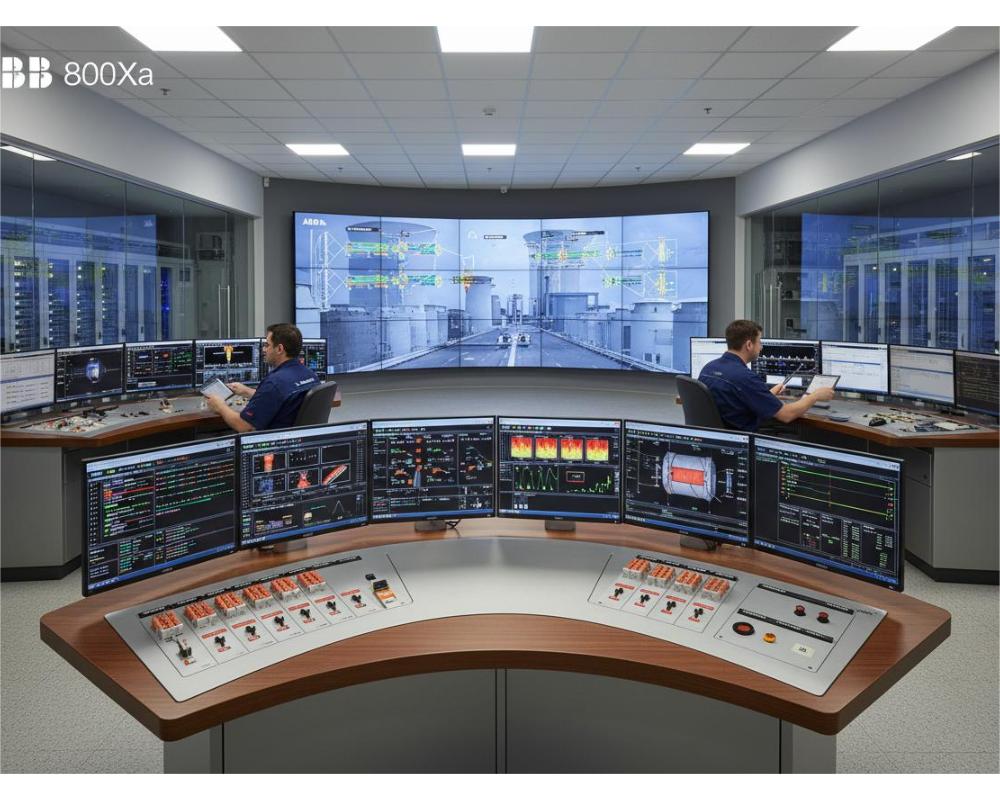
Web-Based Operations Client
One of the main features of xP0 is the System 800xA Operations Client.
The new client uses HTML5 technology and provides access to operator process graphics, alarm lists, and event information without requiring the traditional System 800xA software installation on each local client.
This changes the way operators can interact with the DCS environment.
Instead of depending entirely on dedicated workstation software, the operator interface can use modern web technologies.
For industrial facilities, this can simplify client deployment and maintenance.
It can also provide greater flexibility when designing operator workstations and access points.
The goal is not simply to make a DCS look more modern. The larger objective is to modernize how operators access information while preserving the existing operational environment.
That distinction is important.
Industrial automation modernization cannot sacrifice the reliability and familiarity required by process operators.
Protecting Existing DCS Investments
One of the biggest challenges facing process industries is the long lifecycle of DCS systems.
A DCS may control a chemical plant, power station, refinery, water treatment facility, mining operation, or manufacturing process for many years.
Replacing the complete platform simply to gain access to newer software technologies can be extremely disruptive.
ABB's Extension Pack strategy is based on a different principle: innovation with continuity.
Existing users, organizational structures, and operator graphics can continue to be used.
The new capabilities are designed to work within the existing System 800xA environment rather than requiring customers to rebuild the entire application.
For plant owners, this can be particularly valuable.
An organization may already have thousands of process graphics, alarm configurations, control loops, engineering standards, and operator procedures.
A modernization strategy that requires all of those assets to be recreated can quickly become expensive and time-consuming.
Maintaining compatibility can therefore become just as important as introducing new technology.
Reducing Operator Retraining
Operator training is another important consideration.
Industrial operators are trained to understand specific process graphics, alarm structures, equipment representations, and control workflows.
Even small interface changes can affect operator efficiency, especially in critical process environments.
A completely new DCS interface may require extensive training before it can be deployed safely.
The Extension Pack approach aims to modernize the access technology while preserving the established System 800xA operational experience.
This means operators can benefit from a more flexible web-based interface without necessarily having to learn an entirely different DCS operating philosophy.
For large plants, this can reduce one of the hidden costs associated with automation modernization.
The Importance of Containerized Automation
Another important part of xP0 is the introduction of an Infrastructure Server node designed to orchestrate containerized core control applications.
Containerization is widely used in modern IT environments because it allows software applications to be packaged and deployed in a consistent way.
Its increasing use in industrial automation represents a broader convergence between IT and OT.
Traditional DCS platforms were heavily dependent on specific hardware and software environments.
Modern industrial architectures are increasingly looking toward modular software components that can be deployed, maintained, and updated independently.
This does not mean that industrial control suddenly becomes identical to enterprise IT.
Industrial control still requires deterministic behavior, high availability, cybersecurity, careful change management, and extensive validation.
However, containerized software can provide a more modular foundation around the control system.
This is one of the reasons the Extension Pack concept is significant beyond the web-based operator interface.
ABB Automation Extended Strategy
The System 800xA Extension Pack is part of a larger ABB strategy known as Automation Extended.
The basic idea is to help industrial companies evolve their automation systems without disrupting ongoing operations.
Traditional DCS architectures were often designed as tightly integrated systems where control logic, visualization, data processing, and hardware were closely connected.
Modern plants need more flexibility.
They want to add advanced analytics, AI applications, cloud connectivity, edge computing, digital services, and other technologies while keeping the control core stable.
Automation Extended addresses this challenge through a more modular architecture.
The separation between core control functions and additional digital capabilities can make it easier to introduce new technologies over time.
This approach is particularly relevant for process industries where plant uptime is one of the most important engineering requirements.
What This Means for DCS Engineers
For DCS engineers, the shift toward modular and web-based automation could change engineering practices.
Traditional DCS engineering involves control configuration, graphics development, I/O configuration, alarm management, controller configuration, system administration, and commissioning.
As more digital components are introduced, engineers will increasingly need to understand software architecture in addition to conventional control engineering.
Knowledge of virtualization, containerization, networking, cybersecurity, data interfaces, and modern web technologies may become increasingly useful.
At the same time, traditional DCS knowledge remains essential.
Understanding process dynamics, PID control, instrumentation, alarm philosophy, safety requirements, and operator workflows cannot be replaced by software technology.
The future DCS engineer will likely need both skill sets.
Benefits for Plant Operators
For plant operators, the most visible change is improved access to process information.
A web-based Operations Client can provide a more flexible method of accessing process graphics and alarm information.
This may be useful in modern control rooms, engineering environments, maintenance areas, and other authorized operational locations.
However, flexibility must always be balanced with cybersecurity.
A web-based interface does not mean that every user should have unrestricted access to the DCS.
Authentication, authorization, network segmentation, secure configuration, and cybersecurity policies remain essential.
The modernization of operator access therefore needs to happen together with modernization of industrial cybersecurity.
Why This News Matters for Process Automation
The significance of the System 800xA Extension Pack goes beyond one new interface.
It illustrates a wider trend in the DCS market: the movement from large monolithic releases toward modular and continuously evolving automation platforms.
Industrial customers increasingly want new capabilities without having to replace everything they already own.
This is especially important as AI, industrial analytics, edge computing, and cloud technologies become more relevant to process industries.
A modular DCS architecture can provide a practical path between two extremes.
On one side is the traditional approach of keeping an old control system unchanged for many years.
On the other side is a complete system replacement that may require major capital expenditure and significant operational risk.
Extension-based modernization offers a middle path.
Plants can preserve their existing automation investment while adding new technology step by step.
The Future of DCS Modernization
The DCS market is gradually moving toward software-defined, modular, and open architectures.
System 800xA 7.0 and its Extension Pack mechanism illustrate how this transition can happen without abandoning the installed base.
Web-based operator interfaces, containerized applications, improved IT/OT integration, cybersecurity, analytics, and AI can increasingly become part of the DCS environment.
The key word is continuity.
Industrial operators do not necessarily need a completely new control system every time technology advances.
Instead, future automation platforms may evolve continuously.
That model could help reduce the gap between legacy control systems and modern digital technologies.
Conclusion
ABB's System 800xA 7.0 Extension Pack represents an important development in industrial DCS modernization.
The first Extension Pack introduces a secure HTML5-based Operations Client and a new Infrastructure Server concept for containerized applications.
More importantly, it demonstrates a modernization strategy focused on adding new capabilities without forcing industrial plants to abandon their existing automation investments.
For DCS engineers and plant operators, this approach can provide a practical path toward modern operator interfaces, modular software, and future digital technologies.
As industrial automation continues to evolve, the most successful DCS platforms will not necessarily be the ones that replace existing technology the fastest.
They may be the platforms that allow plants to modernize gradually while keeping production stable.
That is the direction highlighted by ABB's latest System 800xA development: preserve what works, modernize what needs to change, and create an automation architecture capable of evolving with the plant.