Siemens Launches SIMATIC AX WinCC Unified Elements to Modernize Industrial HMI and Automation Engine
Time:2026-08-12 Browse: 18
Published: July 2026 | Industry: PLC, HMI, SCADA, Industrial Automation, Software-Defined Engineering
Siemens Brings IT-Style Software Engineering to Industrial Automation
Industrial automation engineering is becoming increasingly software-driven. PLC programmers and automation engineers are no longer working only with traditional graphical engineering tools. Modern projects also involve version control, reusable software components, automated builds, digital workflows, artificial intelligence, and collaboration between engineering teams.
In July 2026, Siemens announced the launch of SIMATIC AX WinCC Unified Elements, a new engineering application for SIMATIC WinCC Unified visualization projects.
The announcement is significant because the new environment brings software development practices commonly associated with IT into industrial HMI and SCADA engineering.
The new application allows engineers to build, version, and deploy visualization projects using workflows that are familiar to software developers.
Initially available in the United States, SIMATIC AX WinCC Unified Elements extends the SIMATIC AX family from PLC programming into visualization.
This creates a closer relationship between PLC control logic and HMI engineering.
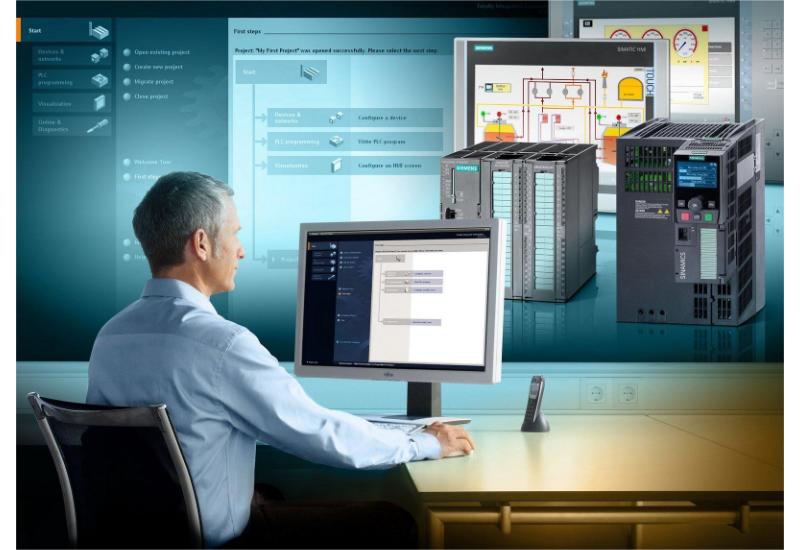
Why HMI Engineering Is Changing
For many years, industrial HMI development relied heavily on graphical editors.
Engineers could create screens by selecting objects, placing them on a page, configuring properties, and connecting them to PLC tags.
This approach remains useful, especially for engineers who prefer visual development.
However, modern automation projects are becoming more complex.
Large production systems may contain hundreds or thousands of HMI objects. Many of these objects are repeated across machines, production lines, and plants.
When projects grow, manually creating and maintaining every screen can become time-consuming.
Software engineering practices provide another way to manage this complexity.
Source control, reusable libraries, automated builds, structured project files, code-based configuration, and collaboration tools can make large projects easier to manage.
SIMATIC AX WinCC Unified Elements is designed around this concept.
A Code-Based Approach to HMI and SCADA
The new environment provides a code-based engineering workflow for WinCC Unified visualization.
Rather than relying only on drag-and-drop development, engineers can work with human-readable project files and software development tools.
One of the key capabilities announced by Siemens is project generation from YAML files.
YAML is a human-readable data format commonly used in software development and automation pipelines.
In an industrial context, structured project information can be used to describe configuration, components, scripts, libraries, and other project elements.
SIMATIC AX WinCC Unified Elements can combine these elements into automation projects that can be built and deployed.
This approach can be especially useful when manufacturers use standardized machine architectures.
For example, a company may operate dozens of similar production machines.
Instead of manually recreating every HMI project, engineers can define reusable structures and generate projects from standardized data.
This can improve consistency between machines and reduce repetitive engineering work.
Combining Graphical and Code-Based Engineering
A major feature of SIMATIC AX WinCC Unified Elements is that engineers do not have to choose exclusively between graphical and text-based engineering.
The system supports hybrid workflows.
Graphical development and direct code editing can be used together, with the two approaches designed to remain synchronized.
This is important because automation engineers have different working styles.
A process engineer may prefer graphical visualization development, while a software-oriented engineer may prefer code and reusable components.
By combining both approaches, Siemens is attempting to create a development environment that can accommodate both traditional automation engineering and modern software practices.
This could also help organizations transition gradually.
Companies do not necessarily need to abandon existing engineering knowledge simply because new software methods are introduced.
Native Git Integration
Another major feature is native Git integration.
Git is widely used by software developers for version control.
In industrial automation, version control has historically been more fragmented.
Automation teams often maintain project backups, archived engineering files, and manually documented revisions.
As PLC and HMI projects become larger, this can create challenges.
Engineers need to know which version of a project is currently active, what changes were made, who made them, and whether a modification has been tested.
Git provides a structured way to manage these requirements.
With native Git integration, visualization projects can use project history, branching, and merge-request workflows.
This could be particularly valuable for larger automation teams where several engineers work on the same project.
Instead of exchanging project files manually, teams can use a more structured software development workflow.
Why Version Control Matters for Industrial Automation
Version control is not simply an IT convenience.
In industrial automation, configuration changes can affect production equipment.
A modification to an HMI screen may change an operator workflow. A change to a PLC program may affect machine behavior. A change to alarm configuration may influence how operators respond to process conditions.
Being able to track engineering changes can therefore improve project management and traceability.
Version control can also support testing.
Engineers can develop a change in a separate branch, test it, review it, and then merge it into the production project when appropriate.
This is common in software engineering but is still developing in many industrial automation environments.
The introduction of IT-style workflows into HMI engineering therefore represents more than a new programming interface.
It reflects a broader change in how automation software may be developed and maintained.
AI-Generated Automation Projects
Artificial intelligence is another major element of the new engineering approach.
SIMATIC AX WinCC Unified Elements supports workflows in which AI-generated code, configuration, scripts, and reusable libraries can become part of an automation project.
This does not mean that an AI system should independently control a production plant without engineering supervision.
Industrial automation requires validation, testing, cybersecurity controls, safety procedures, and engineering approval.
Instead, AI can be used to accelerate repetitive engineering activities.
For example, an engineer could use AI-assisted generation to create a project structure, generate repetitive configuration elements, or produce reusable components.
The engineer can then review and validate the generated result.
This model is likely to become increasingly important as industrial automation projects become more software-intensive.
Extending SIMATIC AX Beyond PLC Programming
SIMATIC AX originally focused on PLC programming.
The addition of WinCC Unified Elements extends the concept into visualization.
This is important because PLC and HMI development are closely connected.
A machine may have complex PLC logic but also require a sophisticated operator interface.
Historically, these tasks could involve different engineering workflows.
Bringing control logic and visualization into a more IT-aligned engineering environment can help reduce the separation between the two.
For system integrators, this could make standardized software architectures easier to implement.
For machine builders, it may help create reusable HMI templates that can be applied across different equipment models.
For large manufacturers, it could provide a common software engineering methodology across multiple production sites.
Open Architecture and Custom Web Controls
The new environment also supports custom web controls.
This is another important development for HMI engineering.
Modern web technologies provide engineers with a large ecosystem of development tools and interfaces.
Instead of relying only on predefined visualization objects, developers can create customized controls for specific applications.
This can be useful when standard HMI components do not provide the required functionality.
It also allows automation teams with software development expertise to apply web development skills to industrial visualization.
This is part of a broader convergence between industrial automation and modern software engineering.
What This Means for PLC Programmers
For PLC programmers, the most important development may be the gradual disappearance of the boundary between PLC code and other automation software.
A modern automation engineer may need to understand PLC programming, HMI design, industrial networks, data structures, cybersecurity, version control, and software deployment.
The traditional IEC 61131-3 programming languages remain essential.
Ladder logic, function block diagrams, structured text, and other automation programming methods are still central to machine control.
However, the surrounding development environment is becoming more similar to software engineering.
This means that automation engineers who learn Git, structured project management, APIs, scripting, web technologies, and software testing may have an increasing advantage.
What This Means for System Integrators
System integrators are often responsible for developing automation applications that must be replicated across many machines or facilities.
Reusable engineering is therefore extremely valuable.
A code-based HMI environment can make it easier to create standardized templates.
For example, a system integrator could create a standard motor control interface, alarm display, diagnostic page, production dashboard, or equipment faceplate.
That component could then be reused across multiple projects.
When the standard component needs to be updated, a structured development process can help engineers manage the change more efficiently.
This can reduce engineering duplication and improve consistency.
HMI and SCADA Development Are Becoming Software Engineering
The launch of SIMATIC AX WinCC Unified Elements reflects a larger trend across the automation industry.
HMI and SCADA applications are increasingly treated as software products rather than static engineering configurations.
This shift is driven by several factors.
Industrial systems are generating more data. Operators require more advanced visualization. Manufacturers need faster engineering cycles. Production equipment is becoming more modular. Engineering teams are distributed across different locations.
At the same time, companies need to maintain increasingly complex automation systems for many years.
Traditional manual engineering workflows can struggle under these conditions.
Software engineering practices provide tools for managing complexity.
Version control, reusable libraries, automated deployment, structured configuration, AI assistance, and collaborative development can all contribute to a more scalable engineering process.
Cybersecurity and Engineering Discipline Remain Essential
The move toward software-based automation does not eliminate the need for industrial cybersecurity.
In fact, it makes cybersecurity even more important.
As automation projects become more connected to software development environments, version control systems, external libraries, and IT infrastructure, organizations need clear security policies.
Engineers must understand who can modify automation projects, how changes are reviewed, how software packages are managed, and how final applications are deployed.
The use of AI also requires engineering discipline.
Generated code should be reviewed and tested before being used in production.
Automation systems control physical equipment, so an error in software can have consequences that are very different from an error in a conventional business application.
Human engineering responsibility therefore remains essential.
The Future of Industrial Automation Engineering
The launch of SIMATIC AX WinCC Unified Elements provides another indication that industrial automation is moving toward software-defined engineering.
The future automation engineer may work with PLC logic, HMI visualization, SCADA applications, digital twins, AI tools, version control systems, and cloud-connected development environments as part of one engineering workflow.
This does not mean traditional automation skills will disappear.
Knowledge of electrical systems, instrumentation, PLC programming, control logic, machine safety, industrial networks, and commissioning will remain critical.
What is changing is the environment in which those skills are applied.
Automation engineering is becoming more collaborative, modular, programmable, and software-oriented.
Conclusion
Siemens' launch of SIMATIC AX WinCC Unified Elements in July 2026 is an important development for HMI, SCADA, PLC, and industrial automation engineering.
The new environment brings code-based development, Git version control, AI-ready workflows, YAML project generation, reusable software components, and hybrid graphical/text engineering into the WinCC Unified ecosystem.
For automation engineers, this represents a shift from traditional screen-by-screen development toward more structured software engineering.
For PLC programmers and system integrators, it creates opportunities to build reusable automation applications and standardize projects across machines and production sites.
For manufacturers, the potential benefit is faster development, better collaboration, improved project consistency, and a more flexible engineering environment.
The industrial automation industry is moving toward a future in which software development practices become a normal part of PLC and HMI engineering.
SIMATIC AX WinCC Unified Elements is one of the latest examples of that transition, showing how the boundary between industrial control engineering and modern software development continues to become smaller.