Honeywell Technologies Brings Forge to China, Accelerating the Shift from Industrial Automation to A
Time:2026-08-18 Browse: 24
Honeywell Technologies has officially introduced its Honeywell Forge intelligent connected platform to the Chinese market, marking a significant step in the company's strategy to help industrial enterprises move from conventional automation toward more autonomous operations.
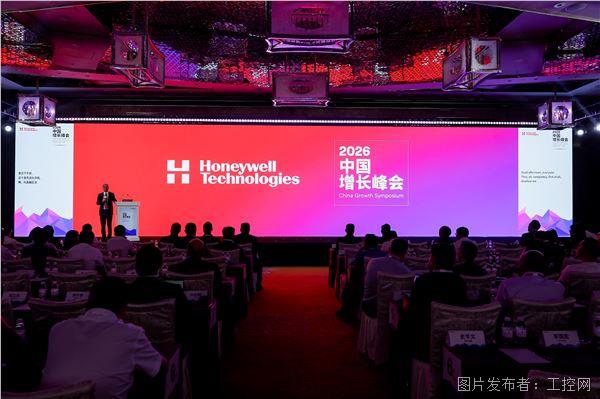
The announcement was made at the second Honeywell Technologies Growth Summit in Shanghai. The launch comes shortly after Honeywell completed the previously announced separation of its aerospace business, with Honeywell Technologies now operating as a more focused global automation company.
For industrial automation professionals, the significance of the Forge launch extends beyond the introduction of another industrial software platform. It reflects a broader shift in how automation companies are approaching artificial intelligence, operational data and existing industrial assets.
Honeywell Technologies Refocuses on Industrial Automation
Following its corporate restructuring, Honeywell Technologies is positioning itself as a focused automation company serving the building, process and industrial sectors.
The company continues to emphasize its long-term commitment to China while increasing its focus on automation, industrial digitalization and lower-carbon energy applications.
Honeywell Technologies says its strategy is built around combining domain expertise, installed-base data, software and automation technologies to help customers improve operational performance.
This positioning is particularly relevant as industrial companies increasingly look beyond basic connectivity and monitoring. Connecting PLCs, DCS systems, sensors and other field devices is no longer sufficient by itself. The larger challenge is turning operational data into decisions that can improve production, energy efficiency, safety and asset performance.
That is the problem Honeywell Forge is designed to address.
Honeywell Forge Adds an AI-Based Intelligence Layer
Honeywell Forge is based on an open, hardware-agnostic architecture designed to connect existing operational assets and provide an intelligence layer across industrial operations.
Rather than functioning only as a centralized data collection platform, Forge combines operational data with industrial domain knowledge and AI-enabled applications. Honeywell describes the platform as a system capable of contextualizing information from physical operations and turning it into actionable insights.
This distinction is important for industrial users.
Factories already contain large amounts of operational data generated by PLCs, DCS platforms, sensors, control systems, equipment and specialized software. The problem is often not a lack of data, but the difficulty of understanding what the data means in a particular production environment.
A temperature fluctuation, pressure change or equipment alarm can have very different implications depending on the process, operating conditions and production target.
By combining industrial models, AI technologies and domain expertise, Honeywell Forge is intended to provide context around this operational information and support faster, more informed decision-making.
Honeywell's global Forge platform currently serves more than 25,000 customers, covers more than 288,000 sites and helps manage approximately 5.5 million assets, according to company data as of July 2026.
Localized Forge Infrastructure for the Chinese Market
One of the most important aspects of the China launch is the platform's localization strategy.
Honeywell Technologies has established a dedicated operating environment for Forge in China and is working with local cloud service providers. The objective is to support local data storage and processing requirements while providing the computing infrastructure and network performance required for real-time industrial applications.
For manufacturers and infrastructure operators, this localization is significant.
Industrial AI applications can involve large volumes of operational information, including equipment status, production parameters, energy consumption and process data. Data governance, cybersecurity, latency and compliance can therefore become major considerations when deploying cloud-based industrial platforms.
A localized operating environment can help address these concerns while allowing enterprises to use AI-enabled applications without necessarily replacing their existing automation infrastructure.
This approach also reflects a practical reality of industrial digitalization: companies do not want to rebuild an entire factory simply to introduce AI.
Instead, they increasingly want digital technologies that can work with existing control systems and installed equipment.
From Automation to Autonomy
Honeywell Technologies is using the term “autonomy” to describe the next stage of industrial transformation.
Traditional automation focuses primarily on executing predefined control strategies. Autonomous operations aim to go further by combining real-time data, industrial models, AI and operational knowledge to support decision-making and continuously optimize processes.
This does not mean that industrial AI will simply replace operators or control engineers.
In safety-critical industrial environments, deterministic control, interlocks and established protection mechanisms remain fundamental. AI is increasingly being positioned as an additional intelligence layer that can help identify patterns, recommend actions and optimize operations while existing control architectures continue to provide the underlying safety and control functions.
Honeywell's global Forge positioning follows this model. The company describes Forge as an intelligence layer that works across existing operations and combines data, domain knowledge and operational constraints.
This architecture could be particularly relevant for industries where replacing legacy automation systems would be expensive, disruptive or technically impractical.
Industrial AI Moves From Demonstration to Measurable Results
The growing interest in industrial AI has also created a new challenge for automation suppliers: demonstrating measurable business value.
Industrial companies are becoming increasingly cautious about AI projects that produce attractive dashboards but have limited impact on actual production.
For this reason, the more important question is no longer simply whether AI can analyze industrial data. The question is whether AI can improve specific operational KPIs.
Potential targets include:
Production efficiency
Equipment availability
Energy consumption
Maintenance performance
Process stability
Product quality
Operator workload
Safety performance
Honeywell has highlighted industrial applications in which AI, digital twins and process knowledge are combined to optimize real production processes.
The company has also pointed to applications such as its work with Shenghong Petrochemical, where an operational guidance solution was developed around a propane dehydrogenation process. The project combines AI, digital twin technology and process models to support operational optimization.
Such applications illustrate an important direction for industrial AI: moving from generic AI demonstrations toward industry-specific operational solutions.
Honeywell Expands Its Industrial AI Ecosystem in China
The Forge launch is also accompanied by a new ecosystem strategy.
At the Shanghai summit, Honeywell Technologies announced the Forge China Ecosystem Partnership Program, involving industrial companies, technology organizations and academic institutions.
Initial partners include Zhongda International, Fuhai Holdings, Sinochem Digital Intelligence and the University of Shanghai for Science and Technology. According to Honeywell, the partners will explore applications of Forge in areas including smart communities, connected services, energy and chemicals, and research and innovation.
This ecosystem model is important because industrial AI is difficult to scale through a single technology provider alone.
Different industries require different process models, equipment knowledge, regulatory requirements and operational workflows. Collaboration with local industrial partners can therefore help technology companies adapt general AI capabilities to specific production environments.
Data Centers Become an Important Industrial AI Application
The data center industry is another area where Honeywell Technologies sees opportunities for automation and AI.
AI computing is increasing power density and cooling requirements in modern data centers. At the same time, operators face growing pressure to improve energy efficiency, reliability and safety.
Honeywell Technologies has highlighted solutions covering areas such as environmental control, energy management, storage and AI-based scheduling, as well as early fire detection technologies.
The broader trend is clear: data centers are increasingly being managed as highly automated industrial facilities rather than simply as buildings filled with IT equipment.
For automation engineers, this creates opportunities to integrate PLC systems, building automation, power management, sensors, energy storage and AI-based optimization into a more unified operational architecture.
Why the China Market Matters
China remains one of the world's largest and most diverse industrial markets, covering sectors ranging from chemicals and petrochemicals to semiconductor manufacturing, energy storage, marine engineering and advanced manufacturing.
This makes China an important testing environment for industrial automation technologies.
Honeywell Technologies has emphasized its “East for East” localization strategy, focusing on developing solutions in China for Chinese industrial requirements while leveraging the company's global technology portfolio.
For the industrial automation market, this approach could become increasingly important.
The next generation of industrial AI will likely require more than powerful computing models. It will require industrial knowledge, reliable automation infrastructure, secure data architectures and deep understanding of specific production processes.
What the Forge Launch Means for Industrial Automation
The introduction of Honeywell Forge in China comes at a time when the industrial automation industry is moving into a new phase.
The first stage of digital transformation focused heavily on connectivity, data acquisition and remote monitoring.
The next stage is increasingly focused on using that data to support operational decisions and continuous optimization.
This transition can be summarized as:
Automation → Connectivity → Intelligence → Autonomous Operations
Honeywell Technologies is positioning Forge as part of this transition.
However, the development of autonomous industrial operations will not happen overnight. Industrial plants have strict requirements for reliability, cybersecurity, functional safety and operational continuity. AI systems must therefore operate within clearly defined engineering constraints.
The companies that succeed in industrial AI will likely be those that can combine AI capabilities with proven automation technologies rather than treating AI as a standalone solution.
Outlook: From Connected Factories to Autonomous Operations
Honeywell Technologies' Forge launch gives the Chinese industrial market another indication of where the automation industry is heading.
The competitive focus is gradually moving beyond traditional PLCs, DCS systems and field devices toward integrated architectures that combine automation hardware, industrial software, cloud infrastructure, operational data and artificial intelligence.
For manufacturers, the potential benefit is not simply greater digitalization. The longer-term objective is to create industrial systems capable of continuously interpreting operational conditions, supporting decisions and optimizing performance while maintaining the reliability and safety of established control architectures.
Honeywell Technologies is betting that its combination of automation expertise, installed-base data, industrial software and Honeywell Forge can provide that foundation.
For industrial automation engineers and system integrators, the Forge launch is therefore worth watching closely. It signals that the next stage of industrial digitalization is shifting from simply connecting machines to making industrial systems increasingly capable of understanding operations and supporting autonomous decision-making.