Industrial AI Needs Productivity, Not Just Pilots: What Siemens Realize LIVE 2026 Signals
Time:2026-08-18 Browse: 26
Siemens Realize LIVE Greater China 2026 in Shenzhen highlights a new direction for industrial AI: turning data, engineering knowledge and AI agents into scalable production value.
Shenzhen, China — August 12, 2026 — Industrial artificial intelligence is entering a new phase.
Over the past two years, much of the industry's attention has focused on what AI can potentially do: generate engineering code, assist product design, support predictive maintenance, analyze production data and help engineers solve technical problems.
But as more manufacturers move beyond proof-of-concept projects, a more difficult question is emerging:
Can industrial AI actually become a measurable source of productivity?
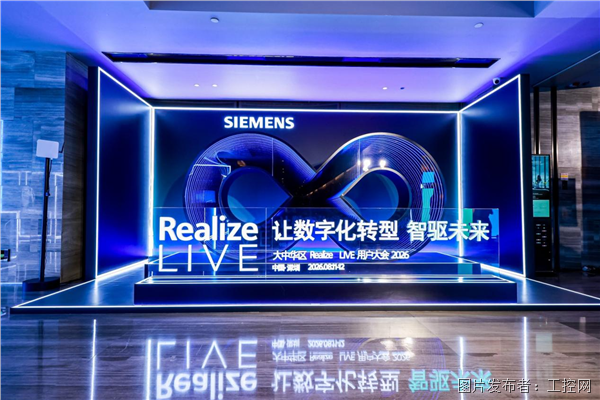
The 2026 Siemens Realize LIVE Greater China event, held in Shenzhen on August 11–12, offered a useful indication of where the industrial AI market may be heading next. Siemens used the event to highlight the connection between industrial software, digital twins, industrial data, engineering knowledge and AI agents, with a strong emphasis on moving AI from isolated applications toward scalable industrial workflows. Siemens officially listed Shenzhen as the host city for Realize LIVE Greater China 2026.
The message was clear: industrial AI is no longer primarily about demonstrating what AI can do. It is increasingly about proving what AI can change.
The Industrial AI Challenge Is Moving From Adoption to Productivity
Manufacturers are not necessarily slow to adopt AI.
In fact, industrial companies in China have shown strong interest in AI-based engineering, manufacturing and operational applications. The challenge is that rapid adoption does not automatically translate into production value.
An AI model can generate a report, identify an anomaly or recommend an action. But industrial environments operate under far more constraints than typical consumer applications.
Engineering decisions have physical consequences. Production processes have quality requirements. Equipment has operating limits. Changes to a product design can affect manufacturing, supply chains and service operations.
As a result, an AI-generated answer is not necessarily an engineering solution.
The real value of industrial AI appears when it can become part of an existing workflow and deliver measurable improvements in areas such as:
Engineering productivity
Manufacturing efficiency
Production issue resolution
Equipment utilization
Product quality
Energy consumption
Maintenance performance
Decision-making speed
This is one reason Siemens has increasingly positioned industrial AI alongside its existing industrial software portfolio rather than treating AI as an isolated technology.
The company's 2026 Realize LIVE strategy centers on the convergence of industrial intelligence, digital twins, lifecycle information and adaptive execution. At Realize LIVE Americas earlier this year, Siemens described this combination as a foundation for engineering and manufacturing systems that can learn, predict and optimize using physics, AI and real-world data.
Industrial Companies Do Not Have a Data Problem Alone
The second major challenge is data.
Modern manufacturers already generate enormous amounts of information.
PLM systems contain product structures, engineering information and bills of materials. ERP systems contain orders, inventory and procurement data. MES platforms contain production information. CRM and service systems contain customer and lifecycle information. At the equipment level, PLCs, sensors and industrial control systems continuously generate operational data.
The problem is that these datasets often remain distributed across different systems and departments.
More importantly, data is not the same as industrial knowledge.
An AI system may know that a particular component is connected to a specific machine. That does not necessarily mean it understands why the component has a particular material specification, why a manufacturing process has a specific constraint, or what downstream consequences could result from changing the design.
This is where industrial context becomes critical.
For industrial AI to be useful, it must understand relationships between products, processes, equipment, engineering decisions and business operations.
That is why technologies such as knowledge graphs, industrial ontologies and digital threads are becoming increasingly important.
Instead of treating enterprise information as disconnected tables, manufacturers are beginning to build a structured representation of how industrial assets and processes are related.
Siemens Puts Industrial Context at the Center of AI
Siemens is addressing this challenge through technologies that connect data and relationships across the industrial lifecycle.
At the center of this approach is the idea that AI should operate within a context-rich industrial environment.
The Siemens software portfolio already spans product lifecycle management, engineering, simulation and manufacturing. Products such as Teamcenter, Designcenter, Simcenter and Opcenter provide information from different stages of the product and manufacturing lifecycle.
The challenge is connecting those systems so that AI can understand the relationship between them.
Siemens has been developing Graph Studio and industrial ontology capabilities to help structure relationships between enterprise information. The objective is to make industrial data more meaningful to AI by adding semantic relationships and business context.
This represents a shift in industrial data strategy.
The previous generation of digitalization focused heavily on collecting and storing data.
The next generation is increasingly focused on organizing knowledge and context so that AI can use the data effectively.
Intelligence Center X Moves Industrial AI Toward Scale
One of the most important developments highlighted by Siemens in 2026 is Intelligence Center X.
Siemens officially introduced Intelligence Center X at Realize LIVE Americas in Detroit on June 1, 2026. The company describes it as industrial AI orchestration software designed to help organizations move from isolated AI experimentation toward scalable business impact.
The Shenzhen event provided an important opportunity to bring this strategy to the Greater China industrial market.
Intelligence Center X is not simply another AI chatbot or analytics dashboard.
According to Siemens, the platform connects industrial data, workflows and AI agents within a governed environment. It is designed to support a hybrid workforce in which people and AI agents work together under controlled processes.
The platform brings together capabilities including Mendix, Graph Studio and AI Studio, while connecting AI workflows with Siemens' broader industrial software environment.
This architecture addresses one of the biggest problems facing industrial AI today: scalability.
A successful AI pilot in one factory is useful, but it does not automatically become a company-wide solution.
If every factory has to build its own AI application from scratch, the cost and complexity of digital transformation can quickly increase.
A shared industrial AI platform can potentially provide a reusable foundation for data, knowledge, models, applications, agents and governance.
That changes the economics of industrial AI.
Instead of building one AI project after another, manufacturers can begin developing a portfolio of reusable industrial intelligence applications.
From Software Tools to AI Agents
Another important signal from Siemens is the changing role of industrial software.
For decades, engineers have interacted with industrial software by manually opening applications and executing specific tasks.
An engineer might use CAD software for design, PLM software for lifecycle management, simulation tools for validation and MES software for production execution.
AI agents introduce a different interaction model.
Instead of simply asking engineers to use more software, an agent can potentially interpret a task, retrieve relevant industrial information, interact with software applications and recommend or execute defined steps.
Siemens demonstrated this concept during its 2026 Realize LIVE Americas event through scenarios involving engineering changes and industrial workflows. Intelligence Center X is designed to allow AI agents to work with industrial data and applications while maintaining governance and traceability.
This could fundamentally change how engineers interact with industrial software.
The future workflow may increasingly look like:
Human defines the objective → AI understands the context → AI accesses industrial data and software → AI proposes or performs actions → Human validates the result.
The important point is that the AI does not operate without constraints.
Siemens emphasizes human-in-the-loop processes, governance and auditability for industrial AI. Its official announcement describes Intelligence Center X as a governed environment where people and AI agents can collaborate within context-rich workflows.
For industrial environments, this is a critical distinction.
Manufacturing companies do not simply need an AI that can make decisions. They need an AI system whose decisions can be understood, controlled, verified and traced.
Physics Still Matters in Industrial AI
Another limitation of general-purpose AI is that industrial systems operate in the physical world.
A large language model may understand how to describe an automobile, turbine or semiconductor process. That does not mean it understands the physical constraints involved in designing or operating one.
Industrial AI therefore needs more than language intelligence.
It also needs engineering and physics intelligence.
This is where Siemens' simulation portfolio becomes increasingly relevant.
At Realize LIVE Americas 2026, Siemens highlighted its use of AI in engineering simulation, including Simcenter PhysicsAI. The technology uses historical simulation data to create AI-driven surrogate models that can accelerate certain engineering analyses.
Siemens says that in selected applications, PhysicsAI can provide data-driven insights at speeds up to 1,000 times faster than traditional solver-based approaches.
The significance is not simply that AI makes simulation faster.
The larger opportunity is to connect AI with engineering constraints.
When AI is combined with simulation, digital twins and engineering models, it can operate within a much more realistic representation of the physical system.
That is essential if industrial AI is expected to move from generating information to supporting engineering decisions.
The Digital Thread Becomes the Foundation
Industrial companies also face another structural problem: the product lifecycle is fragmented.
Design generates engineering information.
Simulation validates the design.
Manufacturing converts the design into physical products.
Operations generate real-world performance data.
Service teams collect information from installed equipment.
If these processes remain isolated, AI can only see fragments of the overall lifecycle.
The digital thread is therefore becoming increasingly important.
Siemens is attempting to connect engineering, manufacturing and service information across its software portfolio. Teamcenter, Designcenter, Simcenter and Opcenter each play different roles within this broader environment.
The objective is to allow information generated at one stage of the lifecycle to remain useful at another stage.
This creates a much stronger foundation for industrial AI.
For example, an equipment problem identified during operation could potentially be linked back to its original design configuration, manufacturing history and maintenance information.
The AI is no longer analyzing an isolated equipment alarm.
It is analyzing the equipment within its full lifecycle context.
That is a much more powerful proposition for industrial users.
Why Scaling AI Is More Important Than Adding More AI Projects
The industrial AI market has already accumulated a large number of pilot projects.
Predictive maintenance.
AI quality inspection.
Engineering copilots.
Production optimization.
Automated reporting.
Generative design.
AI-based scheduling.
But the next stage will be judged by a different standard.
Can these applications be scaled?
Siemens' strategy around Intelligence Center X directly addresses this question.
The company says customers using the platform have already achieved measurable results, including a 95% reduction in manual effort and an 85% improvement in production issue resolution speed in specific deployments. These figures are Siemens-reported results rather than universal benchmarks, and actual performance will depend on the application and deployment environment.
That distinction matters.
Industrial AI should not be evaluated only by model accuracy or the number of AI features included in a platform.
It should increasingly be evaluated through operational metrics.
How many engineering hours were saved?
How much faster was a production problem resolved?
How much downtime was avoided?
How much energy was reduced?
How many manual steps were eliminated?
How consistently can the same solution operate across multiple plants?
These are the metrics that can turn AI from an innovation project into an industrial productivity investment.
What Siemens Realize LIVE 2026 Signals for Industrial Automation
The most important message from Realize LIVE is not that Siemens has added more AI products.
It is that industrial AI is becoming part of the industrial software infrastructure itself.
The direction can be summarized in four stages:
Data → Context → Intelligence → Action
Data provides the raw information.
Industrial ontologies, knowledge graphs and digital threads provide context.
AI and industrial models provide intelligence.
Agents and connected workflows turn intelligence into action.
This architecture is fundamentally different from simply adding an AI assistant to an existing software product.
It suggests that the next generation of industrial software will increasingly be designed around collaboration between humans, software and AI agents.
The Competitive Edge Will Not Be the AI Model Alone
The industrial AI market is becoming increasingly competitive, with automation and industrial software companies investing heavily in AI.
But the next stage of competition may not be determined primarily by who has the largest AI model.
Industrial companies need much more than a powerful model.
They need:
Reliable industrial data
Engineering context
Digital twins
Physics-based models
Lifecycle information
Secure data access
Workflow integration
Governance and auditability
Human oversight
Scalable deployment
This gives established industrial software companies an important advantage if they can successfully connect their existing technologies with AI.
For Siemens, that means leveraging its industrial software ecosystem rather than competing with general-purpose AI providers on model size alone.
From AI Demonstrations to Industrial Productivity
The industrial AI market is entering a more realistic stage.
The first question was:
What can AI do?
The second question became:
Where can AI be applied?
The next question is more demanding:
Can AI consistently improve the way industrial work is performed?
Siemens Realize LIVE 2026 suggests that the answer will increasingly depend on the infrastructure surrounding AI rather than AI models alone.
Industrial AI needs context.
It needs engineering knowledge.
It needs real-time and lifecycle data.
It needs physics.
It needs access to industrial software.
And above all, it needs a clear path from intelligence to measurable action.
That is why Intelligence Center X, digital twins, industrial ontologies, simulation AI and the digital thread are becoming increasingly important parts of the same conversation.
For manufacturers, this could mark a transition from AI as a pilot project to AI as an industrial productivity layer.
And for the industrial automation industry, that may be the more important signal from Siemens Realize LIVE 2026: the next battle in industrial AI will not simply be about who can build the smartest model.
It will be about who can connect AI to the real industrial world — and turn intelligence into measurable production value.