Allen-Bradley MPL-A310P-SJ74AA Servo Motor Troubleshooting Guide: Encoder and Motion Fault Diagnosis
Time:2026-08-25 Browse: 12
Allen-Bradley MPL-A310P-SJ74AA servo motor faults should be diagnosed by separating mechanical, feedback, brake, power, and drive-related problems. Because this motor uses a single-turn high-resolution encoder and 24 V DC brake, an apparent servo motor failure can originate outside the motor itself.
Allen-Bradley MPL-A310P-SJ74AA Servo Motor Fault Symptoms
Common symptoms include:
Motor fails to enable
Servo drive reports a feedback fault
Motor rotates in the wrong direction
Position error increases during motion
Motor vibrates at low speed
Brake does not release
Motor becomes unusually hot
Axis faults during acceleration
Intermittent encoder feedback
The most useful diagnostic clue is usually when the fault occurs. A fault immediately at enable points toward feedback, brake, configuration, or wiring. A fault that appears only under load requires a different investigation.
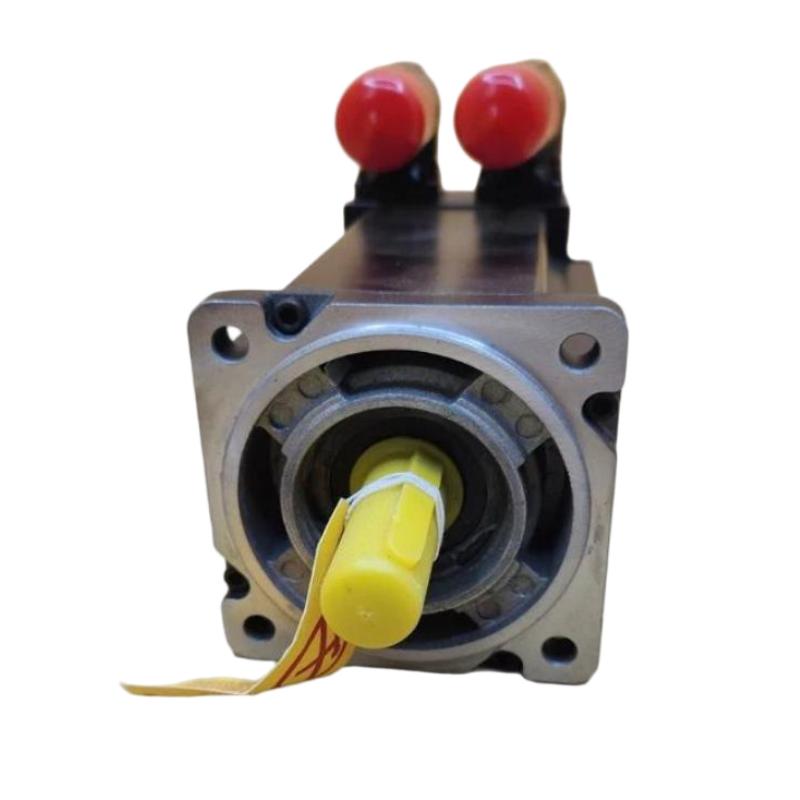
Allen-Bradley MPL-A310P-SJ74AA Encoder Fault Diagnosis
The MPL-A310P-SJ74AA uses a single-turn high-resolution encoder.
When an encoder-related fault appears, inspect the feedback circuit before assuming the encoder itself has failed.
Check the connector for:
Loose locking mechanism
Bent or damaged contacts
Contamination
Cable strain
Incorrect routing
Mechanical damage
A useful diagnostic comparison is to observe the actual position signal while slowly rotating the motor shaft by hand with the system safely isolated. A stable, continuous feedback response is more useful than simply checking whether the connector is physically installed.
Allen-Bradley MPL-A310P-SJ74AA Brake Fault Troubleshooting
The MPL-A310P-SJ74AA includes a 24 V DC brake.
If the drive commands motion but the shaft remains locked, check the brake circuit before increasing the motor torque command.
Measure the brake supply at the motor-side circuit rather than relying only on the PLC output status. A control signal can appear correct while the actual voltage reaching the brake is insufficient because of a damaged cable, loose terminal, relay contact resistance, or incorrect wiring.
A brake that partially releases can also create a misleading symptom: the motor may move, but current and following error can rise significantly.
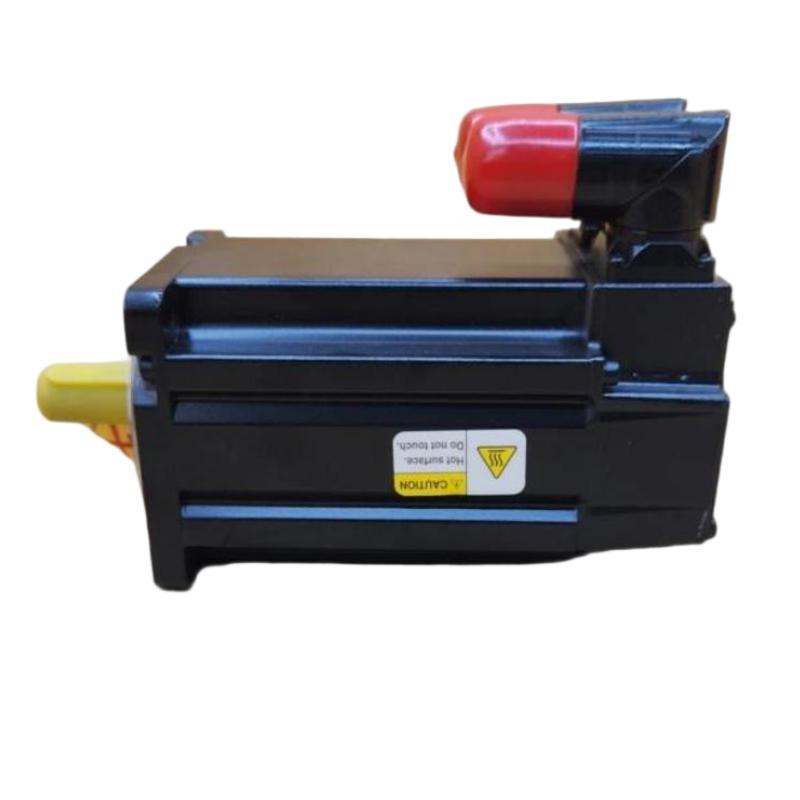
Allen-Bradley MPL-A310P-SJ74AA Servo Motor Mechanical Fault Analysis
Not every vibration fault is an electrical fault.
The MPL-A310P-SJ74AA is a low-inertia motor, so the axis can respond quickly to changes in load and coupling conditions.
If vibration appears after connecting the motor to the machine, compare operation with and without the mechanical load where the machine design permits.
An engineer should check:
Coupling alignment
Shaft runout
Bearing condition
Load imbalance
Mounting rigidity
Excessive external shaft loading
Servo tuning
Changing tuning parameters before checking the mechanical system can conceal the original problem.
Allen-Bradley MPL-A310P-SJ74AA Servo Motor Troubleshooting Case
In a representative troubleshooting case, an MPL-A310P-SJ74AA axis produced a following-error alarm during acceleration. At low speed the motor appeared normal, so the encoder was initially suspected.
The diagnostic sequence was changed to compare command and actual position while increasing acceleration gradually.
The motor remained stable at low acceleration, but the following error increased rapidly when acceleration was raised. Mechanical inspection then found excessive resistance in the driven mechanism.
After the mechanical resistance was corrected, the axis reached the commanded acceleration without reproducing the original fault.
The important diagnostic point was that the fault followed the load condition, not simply motor speed. That distinction prevented unnecessary encoder replacement.
Allen-Bradley MPL-A310P-SJ74AA Fault Diagnosis Decision Path
A practical Fault Diagnosis sequence is:
Motor does not move → check enable and brake → check power → check feedback → check drive configuration.
Motor moves but vibrates → isolate mechanical load → inspect coupling → evaluate tuning.
Position error increases under acceleration → compare command versus actual position → inspect load resistance → then evaluate servo parameters.
Intermittent feedback fault → inspect connector and cable movement → check shielding and routing → compare fault timing with machine movement.
This diagnostic logic is more effective than repeatedly resetting the servo drive and waiting for the fault to disappear.
Allen-Bradley MPL-A310P-SJ74AA Servo Motor Repair Considerations
Repair should be considered only after external causes have been eliminated.
The motor is identified by Rockwell Automation as an MP-Series MPL 240 V AC rotary servo motor, with a 230 V armature specification, 100 mm frame, 5000 RPM rating, single-turn high-resolution encoder, and 24 V DC brake.
If wiring, brake supply, mechanical alignment, drive parameters, and feedback connections are confirmed but the motor continues to fail, the motor can then be evaluated for encoder, winding, bearing, or brake-related defects.
Do not condemn the motor solely because the servo drive displays a motor-related alarm.
Allen-Bradley MPL-A310P-SJ74AA Troubleshooting Long-Tail Keywords
Relevant long-tail searches include Allen-Bradley MPL-A310P-SJ74AA troubleshooting, MPL-A310P-SJ74AA Fault Diagnosis, MPL-A310P-SJ74AA servo motor fault, MPL-A310P-SJ74AA encoder fault, MPL-A310P-SJ74AA brake problem, MPL-A310P-SJ74AA vibration troubleshooting, MPL-A310P-SJ74AA servo drive fault, and MPL-A310P-SJ74AA motor repair.
Allen-Bradley MPL-A310P-SJ74AA Final Fault Diagnosis
The fastest way to troubleshoot this servo motor is to identify whether the fault follows the electrical system, feedback system, brake circuit, mechanical load, or servo configuration.
That approach reduces unnecessary motor replacement and gives technicians a repeatable method for distinguishing a genuine MPL-A310P-SJ74AA hardware fault from an installation or system-level problem.