Emerson Hosts 2026 Boundless Automation Summit in Beijing, Highlighting Industrial AI and Autonomous
Time:2026-08-26 Browse: 14
Published: August 26, 2026
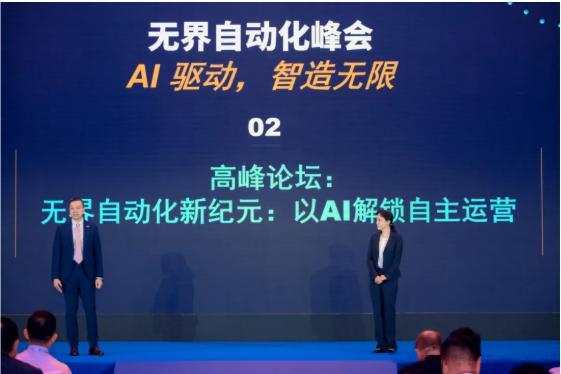
Emerson held its 2026 Boundless Automation Summit in Beijing on July 29, bringing together more than 650 industry leaders, automation professionals, experts and partners to discuss the growing convergence of artificial intelligence and industrial automation.
Under the theme “AI-Driven, Unlimited Intelligent Manufacturing,” the event focused on how Industrial AI, automation software, intelligent instrumentation and advanced control technologies can help industrial companies move beyond traditional automation toward more autonomous operations.
For the global industrial automation market, the summit highlighted an important shift: AI is increasingly moving from proof-of-concept projects toward practical applications connected to real production data, control systems and plant operations.
Industrial AI Moves Toward Engineering Applications
A major focus of the 2026 Boundless Automation Summit was the transition of Industrial AI from experimentation to engineering implementation.
As process industries continue to digitize their operations, manufacturers are collecting increasing amounts of data from sensors, control systems, industrial equipment and enterprise platforms. The challenge is no longer simply generating data, but making that data accessible, contextualized and useful for operational decisions.
Emerson emphasized that successful Industrial AI requires more than AI models alone. Reliable field data, industrial domain knowledge, automation infrastructure and appropriate control strategies remain critical components of an industrial AI architecture.
This approach is particularly relevant to process industries such as oil and gas, chemicals, power, life sciences and other asset-intensive sectors, where safety, reliability and continuous operation are essential.
Boundless Automation Connects Field, Edge and Cloud
At the center of Emerson's strategy is Boundless Automation, its vision for a next-generation automation architecture.
Emerson describes Boundless Automation as an approach that connects the intelligent field, edge computing and cloud environments through a unified data architecture. The objective is to reduce traditional data silos between field devices, control systems, operational technology and enterprise applications.
According to Emerson, intelligent field devices can provide greater access to operational data, while edge computing can support data movement and processing between control environments and cloud applications. Cloud-based technologies can then provide additional capabilities such as analytics, simulation and predictive maintenance.
For industrial users, this architecture can create a more flexible path for integrating existing automation assets with newer software, analytics and AI technologies.
Rather than replacing automation infrastructure overnight, the concept focuses on progressively connecting and modernizing existing systems while expanding access to industrial data.
Three Key Areas: Data Value, Autonomous Operations and Agile Control
The summit featured three main technical forums covering data value, autonomous operations and agile control.
Across nearly 20 presentations and technology demonstrations, Emerson showcased automation hardware and software technologies covering intelligent measurement and control, Industrial AI, asset reliability, intelligent maintenance and advanced control.
The discussions reflected a broader industry trend: the value of AI in manufacturing increasingly depends on how effectively AI can be integrated into established automation workflows.
For automation engineers and plant operators, this means AI must ultimately work with real-world instrumentation, controllers, industrial networks and operational processes rather than operating as an isolated digital application.
From Automation to Autonomous Operations
Traditional industrial automation is primarily designed to execute predefined control strategies. The emerging autonomous operations model aims to go further by combining automation, data analytics, AI and domain knowledge to support more adaptive decision-making.
Emerson's Boundless Automation strategy is positioned around this transition.
The company says its architecture is designed to help industrial organizations use data more effectively across field, edge and cloud environments, supporting improvements in operational visibility, reliability, safety, efficiency and sustainability.
The practical challenge for manufacturers will be determining where autonomy can deliver measurable operational value while maintaining appropriate human oversight and established safety and control requirements.
This makes the integration of AI with existing PLC, DCS, SCADA, instrumentation, control valves and industrial software systems increasingly important.
Emerson Expands Industrial AI Capabilities
The Beijing summit also comes as Emerson continues to expand its Industrial AI and edge-computing portfolio.
In August 2026, Emerson announced PACEdge 3.0, a software platform designed to simplify the deployment and management of industrial edge applications. The platform integrates industrial IoT data and supports AI, machine learning and real-time insights while using containerized workloads to simplify application deployment.
This development illustrates how industrial AI is increasingly being implemented closer to the production environment.
Instead of sending every operational task to a centralized cloud platform, edge computing can allow selected data processing, analytics and AI workloads to operate closer to industrial equipment. This can be useful where response time, connectivity, cybersecurity or operational continuity are important considerations.
Stronger Localization in the Chinese Industrial Market
China remains an important market in Emerson's global automation strategy.
According to Emerson, the company entered the Chinese market in 1979 and has developed local capabilities covering research and development, manufacturing, engineering, sales and service. Emerson's China organization currently supports automation, final control, measurement instrumentation and related industrial technologies across major process industries.
The 2026 summit therefore also highlighted the role of local innovation in industrial automation.
For multinational automation suppliers, localized engineering and application knowledge are becoming increasingly important as Chinese manufacturers pursue digital transformation, energy efficiency, intelligent manufacturing and lower-carbon operations.
What the Summit Means for Industrial Automation Users
The significance of Emerson's 2026 Boundless Automation Summit extends beyond AI itself.
For plant owners and automation engineers, the more important question is how AI can be connected with existing industrial infrastructure.
A modern Industrial AI strategy may involve multiple technology layers, including:
Industrial sensors and measurement instruments
PLC and DCS control systems
SCADA and HMI platforms
Industrial communication networks
Edge computing platforms
Manufacturing and operational data systems
Advanced analytics and AI applications
Predictive maintenance and asset performance software
The challenge is to make these layers work together while maintaining reliability, cybersecurity and control-system integrity.
Emerson's Boundless Automation approach represents one industry response to this challenge, with a focus on breaking down data barriers and creating a more connected architecture between field devices, edge systems, cloud applications and enterprise operations.
Industrial Automation Is Moving Toward a More Connected Architecture
The 2026 Boundless Automation Summit demonstrates how the industrial automation industry is entering a new stage in which AI, automation, software and industrial data are becoming increasingly interconnected.
For manufacturers, the transition toward autonomous operations is unlikely to happen through a single technology or product. Instead, it will depend on the gradual integration of intelligent field devices, reliable control systems, industrial software, edge computing, AI and operational expertise.
As Emerson continues to develop its Boundless Automation strategy, the direction is clear: the future of industrial automation will increasingly depend not only on how machines are controlled, but also on how effectively industrial data can be transformed into actionable operational intelligence.
For automation professionals, system integrators and industrial equipment users, the development of Industrial AI and autonomous operations will remain an important trend to watch throughout 2026 and beyond.