Siemens and Reinhausen Develop Solid-State Transformer for AI Data Center Power Infrastructure
Time:2026-08-27 Browse: 16
August 27, 2026
The rapid expansion of artificial intelligence is creating a new challenge for data center infrastructure: how to deliver large amounts of power while responding quickly to highly dynamic loads.
Against this background, Siemens and Reinhausen (MR) are jointly developing a solid-state transformer (SST) designed specifically for AI-ready data centers. Announced on August 14, 2026, the strategic partnership aims to develop and eventually industrialize the new power conversion technology.
The planned modular SST is designed to connect to grid voltages of up to 36 kV and provide a stable 800 VDC output. The architecture is intended to support direct-current power distribution in high-density AI infrastructure while reducing intermediate power conversion stages, equipment footprint, and system costs.
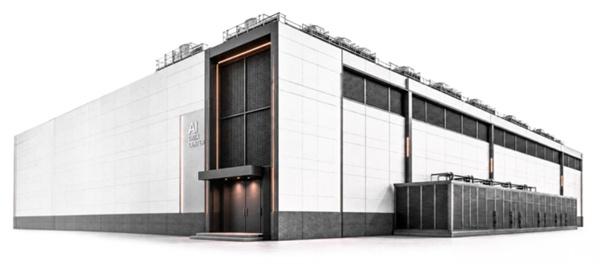
AI Data Centers Are Raising the Requirements for Power Infrastructure
AI data centers place unusually demanding requirements on electrical infrastructure.
Large AI workloads can cause rapid changes in power demand. Sudden load variations can affect servers, storage equipment, cooling systems, and other critical infrastructure if the power system cannot respond quickly enough. As AI clusters become more power-intensive, power quality, availability, power density, and dynamic response are becoming increasingly important design considerations.
Siemens and Reinhausen see solid-state transformers as one potential building block for this transition.
Unlike conventional transformers, an SST combines transformer technology with power electronics and digital control. This allows the system to monitor and actively control power flows in real time, providing a more dynamic response to changing electrical loads.
According to Siemens, the planned solution is intended to respond to load changes within milliseconds, making it particularly relevant to the rapidly changing power demand associated with AI workloads.
From Medium-Voltage AC to 800 VDC
One of the most important aspects of the Siemens-Reinhausen project is its focus on 800 VDC power distribution.
The proposed SST is designed to receive medium-voltage AC from the grid and convert it into 800 VDC for downstream DC distribution and load systems. The architecture can provide galvanic isolation while reducing the number of conversion stages found in conventional AC-based power delivery architectures.
This approach is particularly relevant as data center operators look for ways to increase power density and simplify power delivery to high-performance computing infrastructure.
The planned SST supports grid connections of up to 36 kV and can also be configured for lower voltage levels. Its modular design is intended to make the technology adaptable to different grid connection conditions and data center configurations.
The key technical characteristics announced by the companies include:
Grid connection of up to 36 kV
Stable 800 VDC output
Modular and scalable architecture
High availability
Power electronics-based conversion
Digital control and monitoring
Direct coupling to downstream DC distribution and load systems
Integrated protection technology
Siemens and Reinhausen Bring Different Strengths to the Project
The partnership combines two complementary areas of expertise.
Reinhausen brings decades of experience in transformer voltage regulation, power quality, grid stability, power electronics, power supply solutions, and digital technologies. Its experience with transformer control and medium-voltage power electronics is particularly relevant to SST development.
Siemens contributes expertise in power electronics, grid integration, electrical power systems, protection, automation, control, and digitalization. These capabilities are expected to support the integration of the SST into larger electrical infrastructure and data center power systems.
Stephan May, CEO of Electrification and Automation at Siemens, said that combining the technological strengths of Siemens and Reinhausen could help shape future power solutions for large and energy-intensive AI data centers.
Wilfried Breuer, Managing Director and Spokesperson for the Executive Management of Reinhausen GmbH, said the cooperation reflects the need for a new approach to power delivery in the AI era.
SST Is Expected to Complement Conventional Transformers
The development of solid-state transformers does not mean that conventional transformers with on-load tap changers are becoming obsolete.
Reinhausen explicitly describes SST technology as a complementary solution for demanding applications rather than a direct replacement for conventional transformer technology.
Traditional transformers and on-load tap changers remain well suited to reliably transmitting and regulating power within defined voltage ranges. SSTs, by contrast, use power electronics and digital control to actively manage power delivery with a much faster dynamic response.
This distinction is important for industrial users and data center designers. Rather than replacing established transformer infrastructure across the board, SST technology is more likely to be introduced where dynamic power control, high power density, DC distribution, and rapid load response provide clear system-level advantages.
Why 800 VDC Matters for AI Infrastructure
The move toward higher-voltage DC distribution is closely related to the increasing power density of AI computing systems.
As GPU-based computing clusters consume more electricity, data center operators need to move larger amounts of power efficiently from the utility connection to the computing load. Reducing unnecessary AC/DC conversion stages can potentially simplify the power architecture and reduce conversion losses.
An 800 VDC distribution architecture also creates a more direct path between medium-voltage grid infrastructure and downstream DC power systems.
For industrial automation and electrical equipment suppliers, this trend is significant because it could increase demand for new generations of:
Medium-voltage power electronics
Solid-state transformers
DC distribution equipment
Power conversion systems
Protection and control systems
Industrial power monitoring
High-voltage switching equipment
Digital power management systems
Data center electrical infrastructure
The development therefore extends beyond the transformer itself. It represents a broader shift toward more digitally controlled and power-electronics-based electrical architectures.
A New Direction for Data Center Power Systems
AI is changing not only computing hardware but also the electrical infrastructure supporting it.
Traditional data center power systems were largely designed around predictable and relatively stable electrical loads. AI training and high-density accelerator systems introduce more dynamic operating conditions, increasing the importance of fast power regulation and system-level control.
The Siemens-Reinhausen SST project reflects this change.
With a modular architecture, up to 36 kV grid connection capability, and 800 VDC output, the planned technology is aimed at applications where power density, availability, scalability, and dynamic response are critical.
The companies have stated that they intend to industrialize the technology following the development phase. However, a specific commercial launch date has not been announced, so the SST should currently be regarded as a technology under joint development rather than a commercially available standard product.
What This Means for Industrial Power Equipment
For the industrial automation and electrical equipment market, the development is worth watching closely.
The growth of AI data centers is creating demand for electrical systems that can handle higher power densities while maintaining reliability and controllability. This is likely to accelerate innovation across transformers, switchgear, power electronics, protection systems, industrial controls, and digital energy management.
The Siemens and Reinhausen partnership is one example of this broader transition from conventional power conversion toward more integrated, digitally controlled power architectures.
As AI infrastructure continues to expand, the electrical system is becoming just as important as the computing hardware itself. Solid-state transformers could become an important technology in that evolution, particularly in applications where conventional transformer architectures cannot provide the required combination of power density and dynamic response.
About Reinhausen
Reinhausen GmbH, known globally through the MR brand, is a family-owned energy technology company headquartered in Regensburg, Germany. Founded in 1868, the company specializes in technologies for power flow, power quality, voltage regulation, and the availability of critical electrical assets.
According to Reinhausen, the company has approximately 5,500 employees, annual revenue of around EUR 1.5 billion, and operates through 50 subsidiaries at 57 locations in 27 countries. Its solutions are used to regulate approximately half of the electricity consumed worldwide.
The company has a long history in transformer voltage regulation. In 1926, Reinhausen filed a patent for a high-speed resistor-type tap changer, establishing a technological foundation for its current business.
Industry Outlook
The Siemens-Reinhausen collaboration highlights a larger trend in industrial power engineering: AI is turning data center power delivery into a high-performance electrical engineering challenge.
For equipment manufacturers, system integrators, automation engineers, and data center operators, technologies such as solid-state transformers, 800 VDC distribution, medium-voltage power electronics, and digital power control are likely to receive increasing attention.
The next stage will be the engineering and industrialization of the SST platform. Its actual market impact will ultimately depend on efficiency, reliability, protection requirements, integration costs, serviceability, and the ability to scale the technology across different data center power architectures.
For now, the project provides a clear signal that the power infrastructure supporting AI is moving toward higher voltage, higher power density, faster control, and greater use of power electronics.