AI-Assisted Cyberattacks Put Siemens S7 PLC Systems Under New Industrial Cybersecurity Pressure
Time:2026-09-03 Browse: 20
Industrial automation is entering a new cybersecurity era as artificial intelligence begins to change not only how factories operate, but also how industrial control systems can be attacked. In August 2026, U.S. cybersecurity authorities issued an alert concerning active threats targeting Siemens S7 Series programmable logic controllers, highlighting a growing concern for manufacturers, energy operators, water utilities, agricultural facilities, and other organizations that rely on industrial control systems.
The development is particularly important for companies operating PLC-based automation systems. Siemens S7 controllers are widely used in industrial environments where PLCs are responsible for controlling machines, production processes, motors, pumps, valves, conveyors, and other critical equipment. A cybersecurity incident involving a PLC can therefore have consequences that extend far beyond the IT environment.
The latest warning also illustrates a broader change in the industrial cybersecurity landscape. Attackers are increasingly able to use artificial intelligence to accelerate technical tasks, including the development of exploitation scripts and reconnaissance activities. This means that industrial organizations can no longer treat artificial intelligence only as a productivity tool. AI is becoming part of the security equation on both sides.
Why Siemens S7 PLCs Are Receiving Attention
Programmable logic controllers are at the heart of many modern industrial automation systems. Unlike conventional office computers, PLCs directly interact with physical equipment. A PLC can receive signals from sensors, process control logic, communicate with remote I/O modules, and issue commands to actuators.
In a typical factory, an automation architecture may contain multiple layers. Field sensors and instruments collect process information. Remote I/O modules transfer signals to controllers. PLCs execute control logic. Human-machine interfaces allow operators to monitor the process, while supervisory systems collect production information.
This architecture has traditionally been designed around reliability and availability rather than internet connectivity.
However, industrial facilities have become increasingly connected. Engineers need remote diagnostics, production managers want real-time data, maintenance teams require access to equipment information, and companies are integrating plant-floor systems with enterprise applications and cloud platforms.
Connectivity creates significant operational benefits, but it can also expand the attack surface.
The August 2026 cybersecurity advisory specifically warned that threat actors were using AI assistance to generate exploitation scripts targeting Siemens S7 Series PLCs. The advisory emphasized the risks associated with internet-exposed or inadequately protected industrial controllers.
For automation professionals, this is an important reminder that cybersecurity cannot be separated from PLC engineering.
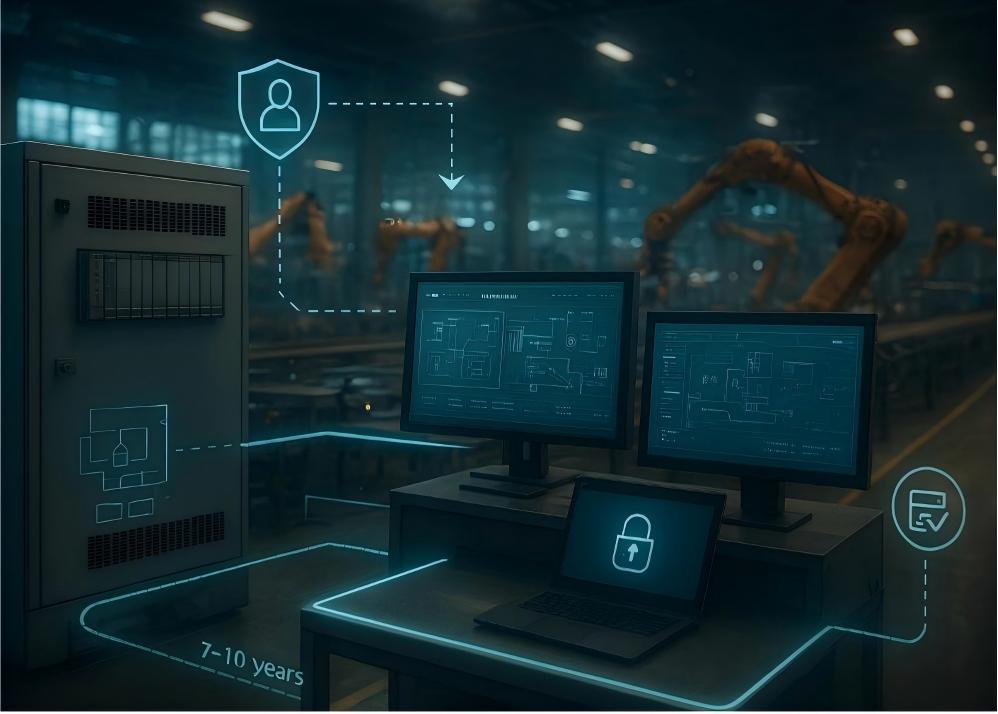
AI Is Changing the Economics of Industrial Cyberattacks
Traditional industrial cyberattacks often required specialized knowledge of a particular controller, protocol, operating environment, or vulnerability.
Artificial intelligence can reduce some of the technical barriers.
AI-assisted tools can help attackers analyze documentation, understand unfamiliar code, search for patterns, generate scripts, and adapt technical approaches. This does not mean that AI can automatically compromise every PLC. Industrial environments remain technically complicated, and successful attacks may still require considerable expertise.
However, the cost and time required to experiment with potential attack techniques can be reduced.
This creates an uncomfortable situation for industrial operators.
A vulnerability that might once have been considered difficult to exploit could become more attractive if AI can help an attacker understand the target faster. In other words, AI can potentially increase the number of people capable of attempting sophisticated attacks against industrial systems.
The problem becomes more serious when vulnerable controllers are directly exposed to the internet.
A PLC was designed to control an industrial process. It was not designed to function like a public-facing web server. When industrial controllers are connected to networks without appropriate segmentation, authentication, access controls, and monitoring, an organization may unintentionally expose critical operational technology.
Why PLC Security Is Different From IT Security
Industrial cybersecurity requires a different mindset from conventional information technology security.
In an office environment, installing a security update may be relatively straightforward. If a workstation needs to restart, the impact may be limited.
In a manufacturing plant, the same approach can be much more complicated.
A PLC may control a continuous production process. Stopping the controller may stop pumps, motors, conveyors, burners, compressors, packaging equipment, or other machinery. In process industries, an uncontrolled interruption can create safety and environmental risks.
For this reason, industrial organizations often prioritize availability and operational continuity.
That does not mean cybersecurity updates should be avoided. Instead, they need to be integrated into a structured OT security program.
Engineers need to understand the controller version, firmware status, connected devices, communication architecture, backup strategy, safety implications, and production schedule before making changes.
This is one reason why PLC cybersecurity increasingly requires cooperation between automation engineers, maintenance teams, IT departments, and cybersecurity professionals.
Network Segmentation Becomes More Important
One of the most important lessons from the latest threat activity is the importance of network architecture.
A modern industrial facility should not normally treat every device as if it belongs to the same network.
PLC networks, engineering workstations, HMIs, SCADA servers, historians, business systems, and external services can require different levels of access.
Network segmentation can limit the ability of an attacker to move from one compromised system to another.
For example, an engineering workstation may need to communicate with PLCs, but that does not mean every corporate computer should have direct access to the PLC network.
Similarly, remote maintenance access can be useful, but it should be controlled and monitored rather than permanently exposing industrial controllers to the public internet.
This principle is particularly important for older automation systems.
Many factories operate equipment that has been running for 10, 15, or even 20 years. Replacing a complete control system is expensive and can require significant engineering and downtime.
As a result, modernization projects often need to protect legacy PLCs while gradually improving network architecture.
Legacy Automation Systems Are a Growing Concern
Brownfield automation is one of the defining characteristics of the industrial market.
A new factory can be designed with cybersecurity from the beginning. An existing facility may contain multiple generations of PLCs, HMIs, industrial switches, drives, remote I/O modules, and communication interfaces.
Some devices may no longer receive regular software updates.
Others may rely on older industrial protocols or engineering tools.
This creates a long-term challenge for plant operators.
Replacing every controller is rarely realistic. Instead, organizations need practical modernization strategies.
These can include network segmentation, secure remote access, asset inventory, vulnerability assessment, firmware management, offline backups, access control, continuous monitoring, and carefully planned controller upgrades.
The objective is not simply to install the newest PLC.
The objective is to create an automation architecture that can remain operational while becoming more resilient against cyber threats.
What This Means for PLC and DCS Buyers
The latest cybersecurity developments may also influence how companies purchase automation hardware.
Historically, buyers often focused on controller performance, memory, I/O capacity, communication protocols, lifecycle availability, and price.
Cybersecurity is becoming another major selection criterion.
A modern PLC system may need secure communications, user authentication, role-based access, secure engineering workflows, firmware management, logging, and compatibility with broader OT security architectures.
DCS systems face similar challenges.
In process industries such as oil and gas, chemicals, power generation, pharmaceuticals, and water treatment, control systems often remain operational for many years. The longer lifecycle makes cybersecurity planning particularly important.
This does not mean PLCs are replacing DCS systems or vice versa. Instead, both technologies are becoming part of increasingly connected industrial environments.
Industrial Automation Is Moving Toward Security by Design
The most important change may be cultural.
Cybersecurity can no longer be treated as something that is added after an automation system has been installed.
It needs to become part of system design.
When engineers design a PLC control architecture, they should consider how the controller will communicate with engineering stations, HMIs, SCADA platforms, historians, MES systems, and external networks.
When a DCS project is planned, cybersecurity requirements should be considered alongside process control requirements.
When an old PLC system is upgraded, network architecture should be reviewed rather than simply replacing the controller and keeping every existing connection unchanged.
This approach is especially important as industrial AI adoption accelerates.
AI can make factories more intelligent, but intelligent systems also depend on large amounts of data and connectivity. More connectivity means more opportunities for both legitimate users and malicious actors.
The Next Stage of PLC Cybersecurity
The recent Siemens S7 security warning represents more than a single product-specific issue.
It reflects a broader transformation in industrial cybersecurity.
PLCs are becoming increasingly connected to digital manufacturing systems, cloud services, remote maintenance platforms, and industrial AI applications. At the same time, attackers are gaining access to increasingly sophisticated software tools.
The industrial sector therefore faces a dual challenge: improve connectivity without sacrificing security.
For manufacturers, this means reviewing exposed PLCs, strengthening network segmentation, maintaining current software and firmware where practical, limiting unnecessary remote access, monitoring industrial traffic, and ensuring that backups and recovery procedures are tested.
For automation engineers, cybersecurity is becoming another part of everyday engineering work.
For companies purchasing PLC, DCS, SCADA, and industrial networking equipment, cybersecurity capabilities will increasingly influence long-term system value.
The future of industrial automation will not simply be about faster controllers, smarter sensors, or more powerful software.
It will also be about building control systems that can remain reliable in a connected and increasingly intelligent industrial environment.
As artificial intelligence continues to develop, the relationship between AI, PLCs, DCS platforms, and industrial cybersecurity will become one of the most important issues shaping the next generation of automation systems.