Siemens Showcases Industrial AI and Software-Defined Automation at AUTOMATE 2026
Time:2026-09-03 Browse: 22
Industrial automation is moving beyond traditional PLC programming and machine control as artificial intelligence, digital twins, software-defined automation, and industrial data increasingly become part of modern manufacturing architectures. At AUTOMATE 2026 in Chicago, Siemens presented technologies aimed at connecting automation, artificial intelligence, digital twins, robotics, and industrial software into a more integrated manufacturing environment.
The event took place from June 22 to June 25, 2026, and provided an important view of where major automation companies believe the industrial sector is heading. Siemens highlighted industrial AI, digital twins, and software-defined automation as major technologies for the next generation of manufacturing.
For PLC, DCS, SCADA, robotics, and industrial control system professionals, the significance is not simply that AI is being added to automation software. The larger change is the gradual movement from isolated automation functions toward connected systems in which engineering data, production data, simulation models, and operational intelligence can work together.
From Traditional Automation to Software-Defined Automation
For decades, industrial automation has been built around dedicated hardware.
A PLC executes a control program.
A DCS manages process control.
An HMI displays operational information.
A SCADA system provides supervisory monitoring.
Industrial robots perform programmed movements.
Sensors and instruments collect process information.
These components remain essential, but the relationship between them is changing.
Modern automation architectures increasingly depend on software layers that connect physical equipment with engineering systems and business applications.
Software-defined automation is part of this transition.
Instead of viewing automation as a fixed combination of controllers and machines, software-defined approaches seek to make engineering, simulation, configuration, control, and optimization more flexible.
This is particularly important for manufacturers facing shorter product lifecycles.
A production line designed to manufacture one product for ten years is becoming less common in many industries. Companies increasingly need to modify production lines, introduce new products, increase flexibility, and respond to changing market requirements.
Automation systems therefore need to become easier to configure and adapt.
Industrial AI Moves Closer to the Factory Floor
Artificial intelligence has attracted enormous attention across almost every industry, but industrial AI has different requirements from consumer AI.
A chatbot can generate an incorrect answer without causing physical damage.
An industrial AI system operating around production equipment must be much more careful.
A wrong recommendation about a machine, process parameter, maintenance action, or production sequence can affect quality, equipment availability, energy consumption, or safety.
This is why industrial AI increasingly needs to operate within an engineering context.
AI needs access to meaningful industrial data.
It needs to understand the relationships between machines and processes.
It needs to operate within engineering constraints.
And, in many applications, its recommendations need to be validated before they influence physical equipment.
Siemens has been emphasizing this type of industrial AI approach through its broader automation and digitalization strategy.
The company's AUTOMATE 2026 presence focused on technologies including AI and digital twins, showing how AI is increasingly being positioned as part of the industrial engineering and production workflow rather than simply as a separate software tool.
Why Digital Twins Matter
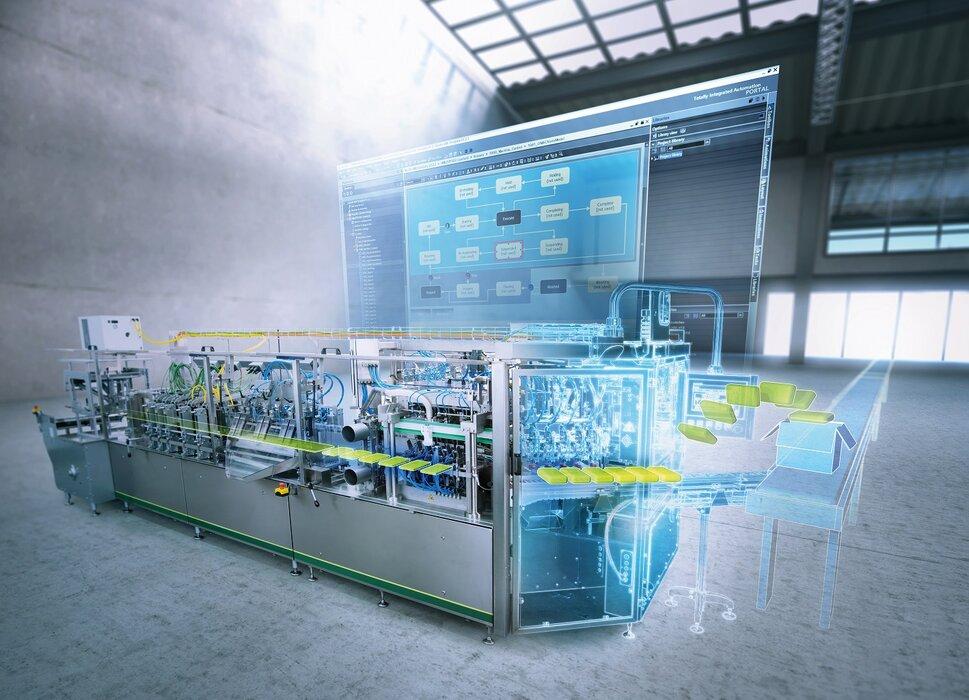
Digital twins are another important part of the industrial automation transition.
A digital twin is more than a three-dimensional model.
In industrial applications, a digital twin can represent equipment, machines, processes, or entire production environments. When connected to operational information, it can help engineers understand how physical systems behave.
This creates opportunities before a machine is built and after it enters production.
During engineering, manufacturers can simulate equipment and processes.
During commissioning, engineers can identify potential problems earlier.
During production, operational data can be compared with expected behavior.
During maintenance, historical information can help teams understand equipment conditions.
The value becomes greater when digital twins are connected to industrial AI.
AI can analyze large volumes of data, identify patterns, and support decision-making. The digital twin provides the engineering and physical context needed to make those decisions meaningful.
This combination could become particularly valuable for complex manufacturing operations.
PLCs Are Not Disappearing
The rise of industrial AI does not mean PLCs are becoming obsolete.
In fact, PLCs remain fundamental to factory automation.
A PLC is designed for deterministic control. It reads inputs, executes logic, and controls outputs with predictable timing. This makes PLC technology highly suitable for machine control and industrial applications where reliability and real-time behavior are essential.
Industrial AI performs a different role.
AI can analyze data, recognize patterns, assist engineers, optimize processes, and provide recommendations.
The future architecture may therefore involve both technologies working together.
A PLC can continue controlling a machine while higher-level software analyzes production data.
An AI system may identify an abnormal vibration pattern, while the control system continues operating within predefined safety limits.
An engineering AI assistant may help generate or modify automation logic, while engineers remain responsible for validation and commissioning.
This separation between deterministic control and intelligent decision support is important.
It allows manufacturers to benefit from AI without requiring AI to directly control every physical operation.
The Growing Importance of Industrial Data
Industrial AI depends on data.
That sounds simple, but industrial data is often difficult to use effectively.
Factories may contain PLCs from different generations, multiple communication protocols, legacy SCADA systems, separate databases, historians, MES platforms, and equipment from different vendors.
Data may exist, but it may not be properly connected.
A temperature value might be available inside a PLC.
Production information might be stored in a manufacturing database.
Maintenance records may exist in another system.
Engineering documentation may be stored separately.
The challenge is therefore not simply collecting more data.
The challenge is creating useful context.
This is one reason digital twins and integrated industrial software platforms are becoming increasingly important.
When engineering information, machine information, and operational information can be connected, AI has a better foundation for analysis.
Automation Engineering Is Becoming More Software-Oriented
The changing automation landscape will also affect engineering jobs.
Traditional automation engineers spend significant time programming PLCs, configuring HMIs, commissioning I/O, troubleshooting communication problems, and tuning machines.
These skills remain essential.
However, engineers increasingly need to understand industrial networking, data structures, cybersecurity, cloud connectivity, analytics, simulation, and AI.
This does not mean every PLC engineer needs to become a data scientist.
Instead, the automation engineer of the future may need to understand how control systems fit into a much larger digital architecture.
For example, a PLC engineer may be asked how controller data can be securely transferred to an analytics platform.
A DCS engineer may need to understand how process data can support predictive maintenance.
A controls engineer may work with a digital twin before commissioning a production system.
These responsibilities require a combination of traditional control knowledge and software awareness.
Software-Defined Automation and Brownfield Plants
One of the biggest challenges facing industrial AI is the existing installed base.
Manufacturing companies cannot simply replace every PLC and DCS system.
Many plants operate successfully with older control equipment.
The problem is that legacy systems may not have been designed for modern data integration.
This makes brownfield modernization particularly important.
Instead of completely replacing an automation system, companies can gradually add connectivity and software layers.
For example, an existing PLC can continue controlling the machine while additional networking and data acquisition systems collect operational information.
The data can then be analyzed without immediately changing the underlying control logic.
This approach can reduce project risk.
It also allows companies to introduce digitalization incrementally.
The same principle applies to DCS systems in process industries.
A plant can modernize historian systems, improve operator interfaces, add advanced analytics, and strengthen cybersecurity while maintaining the core control architecture.
Industrial AI Needs Trust
The most important challenge for industrial AI may not be intelligence.
It may be trust.
Manufacturers need to know why an AI system made a recommendation.
Engineers need to understand whether a suggested parameter change is physically reasonable.
Maintenance teams need to know whether an anomaly represents a real equipment problem or simply unusual data.
Production managers need confidence that an AI recommendation will not create unacceptable quality or safety risks.
This means industrial AI will likely develop differently from general-purpose AI.
Engineering constraints, simulation, validation, traceability, and human oversight will remain important.
AI can help engineers make decisions faster, but industrial environments still require predictable behavior.
What AUTOMATE 2026 Means for the PLC and DCS Market
The technologies demonstrated at AUTOMATE 2026 indicate that the industrial automation market is expanding beyond conventional controller hardware.
PLCs, DCS systems, I/O modules, industrial networks, sensors, drives, and HMIs remain the physical foundation of automation.
But software is becoming increasingly important.
Manufacturers are looking for systems that can connect control, engineering, production, simulation, data, and AI.
This creates opportunities for automation suppliers and system integrators.
Companies that can support legacy equipment while introducing modern digital capabilities may become increasingly valuable.
For industrial equipment buyers, the lesson is also important.
The best automation solution is not necessarily the newest controller.
A successful modernization project needs to consider lifecycle support, communication compatibility, cybersecurity, engineering tools, spare parts availability, system integration, and future expansion.
The Next Generation of Industrial Automation
The direction presented at AUTOMATE 2026 suggests that industrial automation is entering a new stage.
The PLC remains important.
The DCS remains important.
Industrial robots remain important.
But these systems are increasingly connected through software.
AI can analyze industrial data.
Digital twins can model physical processes.
Software-defined automation can improve flexibility.
Cloud and edge technologies can extend access to operational information.
Cybersecurity becomes essential as connectivity increases.
Together, these technologies are creating a more connected industrial environment.
For manufacturers, the objective is not simply to add AI because it is a popular technology.
The real objective is to use AI, automation, digital twins, and industrial data to make production more flexible, efficient, reliable, and easier to manage.
That is likely to be one of the defining themes of industrial automation over the next several years.