Allen-Bradley MPL-B310P-RJ74AA Servo Motor Troubleshooting Guide
Time:2026-09-03 Browse: 20
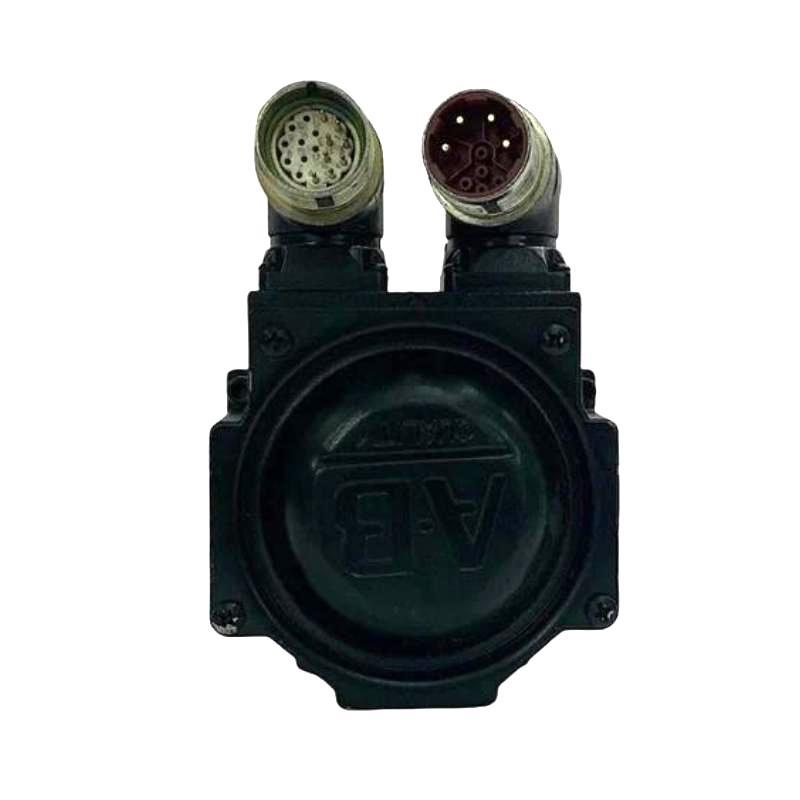
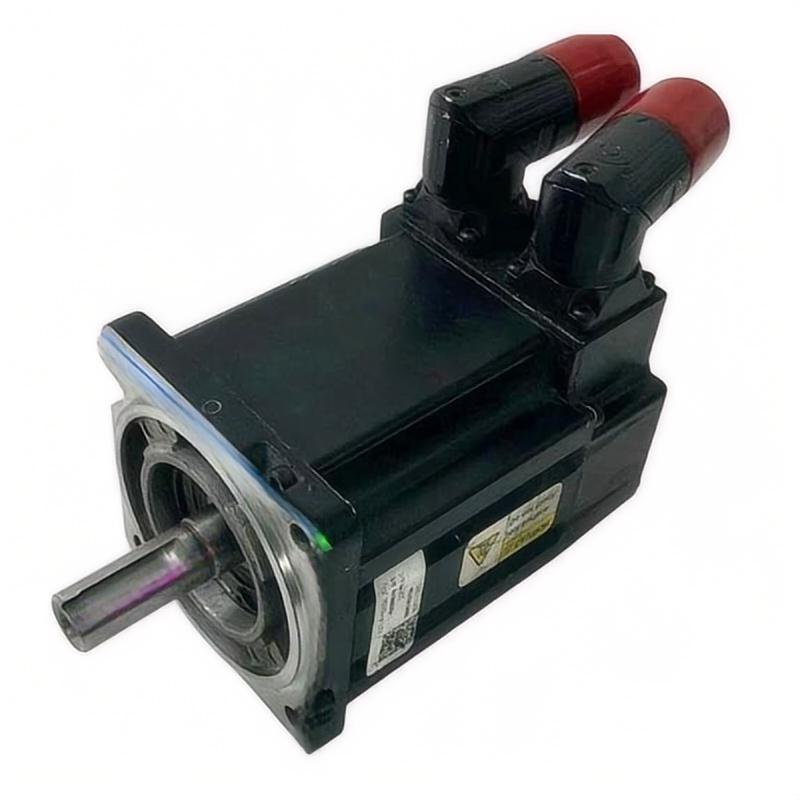
Allen-Bradley MPL-B310P-RJ74AA servo motor faults should be diagnosed by separating feedback, power, brake, drive configuration, and mechanical problems instead of immediately replacing the motor. This model uses resolver feedback, a 24 V DC brake, a keyed shaft, and a right-angle SpeedTEC DIN connector, with a 5000 rpm maximum speed and 1.58 N·m continuous torque specification. These characteristics provide useful clues when diagnosing an axis that will not enable, vibrates, trips, or loses position.
MPL-B310P-RJ74AA Servo Motor Fault Symptoms
The first thing to record is what the machine actually does.
A failed axis may show one of several different patterns:
The drive refuses to enable.
The motor enables but does not rotate.
The motor rotates briefly and then faults.
The motor runs but produces excessive vibration.
The motor reaches speed but loses position.
The brake does not release correctly.
The motor becomes unusually hot.
The same fault returns immediately after reset.
These symptoms should not be treated as equivalent.
For example, a motor that cannot establish resolver feedback before motion is fundamentally different from a motor that runs normally for 20 minutes and then develops an overtemperature condition.
That difference determines where the Fault Diagnosis should begin.
Allen-Bradley MPL-B310P-RJ74AA Resolver Feedback Fault Diagnosis
Resolver-related faults are a logical starting point when the drive reports feedback loss or invalid position information.
The MPL-B310P-RJ74AA specifically uses resolver feedback.
Begin with the connector rather than opening the motor.
Inspect the SpeedTEC DIN connector for incomplete insertion, mechanical damage, contamination, or cable strain. Check the feedback cable along its entire machine route, especially near moving cable carriers and cabinet entry points.
A useful field test is to compare the fault timing.
If the feedback fault appears immediately after the drive is powered, inspect System Configuration and feedback wiring.
If feedback is normal while stationary but becomes unstable as the cable moves, suspect cable damage or intermittent termination.
If feedback remains stable but the axis position drifts under load, the investigation should expand to mechanical coupling, tuning, load behavior, and command scaling.
This is a good example of why Fault Diagnosis should follow the observed failure pattern instead of starting with motor replacement.
MPL-B310P-RJ74AA Servo Motor Does Not Rotate
When the MPL-B310P-RJ74AA is enabled but the shaft does not rotate, check the motion chain from command to mechanical output.
First determine whether the controller is actually generating a velocity or position command.
Then check the drive state.
Then check whether the brake is being released.
Then check whether the drive is applying current to the motor.
The 24 V DC brake is important because a brake that remains engaged can make an otherwise healthy motor appear mechanically locked.
Do not assume that a motor with zero rotation has no electrical output.
For a controlled test, compare the command signal, drive enable state, brake state, and actual motor feedback. If the command changes but actual speed remains at zero, the fault can often be narrowed to drive enable logic, brake control, feedback, motor power, or mechanical obstruction.
MPL-B310P-RJ74AA Brake Release Fault
A brake problem produces a particularly misleading symptom: the drive may appear ready while the motor refuses to move normally.
The MPL-B310P-RJ74AA includes a 24 V DC brake.
If the brake does not release, check whether the correct brake voltage is present during the release command. Also verify that the brake timing in the motion sequence matches the mechanical requirements of the axis.
For a vertical load, do not simply force the brake open for testing. The load may move unexpectedly.
A useful diagnostic observation is motor current.
If the control system commands motion and the drive immediately develops high current while the shaft remains stationary, a mechanically locked brake or mechanical obstruction should be considered.
If the drive shows no meaningful motor current at all, the problem may be further upstream in enable logic, drive state, or configuration.
The same symptom—“motor does not move”—can therefore come from very different causes.
Allen-Bradley MPL-B310P-RJ74AA Overcurrent Fault
An overcurrent fault during acceleration does not automatically mean that the MPL-B310P-RJ74AA has failed.
Start with the mechanical system.
Check whether the load can move freely with the appropriate machine safeguards in place. Inspect the coupling and driven mechanism for binding.
Then compare the fault behavior at different acceleration rates.
Suppose an axis operates normally with a gentle acceleration profile but faults when acceleration is increased sharply. That observation suggests that load inertia, acceleration demand, mechanical resistance, or servo tuning deserves attention.
If the fault occurs immediately even with minimal motion demand, inspect motor power connections, drive configuration, phase-related issues, mechanical obstruction, and motor condition.
The important engineering question is not simply “Why did the drive show overcurrent?”
It is:
At what point in the motion cycle does the current become abnormal?
That timing often provides more information than the fault name itself.
MPL-B310P-RJ74AA Excessive Vibration Troubleshooting
Vibration is another area where replacing the motor too early can waste time.
The MPL-B310P-RJ74AA is a low-inertia servo motor, and the motor is intended for dynamic motion applications.
If vibration appears only around a particular speed, record the speed at which it begins.
For example, assume the motor is smooth at 500 rpm, develops noticeable vibration at 1500 rpm, and becomes smoother again above 2200 rpm. That pattern is more suggestive of a speed-dependent resonance or mechanical issue than a simple “motor is bad” conclusion.
Check:
Coupling alignment.
Mounting rigidity.
Load balance.
Bearing condition.
Cable interference with moving components.
Servo gain and filtering.
Mechanical resonance.
If the vibration follows the machine axis even after a motor replacement, the machine itself becomes a stronger suspect.
In field work, vibration should be measured rather than described only as “bad.” Where appropriate, record acceleration, velocity, displacement, or frequency data. A vibration reading such as 3 mm/s versus 12 mm/s gives maintenance personnel a useful baseline for future comparison.
MPL-B310P-RJ74AA Position Error Troubleshooting
Position error can occur even when the motor sounds and feels normal.
The first distinction is between command position and actual position.
If the command is correct but the actual position does not follow, check feedback integrity and mechanical transmission.
Because this model uses resolver feedback, the resolver circuit and associated feedback wiring should be included in the diagnosis.
Next inspect the mechanical coupling.
A loose coupling can create a position error that resembles an encoder or resolver problem. Backlash in the machine can produce another misleading symptom, especially when the direction changes.
Observe whether the position error occurs only during acceleration, only under load, or mainly after a direction reversal.
A repeatable error during direction reversal points toward a different investigation than an error that grows continuously during high-speed operation.
Allen-Bradley MPL-B310P-RJ74AA Motor Overheating Fault
A servo motor that becomes hot should be diagnosed from operating conditions rather than temperature alone.
Check the actual duty cycle.
A motor repeatedly accelerating a high-inertia load may generate considerably more heating than the same motor running at steady speed.
Review:
Command speed.
Acceleration and deceleration.
Load torque.
Cycle frequency.
Ambient temperature.
Cooling conditions.
Motor current.
Mechanical resistance.
The published specifications identify a 40 °C maximum operating temperature in a representative MPL-B310P configuration, so environmental conditions should be considered alongside the specific installation requirements for the motor and application.
If overheating appears after several hours rather than immediately, intermittent mechanical loading or excessive duty cycle becomes more relevant than a simple wiring fault.
MPL-B310P-RJ74AA System Configuration Errors
Incorrect System Configuration can make a healthy motor appear defective.
This is especially important when replacing one MPL motor with another. The MPL-B310P family includes versions using different feedback technologies, including resolver and high-resolution encoder variants.
Therefore, do not select a configuration solely because the motor physically fits the machine.
Verify the complete catalog number.
Verify feedback type.
Verify brake configuration.
Verify voltage class.
Verify motor speed information.
Verify applicable drive compatibility.
Verify motion scaling.
Verify the direction and feedback relationship.
A configuration copied from another servo axis can create confusing behavior even when every physical connection appears correct.
Real Field Case: MPL-B310P-RJ74AA Axis Trips During Start
In one commissioning case, a servo axis repeatedly faulted immediately after the motion command was issued. The initial assumption was that the replacement motor was defective.
The first observation, however, was that resolver feedback was valid before motion.
That changed the diagnostic direction.
The next check focused on the brake and mechanical load. The brake was not releasing correctly, so the drive was attempting to accelerate a mechanically restrained axis.
After the brake circuit was corrected, the motor began rotating normally and the original drive fault disappeared.
The important lesson was that the motor itself had not been the root cause.
The diagnostic sequence—feedback first, then brake state, then mechanical load—prevented an unnecessary motor replacement.
Allen-Bradley MPL-B310P-RJ74AA Repair Decision
Repair should be considered only after external causes have been eliminated.
A practical Troubleshooting sequence is:
Confirm the exact motor model.
Record the original drive fault.
Check feedback status.
Inspect connectors and cables.
Verify motor power connections.
Check brake operation.
Inspect mechanical coupling and load.
Review System Configuration.
Compare actual operating data with expected values.
Only then consider an internal motor fault.
If the resolver circuit remains invalid with known-good wiring and correct drive configuration, further motor-level testing may be justified. If the motor has physical damage, bearing noise, insulation problems, or abnormal electrical characteristics, professional servo motor repair or replacement may be appropriate.
Long-Tail Keywords for MPL-B310P-RJ74AA Troubleshooting
Useful long-tail search phrases include Allen-Bradley MPL-B310P-RJ74AA Troubleshooting, MPL-B310P-RJ74AA Fault Diagnosis, MPL-B310P-RJ74AA servo motor not running, MPL-B310P-RJ74AA resolver fault, MPL-B310P-RJ74AA brake fault, MPL-B310P-RJ74AA overcurrent fault, Allen-Bradley MPL servo motor repair, MPL-B310P-RJ74AA vibration troubleshooting, MPL-B310P-RJ74AA position error, and MPL-B310P-RJ74AA System Configuration.
Final Fault Diagnosis Approach for MPL-B310P-RJ74AA
The most effective way to troubleshoot an Allen-Bradley MPL-B310P-RJ74AA is to treat the servo axis as a complete system.
Do not replace the motor simply because the drive reports a motion fault.
First establish whether the problem is present before motion.
Then determine whether feedback is valid.
After that, examine brake operation, power delivery, mechanical load, and System Configuration.
Finally, compare actual operating data with the expected behavior.
This approach makes Troubleshooting faster and produces a much clearer repair decision. The MPL-B310P-RJ74AA is a specific MP-Series configuration with resolver feedback, 24 V DC brake, keyed shaft, 100 mm frame, and 5000 rpm maximum speed, so these details should remain central to any professional Fault Diagnosis procedure.