Siemens Expands Refurbished Automation Program to Improve Access to Drives, Controllers and HMI Prod
Time:2026-09-10 Browse: 23
September 2026 — Industrial Automation News
Siemens has entered into a new partnership with German B2B platform Sparepartsnow to expand access to manufacturer-refurbished Siemens automation products. The partnership provides industrial customers with another channel for sourcing refurbished automation equipment, including drives, controllers and HMI panels.
The announcement is particularly relevant to manufacturers and industrial operators that continue to operate legacy automation systems and need reliable replacement equipment.
Industrial plants often have automation hardware that remains operational long after a product family has stopped being actively promoted. Replacing an entire control system simply because one component becomes difficult to source can be expensive and disruptive.
Refurbished automation equipment can therefore play an important role in extending the useful life of existing industrial systems.
Why Refurbished Automation Equipment Matters
Industrial automation systems are designed for long-term operation.
A factory may use the same PLC family, HMI platform, drive system or industrial network for many years. In some industries, equipment can remain in service for more than a decade because the cost and risk associated with a complete system replacement are significant.
However, long equipment lifecycles can create supply challenges.
When a product reaches the later stages of its lifecycle, finding replacement units may become more difficult.
This can create a serious problem when an unexpected failure occurs.
A single failed PLC module, communication processor, HMI panel or variable frequency drive can potentially stop part of a production line.
For industrial companies, the question is not always whether a new automation system is technologically superior.
Sometimes the immediate priority is simply getting the existing production system running again.
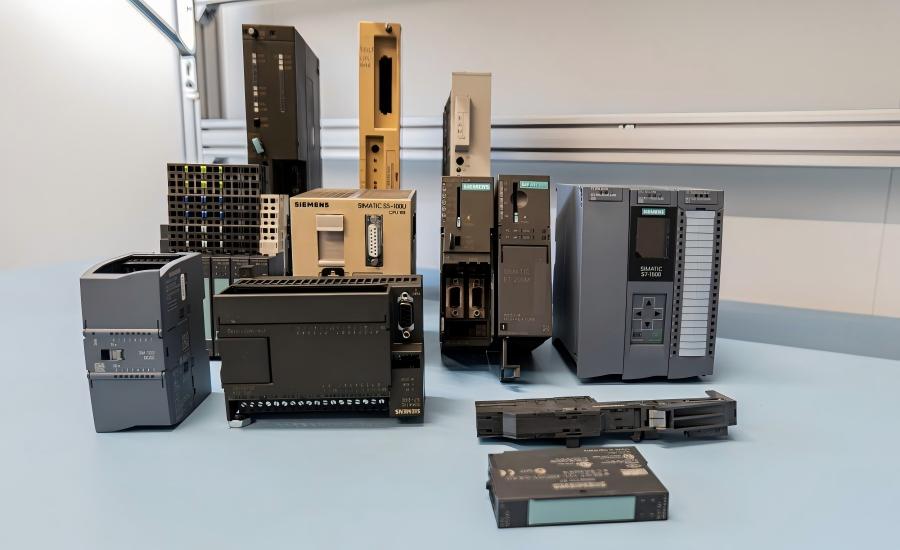
Siemens and Sparepartsnow Partnership
The new partnership between Siemens and Sparepartsnow is designed to make manufacturer-refurbished Siemens automation products more accessible through a digital B2B marketplace.
The program covers categories including drives, controllers and HMI panels.
A major point of the approach is that refurbishment is carried out by the original equipment manufacturer.
This distinction is important in industrial applications.
Industrial buyers are often concerned about the condition, authenticity and technical reliability of used automation products.
A third-party used component may have an uncertain history, unknown operating conditions or incomplete testing documentation.
Manufacturer-refurbished equipment provides a different proposition because the original manufacturer is involved in the refurbishment process.
Extending the Lifecycle of Industrial Automation
The concept of lifecycle extension is becoming increasingly important in industrial automation.
Many companies are under pressure to reduce capital expenditure while maintaining production reliability.
A complete automation replacement can involve new engineering, software development, panel modifications, network changes, testing, commissioning and operator training.
It may also require production downtime.
For a large manufacturing facility, these activities can represent a significant investment.
Refurbished equipment offers another option.
Instead of replacing the complete system, a plant may be able to replace a failed component with a refurbished unit and continue operating the existing architecture.
This does not mean refurbished products are the correct solution for every application.
Safety-critical systems, obsolete architectures and heavily degraded equipment may require complete modernization.
However, for many maintenance situations, lifecycle extension can be a practical strategy.
The Importance of PLC Availability
PLC availability is especially important for manufacturing companies.
A PLC controls the sequence and logic of industrial machinery. If the controller fails, a production line may stop even if the mechanical equipment remains in good condition.
For this reason, many maintenance departments maintain spare PLC CPUs, communication modules, I/O modules and power supplies.
However, stocking every possible spare can be expensive.
Refurbished products can provide an additional sourcing option for maintenance teams.
This can be useful when a particular PLC model is no longer widely available through normal distribution channels.
The same principle applies to industrial drives and HMI panels.
Drives Are Critical to Industrial Production
Variable frequency drives and servo-related equipment are widely used across modern manufacturing.
They control motors used for conveyors, pumps, fans, compressors, machine tools and other equipment.
A drive failure can stop an individual machine or an entire production process.
For this reason, maintenance teams often need rapid access to replacement drives.
A refurbished drive can potentially provide a faster or more economical replacement route when new equipment is unavailable or when the existing system must remain compatible with the installed configuration.
Compatibility remains an important consideration.
Industrial customers need to verify voltage ratings, motor characteristics, communication protocols, firmware requirements, physical dimensions and configuration parameters before installing replacement equipment.
Refurbished does not mean interchangeable.
Engineering verification is still necessary.
HMI Panels and Operator Interfaces
Human-machine interfaces are another important category of industrial automation equipment.
An HMI allows operators to monitor production, view alarms, adjust parameters and interact with machine functions.
A failed HMI may not necessarily stop every control function in the background, but it can make normal operation and troubleshooting significantly more difficult.
Replacing an HMI can also be complicated if the original application software needs to be transferred to a different platform.
A refurbished unit that is compatible with the existing application can therefore be useful in certain maintenance scenarios.
This is especially relevant for older machines where upgrading the entire operator interface would require additional engineering.
Supporting a Circular Industrial Economy
The partnership also reflects a broader movement toward circularity in industrial technology.
Traditional equipment purchasing often follows a linear model: manufacture, purchase, use and dispose.
Industrial equipment, however, can have significant residual value after its first period of use.
A controller may still be functional even when its original owner has upgraded the plant.
A drive may be removed during modernization while remaining technically serviceable.
Refurbishment provides a way to return such equipment to productive use.
This can reduce unnecessary waste and extend the useful life of industrial hardware.
For manufacturers, the circular economy is increasingly becoming part of broader sustainability strategies.
Lifecycle extension can therefore provide both operational and environmental benefits.
Refurbished Equipment and Industrial Maintenance
Maintenance departments increasingly need to balance three priorities:
Reliability, cost and availability.
Buying only new equipment can maximize confidence but may increase cost or lead time.
Buying unknown used equipment can reduce cost but introduce quality and reliability concerns.
Manufacturer-refurbished equipment occupies a different position between these options.
The key advantage is that refurbishment can combine an existing hardware platform with professional testing and quality control.
For industrial users, this can provide a practical option when maintaining older systems.
Legacy Automation Systems Will Remain Important
Despite the rapid development of modern automation technologies, legacy PLC and DCS systems will not disappear quickly.
Thousands of factories around the world continue to operate automation systems installed many years ago.
These systems may still perform their original functions effectively.
Replacing them purely because they are old is not always economically justified.
Instead, many plants adopt a gradual modernization strategy.
Critical components are replaced first, network infrastructure is upgraded where necessary, cybersecurity is improved, and new digital functions are added alongside existing equipment.
Refurbished automation products can support this transitional stage.
Modernization Does Not Always Mean Complete Replacement
One of the most important lessons for industrial automation users is that modernization can happen in stages.
A factory does not necessarily need to choose between doing nothing and completely replacing its automation system.
There can be intermediate options.
A plant may maintain an existing PLC while upgrading its HMI.
It may continue using a legacy drive platform while improving network monitoring.
It may replace failed controllers with refurbished units while developing a long-term modernization plan.
This approach can help companies reduce immediate operational risks while preparing for future investment.
What This Means for Automation Buyers
The Siemens and Sparepartsnow partnership highlights the continuing importance of industrial automation lifecycle management.
For automation buyers, the market is increasingly becoming broader than simply choosing between new products from different manufacturers.
Customers are also considering refurbishment, lifecycle services, repair, migration and long-term support.
For distributors and industrial automation suppliers, this creates opportunities to provide more comprehensive solutions.
A customer looking for a PLC module may also need technical verification, replacement recommendations, programming support, compatibility information or a migration strategy.
The ability to understand the complete application can therefore become a major competitive advantage.
The Future of Industrial Automation Lifecycle Management
Industrial automation is entering a period where lifecycle management will become increasingly important.
Factories are under pressure to improve productivity while controlling investment costs. At the same time, automation systems are becoming more complex and digital transformation is accelerating.
This makes the ability to maintain existing equipment particularly valuable.
Refurbished products are not a replacement for modern automation technology.
Instead, they can serve as one part of a broader lifecycle strategy that includes maintenance, repair, spare parts management, modernization and eventual system migration.
For industrial users operating Siemens PLCs, drives, HMIs and other automation products, improved access to manufacturer-refurbished equipment could provide another way to manage legacy assets.
The development also reinforces an important principle in industrial automation: the value of equipment does not necessarily end when it leaves its first installation.
With appropriate refurbishment, testing and lifecycle management, industrial hardware can continue supporting production for many years.
As manufacturers look for more cost-effective and sustainable ways to operate their facilities, refurbished automation equipment is likely to remain an important part of the industrial spare-parts market.