Emerson Expands DeltaV Real-Time Scheduling to Connect Quality Control Labs with Manufacturing Opera
Time:2026-09-30 Browse: 0
Emerson has expanded its DeltaV Real-Time Scheduling software to include automated scheduling for quality control laboratories, bringing laboratory testing activities into closer synchronization with real-time manufacturing conditions. Announced on September 29, 2026, the update is designed for life sciences manufacturers that need to coordinate production, sample testing, laboratory resources and batch-release decisions within a changing manufacturing environment.
The announcement is significant for the industrial automation sector because it extends automation beyond the traditional plant-floor control layer. Instead of treating laboratory testing as a separate administrative process, the new capability connects QC scheduling with manufacturing priorities, creating a more continuous information flow between production and quality operations.
Real-Time Scheduling Becomes Part of Industrial Automation
Quality control laboratories are an important part of pharmaceutical and biotechnology manufacturing. Production processes can generate samples from multiple locations, while each sample may require different analytical tests, equipment and processing times.
Traditionally, laboratory teams may rely on spreadsheets, manual scheduling systems or laboratory information management systems to organize this workload. These methods can become difficult to manage when sample volumes increase or manufacturing priorities change during the day.
Emerson's latest DeltaV Real-Time Scheduling enhancement addresses this problem by introducing automated scheduling logic for QC laboratory operations. The software can consider factors such as equipment availability, technician capacity, sample arrival, testing requirements and production priorities when building a laboratory schedule.
For automation engineers, the important point is that scheduling is being treated as another layer of operational control.
A modern manufacturing environment increasingly contains several interconnected systems:
PLC controllers for machine-level automation
DCS platforms for continuous process control
SCADA systems for supervisory monitoring
MES platforms for production execution
Laboratory systems for quality testing
Historian platforms for operational data
Industrial software for scheduling and optimization
The challenge is no longer simply controlling an individual machine or process unit. The larger challenge is coordinating information and decisions across the entire production environment.
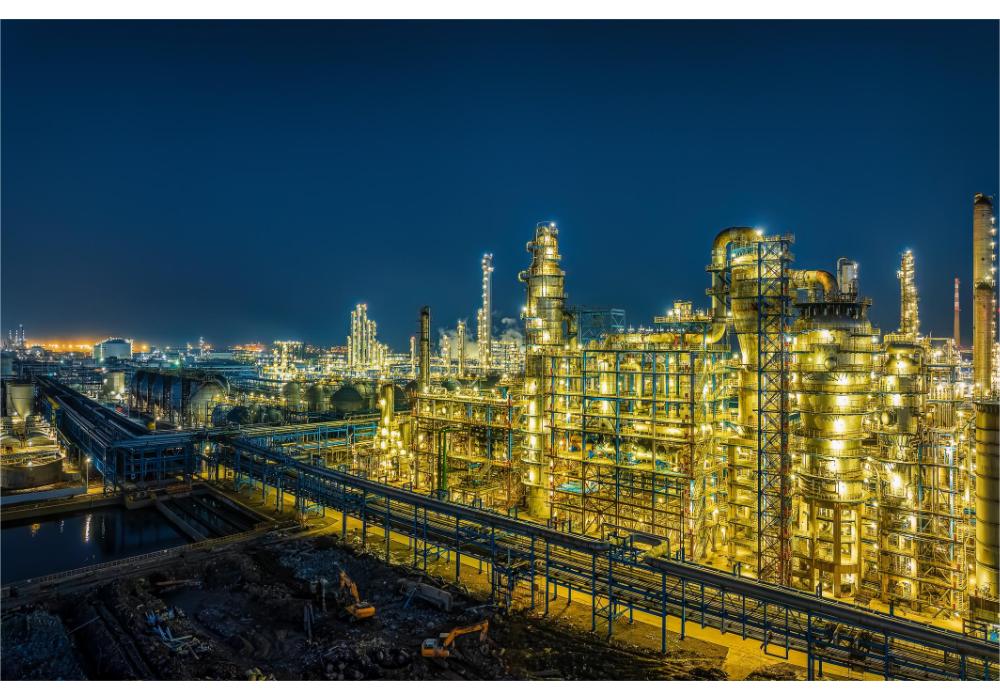
Emerson DeltaV Automation Connects Production and QC Activities
The expanded DeltaV Real-Time Scheduling capability is intended to keep laboratory activities aligned with actual production conditions.
For example, a manufacturing process may change its production sequence because of a batch delay, equipment availability issue or change in manufacturing priority. If laboratory scheduling remains independent from production, technicians may continue following an outdated schedule.
That creates a potential bottleneck.
A production batch may be ready for testing, but the laboratory may not have the appropriate equipment or technician available. Conversely, laboratory resources may be reserved for samples that have become less urgent.
The new scheduling approach is designed to continuously synchronize these activities.
This represents an important development in process automation: the automation system is not only controlling physical equipment but also coordinating operational resources.
In a highly automated pharmaceutical facility, this type of connection can become increasingly important as manufacturers attempt to reduce manual coordination while maintaining strict quality requirements.
Why QC Scheduling Matters for Pharmaceutical Automation
Pharmaceutical manufacturing has a particularly strong dependence on laboratory testing.
A manufacturing batch cannot simply move through the plant without quality verification. Samples may need to be analyzed before production can continue or before a finished batch can be released.
This means that laboratory capacity can directly affect production throughput.
Consider a simplified workflow:
Production → Sampling → Laboratory Testing → Results → Quality Decision → Batch Release
If the laboratory step becomes the slowest part of the process, the rest of the manufacturing system may have to wait.
Automating the scheduling process therefore addresses a problem that sits between process control and production management.
The physical process may already be highly automated with DCS controllers, sensors, valves and intelligent field devices. However, if laboratory planning is still performed manually, the overall operation still contains a significant manual coordination point.
This is one reason software-based industrial automation is becoming increasingly important.
DeltaV Real-Time Scheduling Uses Dynamic Scheduling Logic
The latest enhancement allows scheduling rules to be configured for different laboratory requirements.
This is important because laboratory operations are not always predictable.
A laboratory may need to process:
Multiple samples from different production batches
Different analytical methods
Tests with different durations
Tests requiring specific instruments
Samples with different priorities
Tests that can be grouped together
Final product testing
Production-dependent testing
A fixed timetable cannot efficiently handle all of these conditions.
Dynamic scheduling can instead evaluate the current operating situation and reorganize activities according to predefined rules.
For example, several samples may require the same analytical method. Grouping these samples into one testing sequence can reduce unnecessary equipment changeovers and improve laboratory utilization.
This is similar to optimization problems found elsewhere in industrial automation.
A PLC may optimize machine sequences.
A DCS may optimize process control.
An MES may optimize production workflows.
A scheduling platform can optimize the sequence of laboratory activities.
The underlying principle is similar: use real-time information to make operational decisions instead of relying entirely on static plans.
Integration Between DCS and Laboratory Systems
The announcement also highlights integration with real-time laboratory information systems.
This type of integration is particularly relevant to engineers working with DCS and industrial communication architectures.
A modern automation environment may need to exchange information between:
Field Devices → DCS → Historian → MES → Laboratory Systems → Enterprise Applications
Each layer has a different role.
The DCS remains responsible for controlling the process.
The MES manages production execution.
The laboratory system manages testing information.
The scheduling software coordinates available resources.
The challenge is making these systems exchange accurate information without creating unnecessary manual steps.
This trend is gradually changing how engineers think about automation architecture.
Industrial automation is no longer limited to I/O modules, controllers and operator stations. Software integration, data models and scheduling logic are becoming increasingly important components of the overall automation system.
The Growing Role of Software in Industrial Automation
The DeltaV development also reflects a broader industry trend toward software-defined industrial operations.
Traditional automation projects often focused heavily on hardware:
PLC CPUs
DCS controllers
Remote I/O
Industrial Ethernet
Sensors
Transmitters
Control valves
Motor control systems
These components remain fundamental.
However, manufacturers are increasingly looking for ways to extract more value from the information already generated by these systems.
A pressure transmitter can provide a process measurement.
A vibration sensor can provide machine-condition information.
A PLC can provide machine status.
A DCS can provide process information.
The next challenge is using that information to make operational decisions.
Scheduling software represents one example of this transition.
What This Means for Automation Engineers
For PLC, DCS and SCADA engineers, the development is worth watching because it illustrates how automation projects are expanding beyond conventional control engineering.
Engineers increasingly need to understand the interaction between:
Control → Data → Software → Operations
A process control engineer may traditionally focus on PID loops, I/O configuration, alarm management and sequence control.
A modern automation project may additionally involve data integration, industrial networking, system interoperability, analytics and software-based optimization.
The technical challenge is therefore becoming broader.
A well-designed automation architecture must not only maintain stable process operation. It must also make reliable operational information available to other systems.
Industrial Automation and the Future of Connected Manufacturing
The expansion of DeltaV Real-Time Scheduling demonstrates how automation is moving toward increasingly connected production environments.
The objective is not simply to automate one task.
Instead, the goal is to coordinate many activities using real-time information.
In a pharmaceutical facility, this could mean connecting manufacturing conditions with laboratory testing schedules. In another industry, similar principles could be applied to maintenance planning, production scheduling, material handling or energy management.
This approach does not eliminate the need for engineers or operators. Instead, it changes where human attention is required.
Routine scheduling decisions can be handled automatically, while engineers and operations teams can focus on exceptions, process improvements and higher-value decisions.
For industrial automation professionals, the key takeaway is straightforward: the next generation of automation will increasingly combine PLC and DCS control with real-time software, data integration and operational intelligence. Emerson's latest DeltaV Real-Time Scheduling expansion is a practical example of this direction, connecting laboratory scheduling with manufacturing conditions rather than treating QC as an isolated process.