Schneider ATS480D47Y Soft Starter Installation Guide (Wiring & Commissioning)
Time:2026-10-14 Browse: 3
Schneider ATS480D47Y Soft Starter Installation Overview
The Schneider ATS480D47Y soft starter installation process should focus on correct power wiring, motor compatibility, protective device coordination, and commissioning parameter verification. As part of the Altivar Soft Starter ATS480 series, the ATS480D47Y is designed to control motor starting and stopping by managing the voltage applied to the motor during acceleration and deceleration. Correct installation helps reduce starting current, mechanical shock, and unnecessary stress on connected equipment.
For maintenance engineers and system integrators, this Installation Guide covers the practical checks required before energizing the Schneider ATS480D47Y Soft Starter. The final configuration must be verified against the applicable Schneider Electric hardware manual, motor nameplate, and project electrical drawings rather than copied from another installation.
ATS480D47Y Soft Starter Preparation and Electrical Safety
Before mounting the PLC-controlled motor system's soft starter, confirm the supply voltage, motor rated current, starting duty, and enclosure requirements. The ATS480D47Y must be selected and configured for the actual application, not simply because its model number appears suitable.
The pre-installation inspection should include:
Confirming the starter nameplate and the motor's rated voltage and current.
Checking that the upstream circuit breaker or fuse arrangement meets the manufacturer's coordination requirements.
Reviewing the motor's starting frequency, acceleration time, and load characteristics.
Confirming cabinet ventilation, ambient temperature, and required clearances.
Identifying the control supply, digital inputs, relay outputs, and communication connections required by the System Configuration.
A conveyor with a heavily loaded belt, for example, may require a different starting profile from a centrifugal pump. The correct current limit and ramp settings depend on the mechanical load and the motor's ability to accelerate without remaining at a high current for too long.
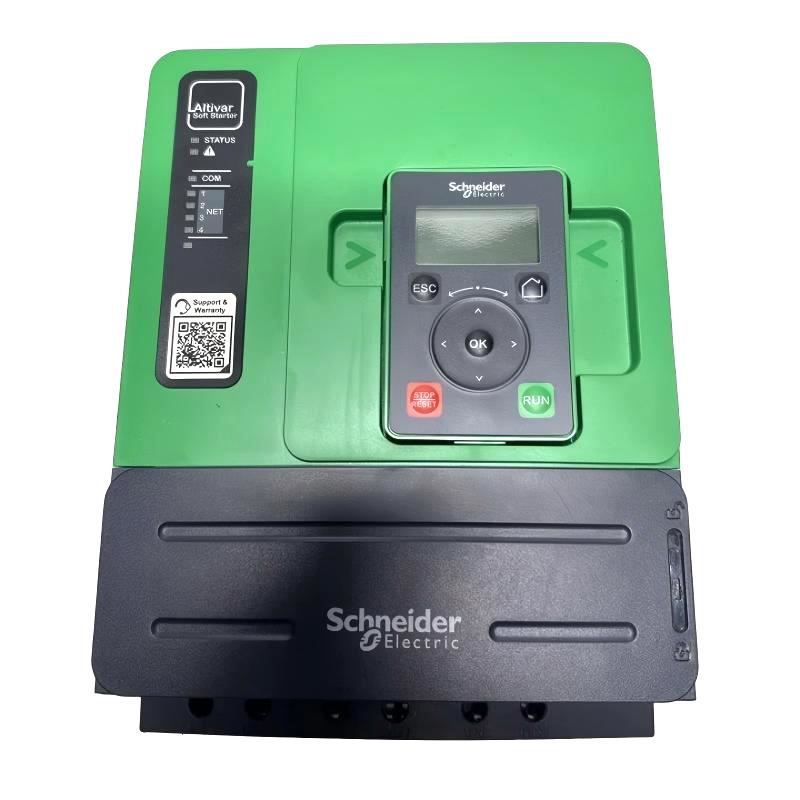
Schneider ATS480D47Y Power Wiring and Control Connections
The power circuit must be wired according to the terminal designations and diagrams for the exact ATS480D47Y hardware revision. Verify the incoming supply, motor output, protective earth, and any required bypass arrangement before connecting the motor.
Control wiring should be kept separate from high-current power wiring wherever the cabinet layout permits. Use appropriate cable routing and shielding practices for analog signals and communication cables. Check terminal tightness using the manufacturer's specified torque values; do not estimate torque from the apparent size of a terminal.
For a PLC-based installation, the control logic should distinguish between a start command, a stop command, a running indication, and a fault indication. A PLC Controller should not assume that issuing a start command proves that the motor has accelerated successfully. Feedback from the starter and, where appropriate, independent process instrumentation should be used to verify the operating state.
ATS480D47Y Setup and Commissioning Parameters
The commissioning process begins with the motor nameplate data and the intended application. Enter the required motor parameters using the supported configuration interface and confirm that the selected control mode matches the installation.
The following values are examples of commissioning items, not preset values for every ATS480D47Y application:
Motor rated current: Match the motor nameplate and the applicable starter configuration instructions.
Starting current limit: Select a value that provides sufficient torque without exceeding the permitted electrical or mechanical limits.
Acceleration ramp: Set an initial ramp that allows the motor to reach operating speed reliably.
Deceleration behavior: Determine whether controlled deceleration is required and suitable for the load.
Protection settings: Coordinate motor overload and other protective functions with the motor and upstream protection scheme.
During Setup and Commissioning, record the original settings before making adjustments. Change one parameter at a time where practical so that the effect on starting performance can be evaluated.
Schneider ATS480D47Y Commissioning Tests and Validation
Before the first start, inspect the completed wiring and verify the safety circuit, emergency-stop arrangement, and permissive logic. Energize the control system under the approved site procedure, check for active faults, and confirm that the starter is ready to receive a command.
A controlled first start should include observation of motor acceleration, starter current, mechanical noise, and process response. Where available, use the PLC trend, current measurement, or drive-monitoring data to establish a baseline.
For example, if a motor accelerates smoothly when unloaded but fails to reach speed with the conveyor connected, investigate the load torque, current limit, ramp duration, and supply conditions before replacing the starter. This is a more defensible engineering approach than assuming a hardware defect from a single unsuccessful start.
The commissioning record should include the motor nameplate information, verified wiring, final parameters, fault history, and test results. These records make future Troubleshooting and Fault Diagnosis more efficient.
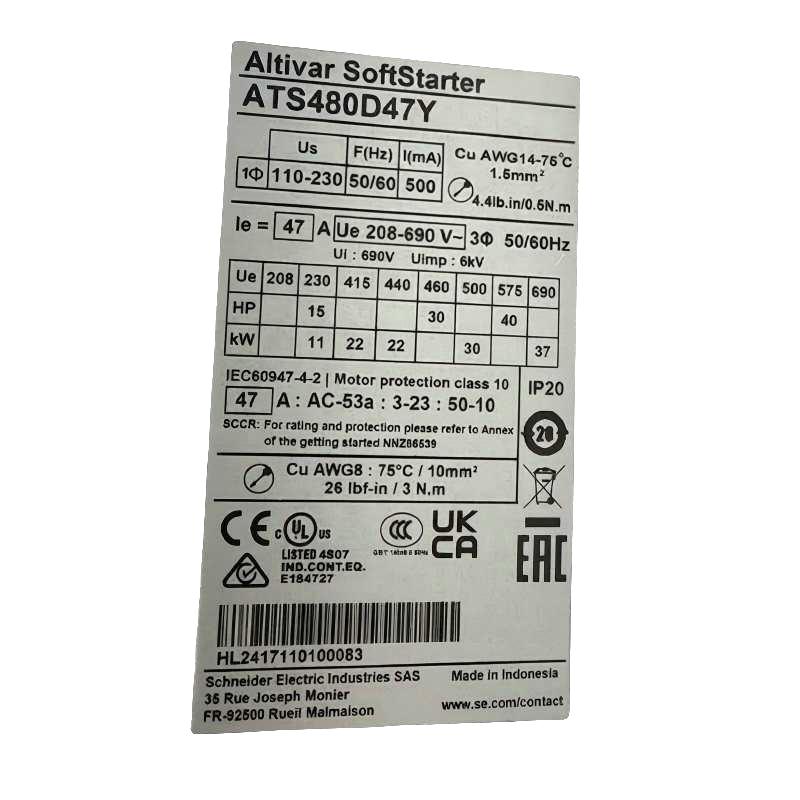
ATS480D47Y Soft Starter Installation Risks and Field Checks
Several installation issues can remain hidden until the first loaded start. Incorrect motor data may cause unsuitable protection behavior, while loose connections can produce localized heating or intermittent faults. Poorly separated control and power wiring may also introduce unwanted interference into control signals.
An effective field check compares three sources of evidence: the electrical drawings, the actual terminal connections, and the starter's displayed status or diagnostic information. If the three do not agree, resolve the discrepancy before continuing commissioning.
Never bypass protective functions merely to complete a commissioning test. Electrical isolation, lockout procedures, appropriate test instruments, and manufacturer-approved methods are essential when inspecting or repairing the power circuit.
Long-Tail SEO Keywords for Schneider ATS480D47Y
The following search phrases describe specific technical tasks associated with the product:
Schneider ATS480D47Y soft starter installation guide
Schneider ATS480D47Y power wiring and control connections
ATS480D47Y soft starter setup and commissioning
Schneider ATS480D47Y motor current limit configuration
ATS480D47Y PLC Controller integration and System Configuration
Schneider ATS480D47Y commissioning checklist
ATS480D47Y soft starter protection and fault prevention
These terms are most useful when connected to accurate wiring requirements, documented configuration procedures, and application-specific commissioning evidence.