Schneider ATS480D47Y Soft Starter Overcurrent Fault Troubleshooting Guide
Time:2026-10-14 Browse: 3
Schneider ATS480D47Y Overcurrent Fault Diagnosis
Schneider ATS480D47Y soft starter overcurrent problems should be investigated by comparing motor current, acceleration behavior, supply conditions, and the starter's recorded fault information. A trip during acceleration does not automatically mean that the ATS480D47Y power section has failed. Excessive mechanical load, unsuitable current-limit settings, incorrect motor data, or an electrical fault can produce similar symptoms.
The purpose of this Troubleshooting Guide is to establish a repeatable Fault Diagnosis process for the Schneider ATS480D47Y Soft Starter. The actual fault code and diagnostic message must be recorded before corrective action, and the relevant Schneider Electric documentation should be consulted for the exact fault definition and permitted recovery procedure.
ATS480D47Y Fault Symptoms and Initial Observations
An overcurrent-related problem may appear in several ways:
The motor starts but trips before reaching operating speed.
The starter trips immediately when a start command is issued.
The motor accelerates successfully without a load but fails under normal operating conditions.
Starting performance becomes inconsistent after a process or mechanical change.
A PLC Controller reports a fault even though the start command and control wiring appear correct.
These symptoms should not be treated as interchangeable. A trip immediately after a start command points toward a different diagnostic path from a trip after several seconds of acceleration.
First, record the displayed fault message, event history, motor current if available, elapsed time before the trip, and whether the load was connected. Check whether the supply voltage remains within the permitted range during the start. Do not repeatedly reset the starter without identifying the cause.
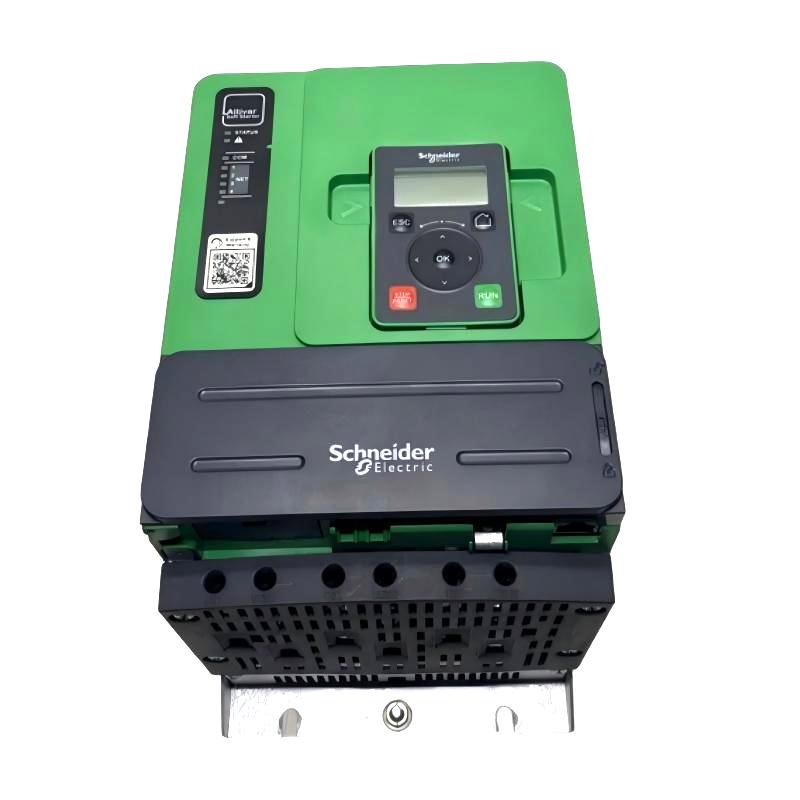
Schneider ATS480D47Y Overcurrent Troubleshooting Logic
The most efficient diagnostic approach is to separate an electrical problem from a configuration or mechanical problem.
When the trip occurs immediately: Inspect the documented fault information, motor cable condition, phase connections, and evidence of a short circuit or earth fault. Any insulation testing must follow the manufacturer's isolation requirements. Disconnect sensitive electronic equipment as required by the applicable test procedure.
When the trip occurs during acceleration: Compare the current profile with the expected motor starting behavior. A motor that remains at high current without gaining speed may be overloaded, mechanically obstructed, or configured with an unsuitable current limit or acceleration profile.
When the trip occurs only under load: Check the driven machine, bearings, belt tension, pump condition, and other sources of excessive torque. Verify that the starter and motor are correctly selected for the actual load and starting duty.
When the fault begins after maintenance: Recheck power terminals, motor connections, changed parameter values, and any modifications to PLC interlocks or operating sequences.
This diagnostic sequence avoids replacing an expensive soft starter before basic electrical and mechanical causes have been excluded.
Schneider ATS480D47Y Real-World Diagnostic Example
Consider a representative field scenario in which a conveyor motor starts normally during an unloaded test but trips after the belt is loaded. The maintenance team initially suspects a defective starter because the fault appears during acceleration.
The investigation should begin by comparing the unloaded and loaded starts. Suppose the recorded current remains elevated during the loaded attempt and the motor fails to reach normal operating speed. Those observations would support checking the mechanical load and acceleration configuration before condemning the starter.
The engineer should then inspect the conveyor for excessive resistance, confirm the motor nameplate data, review the current limit and ramp settings, and compare the observed current with the motor's rated current and permitted starting duty. If the motor reaches speed after an identified mechanical obstruction is removed, the evidence supports a load-related cause rather than an electronic hardware failure.
This is an illustrative diagnostic case, not a claim about a documented ATS480D47Y service incident. Actual current values, elapsed times, and fault codes must come from the installation's measurements and recorded events.
ATS480D47Y Motor Current and Acceleration Analysis
Current measurements become more useful when interpreted alongside speed and elapsed time. A high starting current alone does not prove that the starter is defective; induction motors normally draw elevated current during startup.
Use a trend or event log, where supported, to compare:
Motor current before and during the start.
Time required to accelerate under unloaded and loaded conditions.
Supply voltage during acceleration.
The point at which the fault is registered.
Whether the fault repeats under the same operating conditions.
For example, if current remains near the configured limit while the motor fails to accelerate, check the load torque and ramp settings. If the fault occurs immediately and is accompanied by an electrical fault indication, prioritize the relevant electrical checks instead.
Do not apply a universal current threshold to every ATS480D47Y application. The acceptable operating range depends on the motor, starter configuration, load, and applicable protection settings.
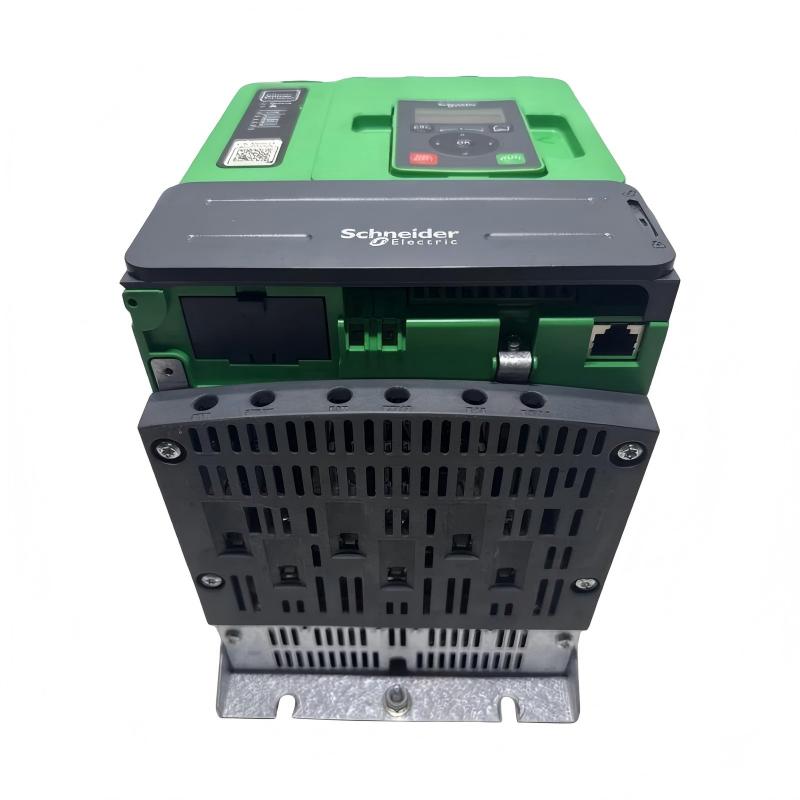
Schneider ATS480D47Y PLC Interface and System Configuration Checks
A PLC Controller can help identify the sequence leading to a trip, but it should not be treated as the sole source of electrical diagnosis. Review the start request, permissive conditions, running feedback, fault feedback, and any communication status available from the starter.
A useful logic review is:
Confirm that the PLC issues the intended start command.
Verify that the starter receives the command through the configured interface.
Check whether the running indication changes during acceleration.
Capture the fault status and timestamp when the start attempt fails.
Confirm that the PLC does not repeatedly restart the motor while the cause remains unresolved.
If the PLC shows a communication fault while the starter itself remains operational, investigate the communication configuration and network wiring separately from the motor-current problem. Avoid changing multiple communication and motor parameters at the same time.
Schneider ATS480D47Y Fault Recovery and Repair Verification
After identifying and correcting the cause, follow the manufacturer's fault-reset procedure. Before restarting, verify that the motor and driven equipment can operate safely, the protective circuit remains functional, and all relevant parameters are within the approved configuration.
Perform a controlled restart and compare the new current profile and acceleration time with the earlier measurements. Confirm that the starter reaches the expected operating state and that no new diagnostic events appear.
If the fault persists despite verified wiring, suitable motor data, acceptable supply conditions, and a mechanically free load, escalate the investigation using the recorded fault details and applicable Schneider Electric service procedures. Internal power-stage inspection or repair should be performed only by appropriately qualified personnel.
A successful repair is demonstrated by repeatable operation under the intended load, not merely by clearing the displayed fault.
Long-Tail Keywords for Schneider ATS480D47Y Fault Diagnosis
Schneider ATS480D47Y overcurrent fault troubleshooting
ATS480D47Y soft starter trips during motor acceleration
Schneider ATS480D47Y motor current fault diagnosis
ATS480D47Y soft starter fails to start under load
Schneider ATS480D47Y PLC fault feedback troubleshooting
ATS480D47Y motor wiring and supply fault checks
Schneider ATS480D47Y soft starter repair and commissioning verification
For effective technical SEO, each troubleshooting topic should be supported by the exact fault message, applicable manufacturer instructions, and measurements from the actual installation. This provides more useful information than assigning a generic repair procedure to every overcurrent trip.