Allen-Bradley MPL-B680H-MJ74AA Servo Motor Feedback Fault Troubleshooting Guide
Time:2026-10-16 Browse: 4
Diagnosing Feedback Faults on the Allen-Bradley MPL-B680H-MJ74AA Servo Motor
Allen-Bradley MPL-B680H-MJ74AA servo motor feedback faults can result from a damaged feedback cable, loose SpeedTEC connector, incompatible drive configuration, electrical noise, or a feedback device problem. Because this MP-Series motor uses a multi-turn high-resolution absolute encoder, the drive's feedback diagnostics should be examined before concluding that the motor itself has failed.
A motor may show no obvious physical damage while still producing intermittent feedback alarms. The most reliable Troubleshooting approach is to compare the drive's fault history, feedback status, wiring condition, and mechanical behavior under controlled conditions.
Symptoms of MPL-B680H-MJ74AA Encoder and Position Feedback Problems
Feedback-related failures commonly present as a drive startup fault, an encoder communication alarm, unstable actual-position readings, or an axis that cannot complete its enable sequence.
Other symptoms include position deviation during motion, unexpected feedback loss after the machine warms up, or a fault that appears only when motor power cables are energized.
The timing of the failure provides useful evidence. An alarm that occurs immediately during startup points toward motor identification, feedback connection, or configuration. A fault that appears during acceleration may justify checking electrical noise, connector integrity, cable routing, and mechanical loading.
These symptoms are diagnostic clues rather than proof of a defective encoder.
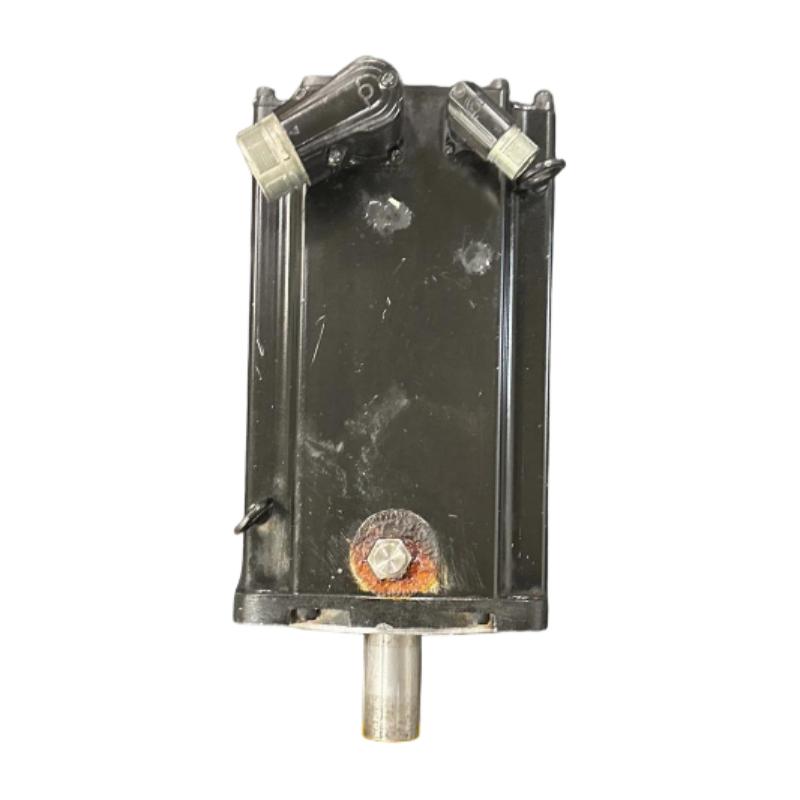
MPL-B680H-MJ74AA Fault Diagnosis: Check the Drive Before Replacing the Motor
Begin by recording the exact drive fault code, alarm text, operating state, and event sequence. Use the drive manufacturer's documentation to identify the meaning of the reported fault rather than relying on a generic encoder-fault description.
Next, verify that the configured motor is MPL-B680H-MJ74AA and that the drive supports the installed motor's absolute feedback interface. Confirm that the feedback connector is fully seated and that the cable matches the approved motor and drive combination.
Inspect the connector and accessible cable sections for bent contacts, damaged insulation, contamination, or evidence of mechanical strain. Check that the feedback cable is routed and shielded according to the manufacturer's instructions.
If the fault persists, use the supported drive diagnostics to compare feedback validity, actual position, and other available status information. Avoid disconnecting feedback connectors while the system is energized. Follow the manufacturer's isolation and discharge requirements before handling motor wiring.
Case Analysis: Intermittent MPL-B680H-MJ74AA Feedback Loss
In a representative industrial maintenance scenario, an axis runs normally at low speed but reports an intermittent feedback fault during acceleration.
The engineer first checks the fault timestamps against the motion profile. If the alarm occurs at the same point in the acceleration cycle, the next investigation includes feedback cable routing, connector retention, electrical noise, and drive diagnostic history.
If the fault occurs independently of acceleration, the investigation should also consider connector damage, motor feedback compatibility, and configuration consistency. The motor should not be replaced until the cable, drive interface, and available diagnostic evidence have been assessed.
This is a field-oriented diagnostic example, not a verified customer repair report. No specific fault code, measured signal waveform, or successful repair result is claimed without equipment data.
Separating Electrical Noise from a Genuine Encoder Fault
Electrical noise can interfere with feedback signals, especially when motor power conductors and feedback cables are routed incorrectly or shield termination is inconsistent with the manufacturer's recommendations.
Inspect cable routing, grounding, shield connections, and connector condition. Compare the fault history with drive switching activity, acceleration events, and nearby electrical equipment operation.
Where the drive provides diagnostic counters or feedback-quality information, record the values before and after any approved wiring correction. A repeatable reduction in feedback errors following a documented cable-routing correction supports the noise hypothesis, but it does not by itself prove that the encoder is fault-free.
Do not apply arbitrary insulation tests or external voltage to the feedback terminals. Use only the diagnostic and electrical test procedures authorized for the motor and drive combination.
MPL-B680H-MJ74AA Troubleshooting for Brake and Positioning Symptoms
Not every positioning problem is caused by the feedback device. The MPL-B680H-MJ74AA includes a 24 V DC holding brake, and an incorrect brake sequence can create symptoms that resemble a motor or positioning fault.
If the motor is enabled but the shaft does not move as expected, verify that the brake-release command is issued correctly and that the brake circuit meets the manufacturer's requirements. Confirm that the brake is not being used to repeatedly stop a moving load outside its intended duty.
If actual position follows the commanded motion but the machine does not reach the expected physical position, inspect the coupling, shaft key, gearbox, belt drive, and load mechanics. A loose coupling or mechanical backlash can produce positioning errors without an encoder failure.
This distinction is important during Fault Diagnosis because replacing a functional servo motor will not correct a brake-control or mechanical-transmission problem.
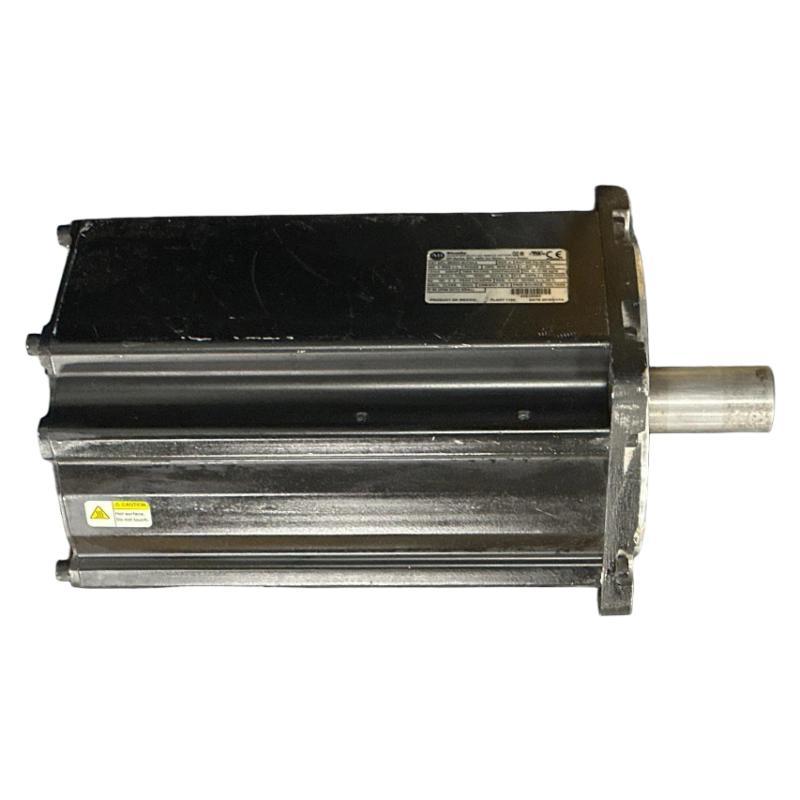
Recovery and Validation After an MPL-B680H-MJ74AA Feedback Fault
After identifying the likely cause, correct the confirmed issue and repeat the test that originally produced the alarm. Verify stable feedback at startup, during low-speed movement, and through the approved operating range.
Check that the drive reports valid feedback, the position value changes consistently with shaft movement, and the brake sequence functions as designed. If an absolute-position reference procedure is required by the drive or machine configuration, follow the documented procedure before returning the axis to automatic operation.
Record the original alarm, diagnostic findings, corrective action, and post-repair results. If the feedback fault returns, preserve the updated fault history rather than repeatedly resetting the drive without identifying the cause.
Long-Tail Keywords for Allen-Bradley MPL-B680H-MJ74AA Fault Diagnosis
Engineers investigating this servo motor can focus on the following troubleshooting topics:
Allen-Bradley MPL-B680H-MJ74AA encoder fault troubleshooting.
MPL-B680H-MJ74AA absolute feedback communication errors.
Allen-Bradley MP-Series servo motor position deviation diagnosis.
MPL-B680H-MJ74AA 24 V DC holding brake troubleshooting.
Allen-Bradley servo motor feedback cable and connector faults.
A structured Fault Diagnosis process distinguishes encoder faults from wiring, drive configuration, electrical noise, brake control, and mechanical transmission problems. This evidence-based approach reduces unnecessary motor replacement and supports reliable operation of the servo axis.