Foxboro P0916ND Communication Fault Troubleshooting Guide (HDLC Cable Diagnosis)
Time:2026-11-05 Browse: 1
Why Foxboro P0916ND Communication Faults Occur
Foxboro P0916ND communication faults should initially be investigated as possible interconnection problems rather than immediate evidence of module failure. This 0.25 m HDLC shielded twisted-pair module fieldbus cable provides a communication path between compatible Foxboro subsystem components.
An incorrectly seated connector, damaged cable, unsuitable replacement, or faulty mating interface can interrupt communication even when the connected modules appear to be powered normally.
The most effective Troubleshooting approach is to separate cable-related faults from hardware and System Configuration problems before replacing expensive subsystem components.
Recognizing Foxboro P0916ND HDLC Communication Symptoms
Communication problems involving the P0916ND may present in several ways, depending on the connected equipment and diagnostic capabilities.
Typical observations include:
Intermittent communication alarms.
Unexpected loss of communication with an associated subsystem component.
Inconsistent module recognition during startup.
Communication errors that appear after cabinet maintenance.
Repeated diagnostic events despite normal equipment power status.
These symptoms are not exclusive to cable failure. They can also result from problems in the connected hardware or the wider communication architecture.
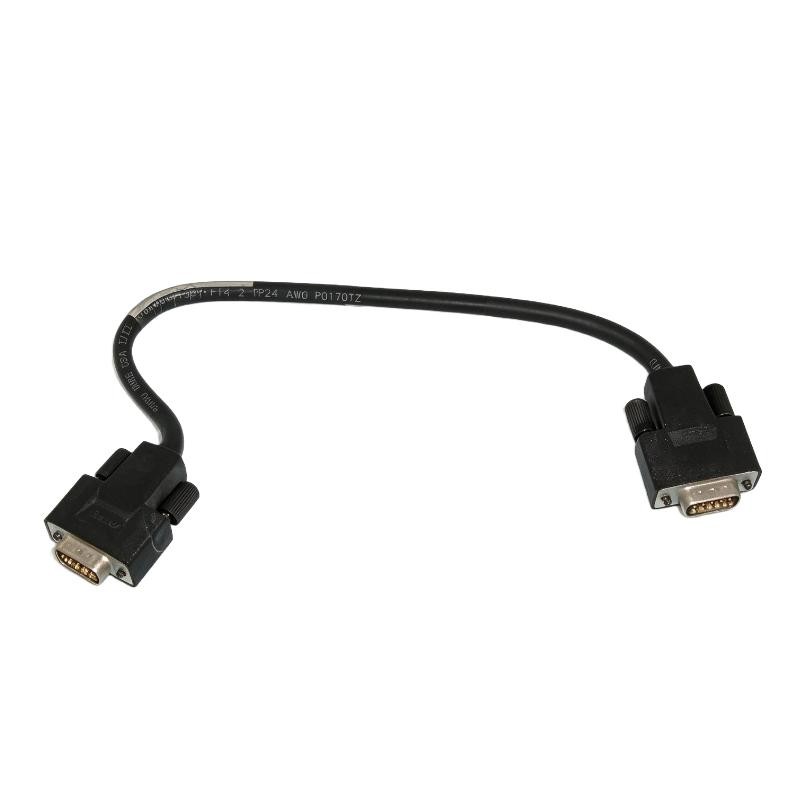
A Practical Foxboro P0916ND Fault Diagnosis Process
Consider a representative field diagnostic scenario: an I/O subsystem intermittently reports a communication fault after maintenance work inside the cabinet.
The first observation is that the connected equipment remains powered, but communication status is unstable.
Rather than immediately replacing the module, an engineer should evaluate the physical communication path.
Initial inspection
Check whether the P0916ND has been displaced, twisted, or partially disconnected. Pay particular attention to connector seating and possible mechanical damage.
Interconnection verification
Confirm that the cable connects the intended components and that its part number matches the approved hardware documentation.
Comparative testing
If an approved, known-good replacement cable is available, perform a controlled substitution under the plant maintenance procedure.
If communication becomes stable after replacement, the original cable or its connector interface becomes a stronger suspect. Further inspection is still necessary to distinguish the cable itself from a mating-connector problem.
P0916ND Cable Damage and Intermittent Communication
One failure pattern worth investigating is intermittent communication caused by mechanical stress.
A cable can develop internal conductor damage even when its external jacket appears relatively intact. Repeated bending, pulling during cabinet maintenance, or pressure against an enclosure edge can affect the connection.
For this type of Fault Diagnosis, inspect:
Connector housing deformation.
Bent or contaminated contact surfaces.
Cable jacket damage.
Evidence of excessive bending near either termination.
Unstable communication associated with physical movement.
A controlled substitution test provides stronger diagnostic evidence than repeatedly reconnecting the original cable.
Do not manipulate live connectors or deliberately flex an energized communication cable to reproduce a fault.
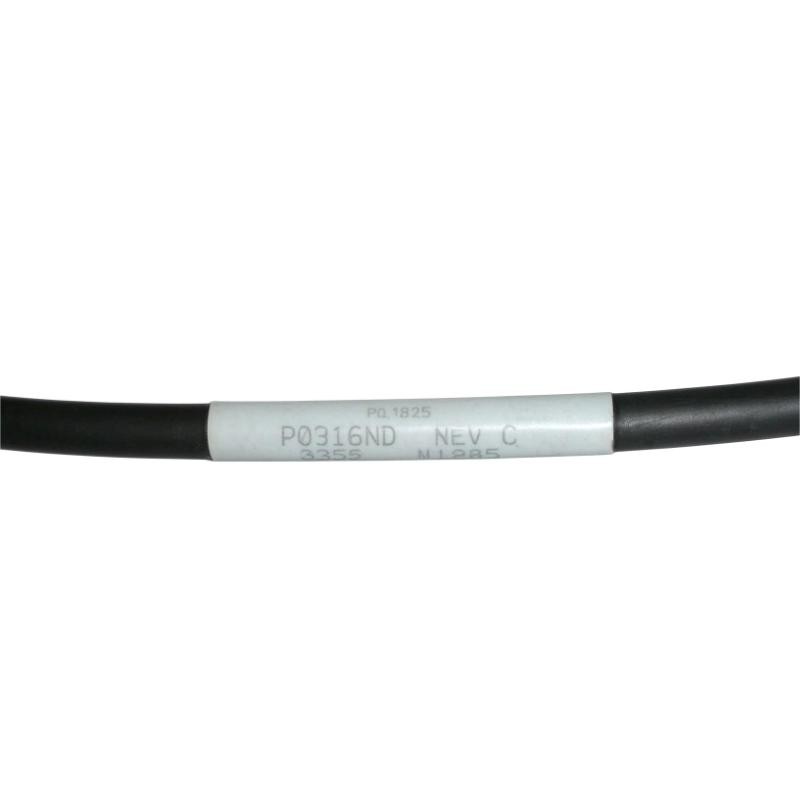
Distinguishing Cable Failure from HDLC Hardware Problems
If replacing the P0916ND does not resolve the communication issue, the investigation should move beyond the cable.
The following comparison helps organize the troubleshooting process:
| Observation | Diagnostic Direction |
|---|---|
| Communication recovers after cable replacement | Suspect original cable or connector interface |
| Fault remains with a known-good cable | Investigate connected hardware |
| Multiple components report communication problems | Check shared communication infrastructure |
| Fault appears after equipment replacement | Verify hardware compatibility and configuration |
| Communication fails during startup | Review connection integrity and initialization diagnostics |
The diagnostic objective is to identify where communication is interrupted, not simply to replace components until the alarm disappears.
Foxboro P0916ND Troubleshooting Measurements and Test Precautions
Unlike an analog input cable, the P0916ND is an HDLC communication interconnect. Its diagnosis should therefore prioritize communication status, connector condition, and hardware compatibility rather than applying an assumed analog voltage or resistance specification.
A useful troubleshooting record can include:
| Diagnostic Item | Information to Record |
|---|---|
| Cable identification | P0916ND |
| Nominal cable length | 0.25 m (10 in) |
| Communication status | Normal, intermittent, or failed |
| Diagnostic messages | Exact alarm or error text |
| Connector condition | Secure, loose, or damaged |
| Substitution result | Improved, unchanged, or unresolved |
Do not apply insulation resistance testing or arbitrary voltage injection to a cable connected to electronic communication hardware. Any electrical test must follow the manufacturer's approved procedure.
Restoring Foxboro P0916ND Communication After Repair
Once the suspected problem has been corrected, restore the subsystem using the approved maintenance and startup procedure.
Confirm that:
Both cable connections are properly secured.
The installed cable matches the approved part number.
Connected components are recognized.
Communication diagnostics return to the expected state.
No recurring communication alarms appear during operation.
If the fault persists, investigate the associated HDLC interfaces, connected modules, and System Configuration rather than repeatedly replacing the same cable.
Foxboro P0916ND Troubleshooting: Common Search Queries
This fault diagnosis guide also addresses several related engineering topics:
Foxboro P0916ND communication failure troubleshooting
Foxboro HDLC fieldbus cable fault diagnosis
P0916ND cable connector inspection
Foxboro I/O subsystem intermittent communication
Foxboro module communication loss after maintenance
P0916ND cable replacement and verification
Foxboro shielded twisted-pair cable troubleshooting
Engineering Conclusion
The Foxboro P0916ND is a short HDLC shielded twisted-pair communication cable, and its condition can directly affect communication reliability between connected subsystem components.
A structured troubleshooting process should begin with cable identification, connector inspection, and compatibility verification. If a known-good cable does not restore communication, attention should shift to the connected hardware and communication configuration.
This approach reduces unnecessary module replacement and provides a more reliable basis for restoring Foxboro I/O subsystem operation.