Virtual–Physical Integration Drives Next-Gen Smart Warehousing
Time:2026-05-25 Browse: 27
Schneider Electric and Vanderlande Advance Digital Twin Deployment in Multi-Shuttle AS/RS Systems
In modern e-commerce and global logistics environments, automated warehousing systems are under unprecedented pressure to handle highly fragmented orders, peak-demand volatility, and increasingly complex fulfillment requirements. Among these systems, multi-shuttle automated storage and retrieval systems (AS/RS) have become a critical enabler for high-density, high-throughput warehouse operations.
However, the complexity of multi-shuttle systems—comprising shuttles, lifts, conveyors, and coordinated control logic—has introduced significant engineering challenges. Traditional development approaches rely heavily on physical prototypes and on-site commissioning, resulting in long development cycles, high testing costs, and limited scalability across projects. In addition, regional localization demands often require strong reliance on overseas engineering support, further constraining responsiveness and delivery efficiency.
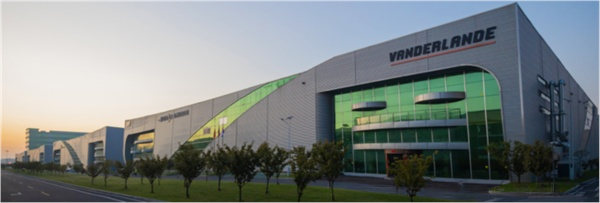
To address these challenges, global logistics automation leader Vanderlande has deepened its collaboration with Schneider Electric, leveraging the EcoStruxure™ Machine Expert Twin (EMET) digital twin platform to establish a localized simulation and virtual commissioning capability in China. This initiative builds upon their previous cooperation in intelligent baggage handling systems and marks a further step in expanding digital engineering capabilities for advanced warehousing applications.
Addressing Key Engineering and Deployment Challenges
As Vanderlande accelerates its localization strategy in the Chinese market, several critical challenges have emerged in project engineering validation:
First, reliance on overseas engineering teams has reduced responsiveness and increased dependency on physical testing systems, leading to longer validation cycles and higher project costs.
Second, the lack of a localized digital verification environment has made it difficult for engineering teams to accurately evaluate system cycle times, peak load conditions, and control logic behavior in early project stages. As a result, PLC commissioning activities are often compressed into late project phases, increasing delivery risk.
Third, pre-sales communication inefficiencies have become a bottleneck. Without intuitive visualization tools, system behavior, control strategies, and integration logic must be communicated through drawings and documentation, or validated through costly physical prototypes, reducing decision-making efficiency and increasing management overhead.
Finally, traditional physical test lines lack reusability. Each project requires significant hardware investment and setup effort, while frequent specification changes across different deployment scenarios further reduce reuse efficiency and increase resource consumption.
Virtual Commissioning with EMET: Enabling a “First-Simulation-Then-Execution” Model
To overcome these limitations, Schneider Electric’s EMET digital twin platform provides a high-fidelity, 1:1 virtual simulation environment that replicates multi-shuttle AS/RS systems with engineering precision.
The solution enables real-time interaction between virtual models and third-party PLC systems, effectively decoupling hardware and software for full virtual commissioning across the system lifecycle—from design validation to final deployment.
Key capabilities include:
1. Early-stage system validation through high-fidelity simulation
Engineers can simulate shuttle movement, lift coordination, conveyor logic, and system-level scheduling strategies within a 3D digital environment. This enables early detection of design flaws and optimization opportunities before any physical installation begins.
2. Virtual commissioning of PLC systems
PLC engineers can perform up to 95% of control logic testing in a virtual environment before on-site deployment. This significantly reduces on-site debugging workload, mitigates commissioning risks, and improves project delivery predictability.
3. Immersive 3D visualization for pre-sales engagement
The platform provides interactive 3D system models that allow customers to visualize operational behavior, system throughput, and integration logic from multiple perspectives. This enhances communication efficiency, reduces misunderstanding, and accelerates decision-making processes.
4. Parametric modeling for rapid reuse and deployment
Through parameter-driven model configuration, system templates can be rapidly adapted for different project requirements. This approach reduces modeling time by approximately 65% and enables scalable reuse across multiple deployment scenarios.
Transforming the Logistics Automation Development Paradigm
The collaboration between Vanderlande and Schneider Electric represents more than a technological upgrade—it signals a fundamental shift in the logistics automation development paradigm.
Traditionally, industrial automation projects have followed a “hardware-first, software-later” approach. However, with the adoption of digital twin and virtual commissioning technologies, the industry is moving toward a “virtual-first, execution-later” model, where system behavior is fully validated in a simulated environment prior to physical implementation.
This shift delivers multiple long-term benefits:
Significant reduction in physical prototyping costs
Shorter project delivery cycles
Improved system reliability and commissioning efficiency
Enhanced scalability and reuse of engineering assets
Reduced material consumption and carbon emissions
Industry Outlook: From Hardware Competition to Digital Capability Competition
As logistics automation continues to evolve, competitive differentiation is increasingly defined not only by mechanical design or hardware performance, but also by digital engineering capabilities.
Technologies such as digital twins, virtual commissioning, and parametric system modeling are becoming core enablers of next-generation logistics infrastructure. Companies that invest in these capabilities are better positioned to accelerate innovation, improve project delivery efficiency, and strengthen long-term competitiveness.
The Schneider Electric–Vanderlande collaboration demonstrates how digital twin technology can be effectively applied in complex warehousing systems, offering a scalable and replicable model for broader adoption across the global logistics automation industry.
About Schneider Electric & Vanderlande
Schneider Electric is a global leader in energy management and industrial automation, providing integrated solutions across electrification, automation, and digital intelligence through its EcoStruxure architecture.
Vanderlande is a global market leader in logistics process automation for airports, warehousing, and parcel handling systems, delivering high-performance solutions for complex material flow environments.