2026 Industrial Automation Trends: PLC, DCS Integration and the Rise of Intelligent Manufacturing
Time:2026-06-15 Browse: 28
Introduction: A New Industrial Automation Landscape
The global industrial automation sector is entering a new phase in 2026, driven by technological convergence between PLC systems, Distributed Control Systems (DCS), edge computing, and artificial intelligence.
Manufacturers are no longer focusing solely on automation efficiency. Instead, the focus has shifted toward intelligent, adaptive, and data-driven production systems.
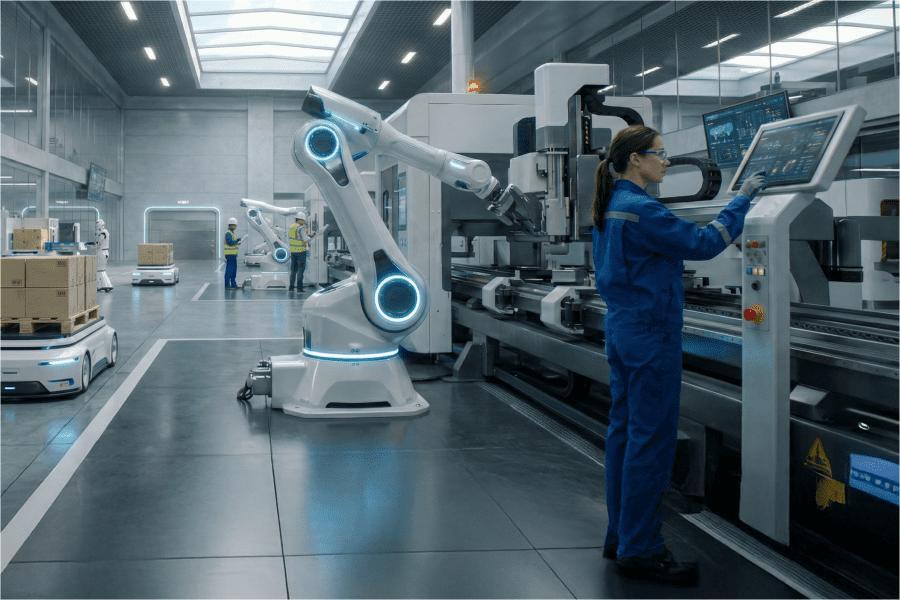
PLC and DCS Convergence
Traditionally, PLC and DCS systems have served different purposes:
PLC: fast, discrete machine control
DCS: continuous process control at plant scale
However, modern automation systems are merging these two layers into unified architectures.
Key developments include:
Shared communication protocols (OPC UA, Ethernet/IP)
Unified engineering environments
Integrated diagnostics and monitoring systems
Cross-layer data visibility
This convergence reduces complexity and improves operational efficiency.
Rise of Edge Computing in Industrial Automation
Edge computing has become a critical component of modern factories. Instead of sending all data to centralized systems, processing is now performed closer to machines.
Benefits include:
Lower latency in decision-making
Reduced network load
Improved system resilience
Real-time production adjustments
Edge devices now act as a bridge between PLC/DCS systems and cloud analytics platforms.
AI and Predictive Maintenance
Artificial intelligence is increasingly embedded into industrial control systems. In 2026, AI is widely used for:
Predictive maintenance of machinery
Anomaly detection in production lines
Energy optimization strategies
Quality control automation
This shift enables manufacturers to reduce downtime and improve overall equipment effectiveness (OEE).
Cybersecurity and Industrial Networks
As automation systems become more connected, cybersecurity is a critical concern. Industrial networks now implement:
Multi-layer security architectures
Device authentication protocols
Encrypted industrial communication
Continuous monitoring systems
Cybersecurity is no longer optional but a core design requirement.
Future Outlook of Industrial Automation
The future of industrial automation will be defined by integrated ecosystems rather than standalone systems. Key directions include:
Fully digitalized smart factories
Cloud-connected control systems
Autonomous production lines
Software-defined industrial infrastructure
Conclusion
Industrial automation in 2026 is evolving rapidly toward intelligent, interconnected systems. The convergence of PLC, DCS, AI, and edge computing is reshaping how factories operate, making production more flexible, efficient, and data-driven.