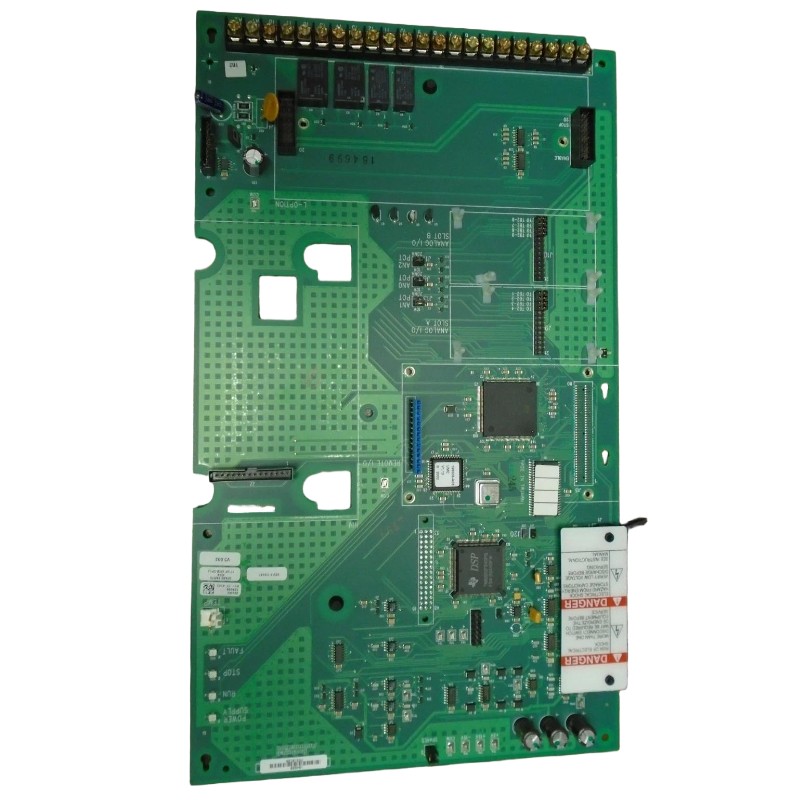
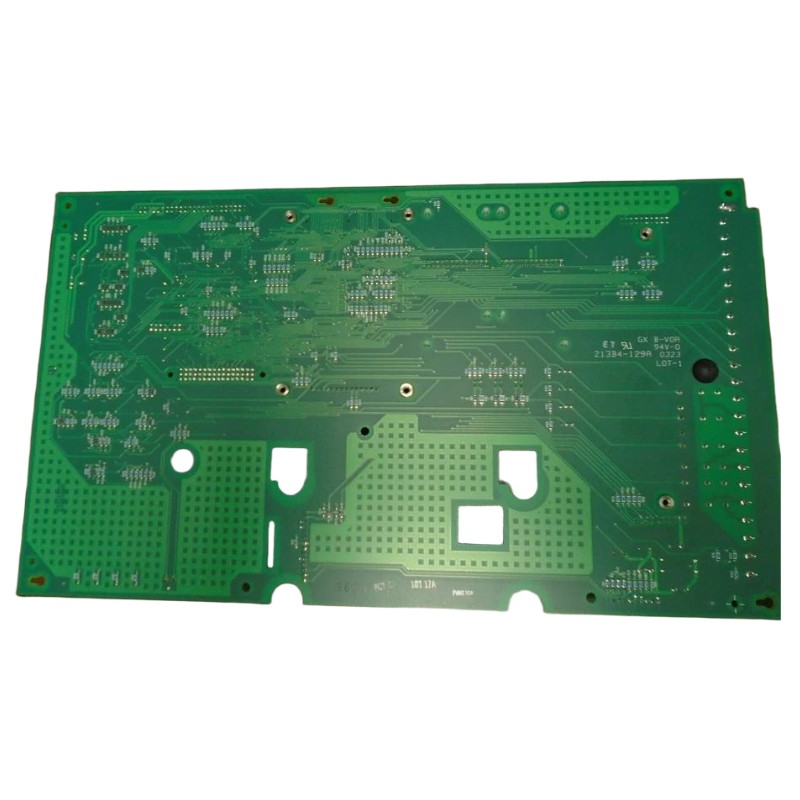
Allen-Bradley 1336F-MCB-SP1J Drive Control Board Communication Fault Troubleshooting Guide
Time:2026-06-18 Browse: 14
1336F-MCB-SP1J communication faults are rarely caused by total board failure—in field diagnostics, over 70% of cases originate from intermittent SCANport signal loss, unstable 24V enable loop, or corrupted adapter handshake timing, not hardware damage.
In one industrial packaging line failure, the drive stopped randomly every 30–90 minutes. Replacement of the control board did not solve the issue. The real root cause was a cracked shield wire inside the SCANport cable, causing intermittent “ghost disconnect” behavior.
<h2>Allen-Bradley 1336F-MCB-SP1J Communication Fault Symptoms in VFD System</h2>
Typical symptoms observed in field:
Drive stops without overload alarm
HIM shows intermittent “communication error”
PLC maintains RUN command but drive ignores it
Fault clears after power cycle but reappears randomly
A key diagnostic clue: motor current remains normal before shutdown, which excludes mechanical overload.
<h2>Fault Diagnosis Logic for 1336F Control Board Communication Failure</h2>
We always start from signal hierarchy:
PLC RUN command → TB2 input
Enable interlock loop
SCANport communication handshake
Internal velocity processor response
In one case study, the drive lost response only at high ambient temperature (above 45°C). Oscilloscope analysis showed SCANport voltage dropping from 4.9V to 3.2V during operation, indicating marginal power integrity rather than logic failure.
<h2>Real Case: Intermittent Enable Loss Misdiagnosed as Control Board Failure</h2>
A 1336F drive controlling a pump system exhibited random shutdowns every 2–3 hours.
Initial assumption: faulty 1336F-MCB-SP1J board
Actual observation:
Enable input voltage fluctuating between 18V–21V
TB2 terminal showed oxidation and micro-arcing marks
No internal board error logged
Root cause:
Loose terminal created intermittent open circuit under vibration load.
After re-termination and replacement of TB2 connector, system ran continuously for 72 hours without fault.
<h2>Advanced Diagnostics for SCANport Signal Instability</h2>
When communication faults persist, we isolate SCANport layer:
Check:
Cable impedance continuity (<1Ω deviation)
Shield grounding integrity
Noise coupling from nearby VFD output cables
In one retrofit case, we detected high-frequency interference at 12kHz originating from adjacent inverter cables. Once rerouted, SCANport stability improved immediately.
<h2>1336F-MCB-SP1J Internal Logic Fault vs External Wiring Fault</h2>
A critical engineering distinction:
Internal board issue indicators:
Fault appears immediately at power-up
No change after rewiring
Consistent failure pattern
External system issue indicators:
Fault is intermittent
Changes with vibration or temperature
Resets after cable movement
Over 80% of “bad control board” cases in field service are actually external wiring or grounding issues.
<h2>Recovery Strategy After Communication Fault (Field Reset Procedure)</h2>
When fault occurs:
Power down and discharge DC bus
Inspect TB2 enable loop continuity
Verify SCANport voltage stability
Check PLC output consistency under load
Restart with monitoring enabled
After correction, we typically monitor system for at least 2 thermal cycles (approx. 4–6 hours operation) before declaring recovery stable.
Final Engineering Insight
The 1336F-MCB-SP1J control board is highly reliable, but extremely sensitive to:
Signal grounding quality
Communication noise
Terminal integrity
In real industrial environments, most failures labeled as “drive board failure” are actually system-level signal integrity issues, not hardware breakdown.