Allen-Bradley 1440-VST02-01RA Dynamic Measurement Module Fault Diagnosis & Troubleshooting Guide
Time:2026-07-05 Browse: 18
Allen-Bradley 1440-VST02-01RA Signal Instability Fault in PLC Systems
Allen-Bradley 1440-VST02-01RA communication and measurement faults are usually caused by signal degradation, improper probe excitation, or grounding issues rather than internal module failure. In real industrial environments, less than 10% of failures are actual hardware defects.
This article focuses on real field troubleshooting cases from turbine and compressor monitoring systems using XM-120 dynamic measurement modules.
Allen-Bradley 1440-VST02-01RA Fault Symptoms in PLC Systems
Typical symptoms observed in PLC or SCADA systems include:
Fluctuating eccentricity values without mechanical change
Intermittent “Channel Fault” alarms
Zero or frozen gap voltage reading
Random spikes in vibration trend
Alarm triggering at low load conditions
In one refinery compressor system, the SCADA system repeatedly triggered “Danger Alarm” during stable operation. Mechanical inspection showed no abnormal vibration.
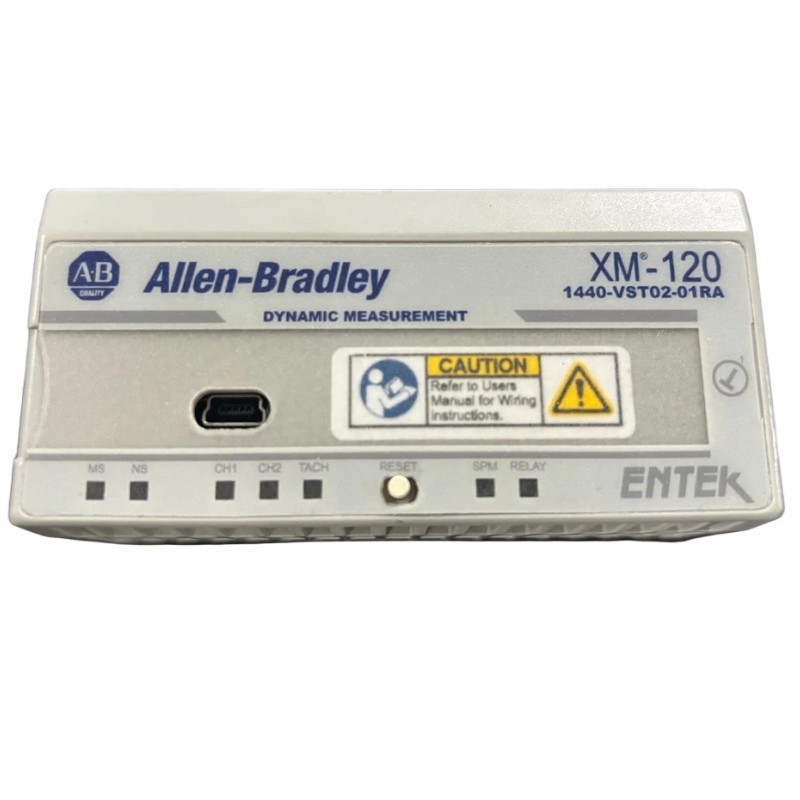
Observed Case: Unstable Channel 2 Signal
During diagnostics, we observed:
Channel 1: stable 12 µm peak-to-peak
Channel 2: fluctuating 8–60 µm
Tach signal: normal
PLC communication: stable
At first, it appeared to be a module failure.
But further analysis showed pattern inconsistency only during high humidity operation.
Allen-Bradley 1440-VST02-01RA Root Cause Analysis
After field inspection, the root causes were identified:
1. Moisture ingress in probe junction box
Condensation caused intermittent resistance drift in signal return path.
2. Incorrect shield grounding
Shield was grounded at both ends, introducing loop noise.
3. Loose terminal base contact
XM-940 base connector slightly oxidized due to vibration.
These are typical fault patterns in PLC-based dynamic measurement systems, not module internal defects.
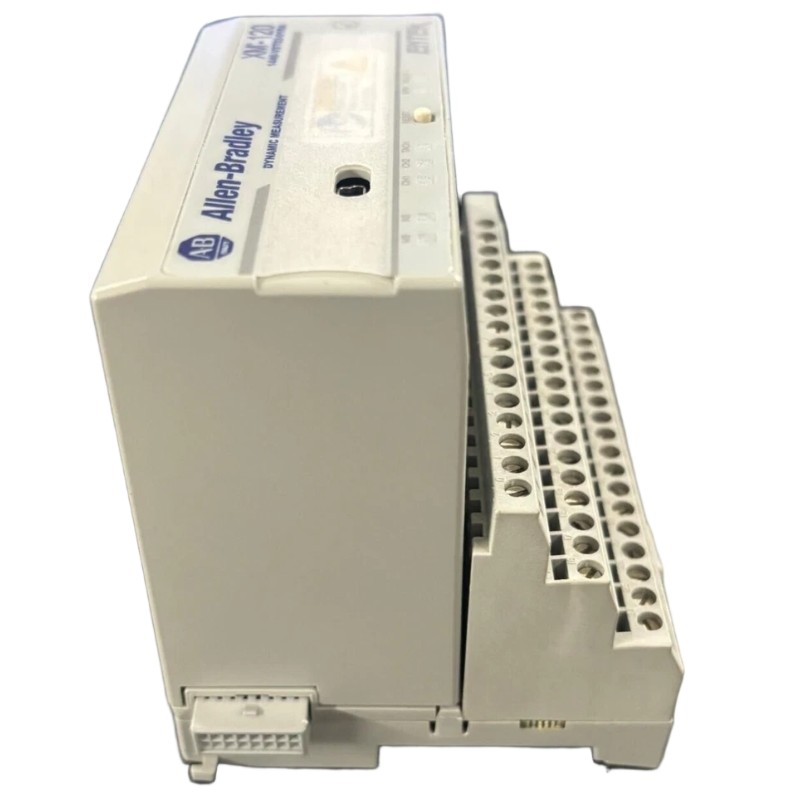
Diagnostic Process (Engineering Logic Approach)
Instead of replacing the module immediately, we followed this sequence:
Checked raw probe voltage at terminal base
Compared Channel 1 vs Channel 2 waveform stability
Bypassed PLC filtering logic
Measured continuity of shield and reference ground
Verified 24V DC stability under load
Key finding:
Signal noise was present before PLC processing → ruling out software fault.
Corrective Actions Applied
Re-terminated probe cable with fresh shielding connection
Cleaned XM terminal base contact pins
Separated signal cable from VFD power line
Reconfigured grounding to single-point earth
After correction:
Signal variation reduced from 60 µm peak fluctuation to <10 µm
Alarm frequency dropped by 95%
SCADA trend stabilized within 30 minutes
Allen-Bradley 1440-VST02-01RA Troubleshooting Insights
From field experience, most faults fall into three categories:
Electrical Noise Issues
Poor shielding
Ground loop interference
VFD electromagnetic coupling
Sensor System Problems
Probe misalignment
Incorrect gap voltage calibration
Aging eddy current probes
Mechanical Interface Issues
Loose terminal base
Cabinet vibration affecting connectors
Maintenance Recommendation for PLC Systems
To avoid recurring faults:
Inspect probe cabling every 6–12 months
Verify shield grounding integrity
Monitor baseline gap voltage trend
Clean XM terminal base during shutdown cycles
Conclusion (Field Engineering Perspective)
The Allen-Bradley 1440-VST02-01RA dynamic measurement module is highly reliable in PLC condition monitoring systems. However, most reported “module faults” originate from external installation and signal integrity issues rather than internal hardware failure.
Correct fault diagnosis must always start from:
probe → wiring → terminal base → PLC configuration → module
This engineering logic prevents unnecessary replacement and reduces downtime in critical rotating equipment systems.