Allen Bradley 150-F135NBD SMC Flex Soft Starter Overload Trip Troubleshooting Guide
Time:2026-07-09 Browse: 19
Allen Bradley 150-F135NBD SMC Flex Overload Fault Symptoms
Allen Bradley 150-F135NBD overload faults usually occur because of abnormal motor loading, incorrect parameter settings, or operating conditions outside the expected application range. Effective Troubleshooting requires analyzing the entire motor system instead of immediately replacing the soft starter Module.
Typical overload symptoms include:
Motor stops during acceleration
Fault alarm appears after several seconds of operation
PLC Controller reports motor failure
Current remains higher than normal operating value
The timing of the fault provides important diagnostic information.
An immediate trip often indicates electrical problems.
A delayed trip usually points to mechanical overload, excessive starting torque, or incorrect motor protection settings.
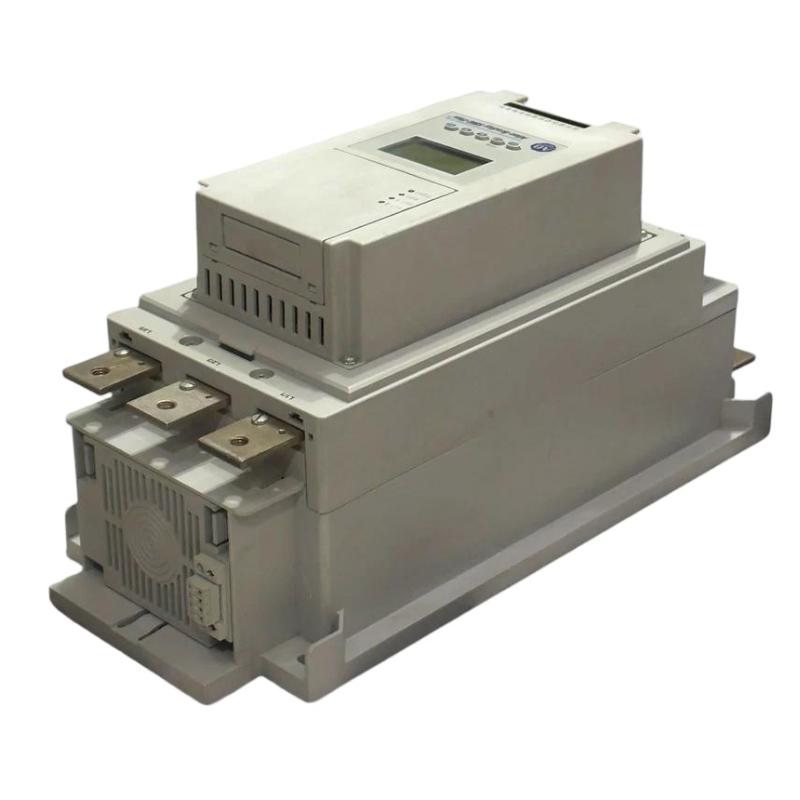
Allen Bradley 150-F135NBD Fault Diagnosis Through Field Investigation
A maintenance team reported repeated overload trips on an Allen Bradley 150-F135NBD controlling a material conveyor motor.
The initial assumption was that the SMC Flex Soft Starter had internal damage because the motor stopped randomly during production.
Engineers followed a practical Fault Diagnosis process:
First, they checked the incoming voltage.
Measured voltage:
Phase A-B: 462 VAC
Phase B-C: 461 VAC
Phase C-A: 463 VAC
The power supply was stable.
Next, they monitored motor current during startup:
Normal startup:
120 A → 165 A → 125 A running current
Fault condition:
125 A → 190 A → Overload trip
The balanced current increase showed that the soft starter power section was working correctly. Further mechanical inspection discovered excessive conveyor loading caused by material accumulation.
After removing the blockage:
Startup current reduced from 190 A to 145 A.
The Allen Bradley 150-F135NBD returned to normal operation without hardware replacement.
Allen Bradley 150-F135NBD Current Analysis Troubleshooting Method
Current measurement is one of the most effective methods for diagnosing SMC Flex Soft Starter problems.
Engineers should compare current patterns rather than only checking fault codes.
Common fault patterns:
Balanced High Current
Possible causes:
Mechanical overload
Incorrect motor sizing
Excessive starting torque
Single Phase Current Increase
Possible causes:
Loose connection
Motor winding issue
Phase imbalance
Sudden Current Spike
Possible causes:
Short circuit condition
Locked rotor
Incorrect wiring
In practical maintenance work, current waveform analysis often provides more useful information than simply resetting the fault.
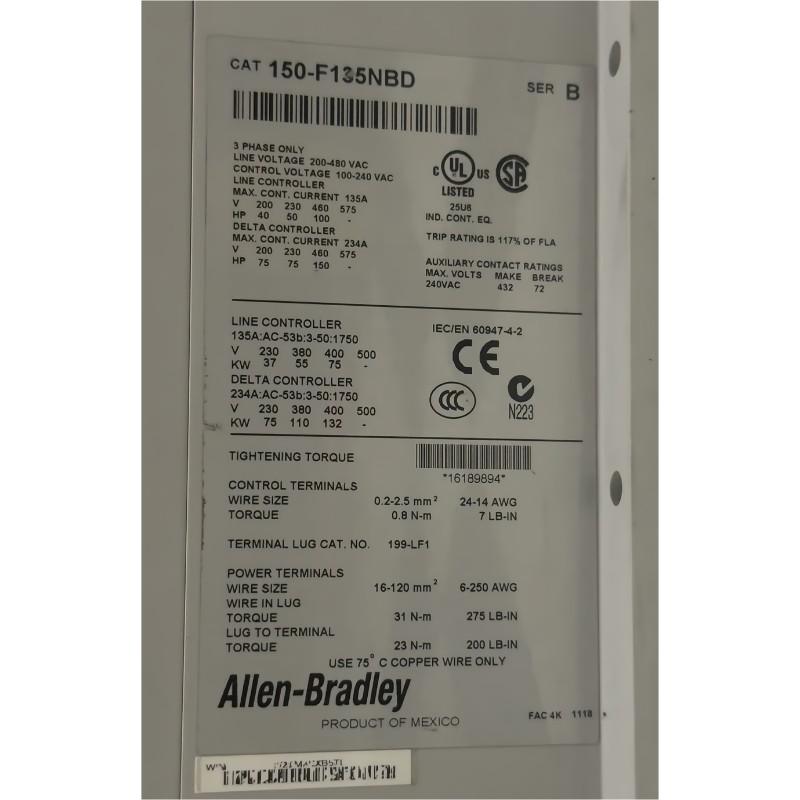
Allen Bradley 150-F135NBD PLC Communication Fault Troubleshooting
In automated production lines, some SMC Flex faults are incorrectly identified because the PLC Controller displays only general motor alarms.
Possible System Configuration problems include:
Incorrect fault feedback mapping
Reset signal timing errors
Incorrect digital input assignment
PLC program logic mistakes
During one factory troubleshooting case, operators reported that the motor fault remained active after restarting the soft starter.
The engineering team compared:
Soft starter display status
PLC input status
HMI alarm message
The soft starter had already cleared the fault, but the PLC input remained active because the feedback logic was configured incorrectly.
After modifying the PLC program, the motor control system operated normally.
Allen Bradley 150-F135NBD Soft Starter Repair Verification and Preventive Maintenance
After completing Troubleshooting and Fault Diagnosis, engineers should verify long-term reliability.
Recommended checks include:
Perform repeated startup cycles
Record motor current trends
Inspect electrical connections
Confirm parameter backup
Review historical alarms
Preventive maintenance should focus on:
Terminal inspection
Cooling airflow verification
Motor condition monitoring
Load condition evaluation
In another industrial case, vibration monitoring showed a motor vibration increase from 3.2 mm/s to 8.5 mm/s before repeated overload events. After correcting the motor coupling alignment, vibration dropped to 2.7 mm/s and the soft starter operated normally.
The Allen Bradley 150-F135NBD Troubleshooting process should always consider electrical, control, and mechanical factors together. Correct diagnosis prevents unnecessary replacement and improves equipment availability.