Allen Bradley 150-F85NBDB SMC Flex Smart Motor Controller Troubleshooting Guide
Time:2026-07-10 Browse: 20
Allen Bradley 150-F85NBDB SMC Flex Overload Fault Symptoms
The Allen Bradley 150-F85NBDB SMC Flex Smart Motor Controller overload fault is commonly caused by abnormal motor conditions, incorrect protection settings, or mechanical load problems. When the controller trips during operation, engineers should perform a complete Fault Diagnosis instead of assuming the SMC Flex Module has failed.
Typical symptoms include:
Motor stops during normal operation
Overload alarm appears after several minutes
Current gradually increases before shutdown
PLC reports motor fault status
Restart is possible after cooling period
In industrial applications, overload faults are often related to changes in mechanical conditions, such as increased pump resistance, conveyor blockage, or bearing problems.
Allen Bradley 150-F85NBDB Fault Investigation Process
A real troubleshooting case involved an Allen Bradley 150-F85NBDB installed on a material handling conveyor.
The operator reported that the motor operated normally after startup but stopped after approximately 15 minutes.
Initial observations:
Supply voltage: 460 VAC
Control voltage: 120 VAC
Motor insulation resistance: 76 MΩ
Fault type: Overload trip
The engineer did not replace the controller immediately. Instead, the investigation focused on the complete operating condition.
Measured motor current:
Phase A: 84 A
Phase B: 86 A
Phase C: 87 A
Electrical balance was normal, which indicated that the problem was likely caused by increased mechanical loading rather than a power supply issue.
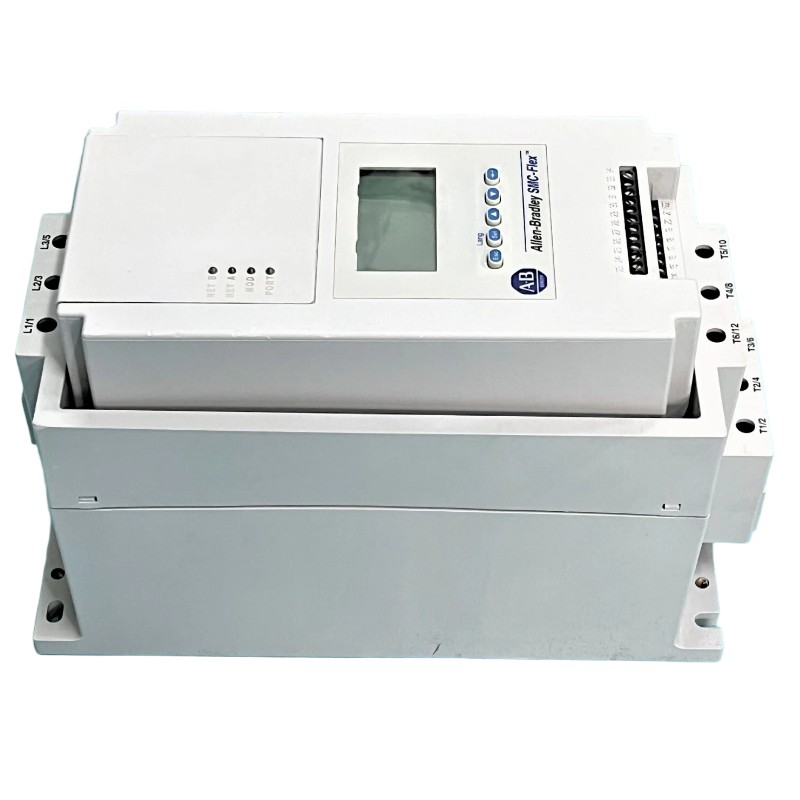
Allen Bradley 150-F85NBDB Troubleshooting and Root Cause Analysis
The Allen Bradley 150-F85NBDB Troubleshooting process requires checking both electrical signals and application conditions.
The main diagnostic areas include:
Motor current trend analysis
Overload parameter verification
Mechanical load inspection
Cooling condition check
Fault history review
During further inspection, engineers discovered that the conveyor gearbox lubricant had degraded, causing increased resistance during operation. The motor current increased gradually until the SMC Flex protection function activated.
After correcting the mechanical issue:
Before repair:
Running current: 86 A
Temperature rise: abnormal
Fault occurrence: every 20 minutes
After repair:
Running current: 63 A
Temperature condition: normal
Continuous operation: over 8 hours without fault
This diagnosis confirmed that the controller was functioning correctly and the actual failure source was the mechanical system.
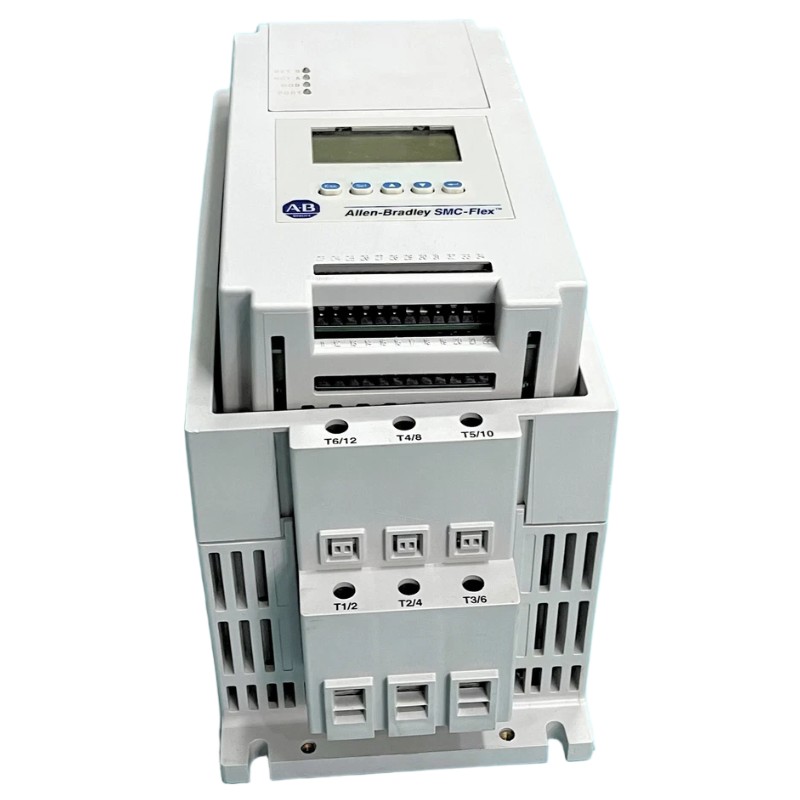
Allen Bradley 150-F85NBDB Fault Diagnosis and Recovery Solution
After identifying the root cause, the repair process focused on restoring normal operating conditions.
Corrective actions included:
Repairing the mechanical drive system
Checking motor alignment
Confirming overload settings
Clearing stored fault records
Performing operational testing
The SMC Flex controller successfully returned to normal operation after the mechanical repair.
Engineers should remember that a Fault Diagnosis process must consider the complete System Configuration. Replacing the controller without identifying the actual cause may only hide the problem temporarily.
Allen Bradley 150-F85NBDB Preventive Troubleshooting Recommendations
To reduce future Allen Bradley 150-F85NBDB PLC Controller failures, maintenance teams should regularly monitor:
Motor current changes
Fault history records
Cabinet temperature
Terminal conditions
Mechanical load behavior
Field experience shows that many SMC Flex troubleshooting cases originate from external system conditions rather than controller damage.
A structured troubleshooting approach helps engineers quickly separate hardware faults, configuration errors, and application-related problems.