Allen Bradley 1606-XL120D Power Supply Installation Guide
Time:2026-07-12 Browse: 20
Allen Bradley 1606-XL120D Power Supply installation requires correct load evaluation, reliable DC wiring, and proper cabinet integration. In industrial automation systems, unstable PLC Controller operation after installation is often caused by incorrect power distribution or insufficient DC capacity rather than a defective power supply module. The 1606-XL120D is a 24V DC industrial power supply designed for control cabinets, PLC systems, I/O modules, sensors, and automation equipment.
A successful installation should ensure that the 1606-XL120D Power Supply can maintain stable voltage during real machine operation, including moments when valves, relays, communication modules, and field devices are activated.
Allen Bradley 1606-XL120D Power Supply Installation Preparation and System Configuration
Before mounting the Allen Bradley 1606-XL120D, engineers should review the complete control power structure instead of checking only the PLC Controller current requirement.
In one machine upgrade project, a customer replaced an older control system and added several remote I/O modules. The PLC started normally during testing, but random resets occurred after the machine entered automatic mode.
The engineering team measured the 24V DC load:
PLC Controller and communication modules: 1.7 A
Digital input and output modules: 0.8 A
Sensors: 0.6 A
Solenoid valves and relays: 1.8 A
The total current was higher than the original design calculation.
After reviewing the System Configuration, the team adjusted the DC power distribution and separated high-current devices from sensitive control circuits. The PLC operation became stable after commissioning.
For a reliable Installation Guide process, engineers should check:
Total DC current demand
Peak startup load
Cabinet temperature
Future expansion requirements
Cable distance between power supply and devices
Proper planning prevents many future Troubleshooting problems.
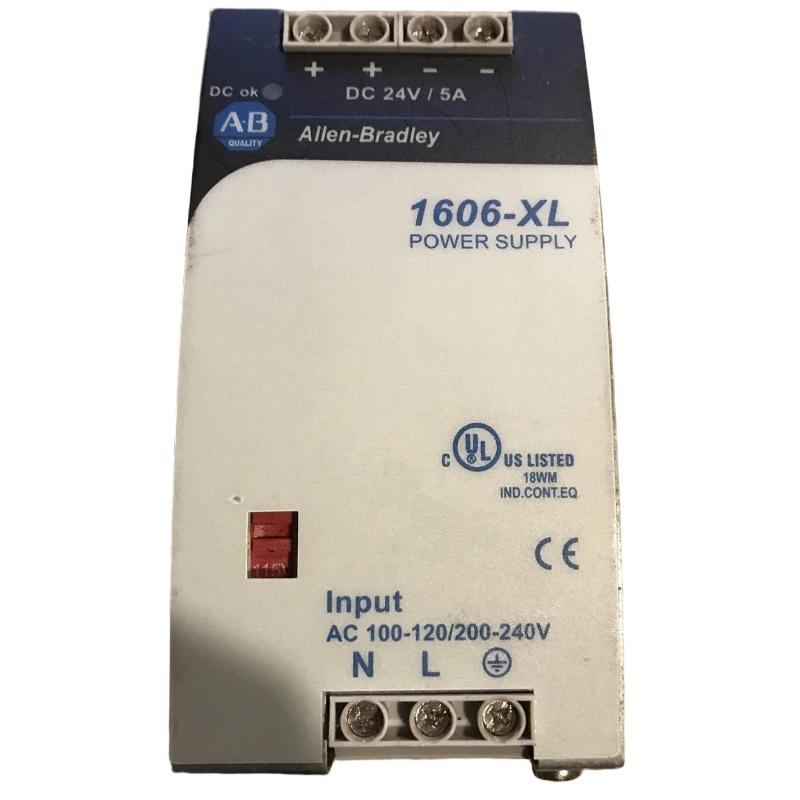
Allen Bradley 1606-XL120D Wiring Setup for Industrial 24V DC Applications
Correct wiring is one of the most important factors affecting Allen Bradley 1606-XL120D Power Supply performance.
During installation, the main attention should be placed on:
AC input connection quality
Protective grounding
DC positive distribution
DC negative return path
Terminal tightening condition
In one commissioning case, the 1606-XL120D output voltage was measured at 24.2V DC, but a remote PLC I/O module showed intermittent communication loss.
The engineer performed voltage measurements at different points:
Power supply output:
24.2V DC
Control panel distribution terminal:
24.0V DC
Remote I/O terminal:
22.0V DC
The first assumption was a power supply failure. However, further inspection found that the problem was caused by a loose terminal connection creating additional resistance.
After repairing the connection:
Remote voltage increased from 22.0V DC to 23.8V DC
Communication remained stable
PLC Controller operation returned to normal
This case shows that Installation Guide procedures must consider the complete electrical circuit, not only the power module output.
Allen Bradley 1606-XL120D Setup and Commissioning Verification Method
The Setup and Commissioning stage should confirm the performance of the power supply under actual working conditions.
A simple startup test is not enough because many power problems appear only when the machine reaches full operation.
During commissioning, engineers usually check:
24V DC output stability
Current consumption
PLC Controller startup behavior
Sensor response
Communication reliability
In one factory commissioning project, engineers recorded the following data:
Before optimization:
No-load voltage: 24.3V DC
Normal production voltage: 23.6V DC
Valve activation voltage: 22.7V DC
After improving the DC distribution:
No-load voltage: 24.2V DC
Normal production voltage: 24.0V DC
Valve activation voltage: 23.7V DC
The improvement eliminated unexpected PLC restarts.
The commissioning conclusion was that the power supply was working correctly, but the original System Configuration did not provide enough voltage stability during dynamic loads.
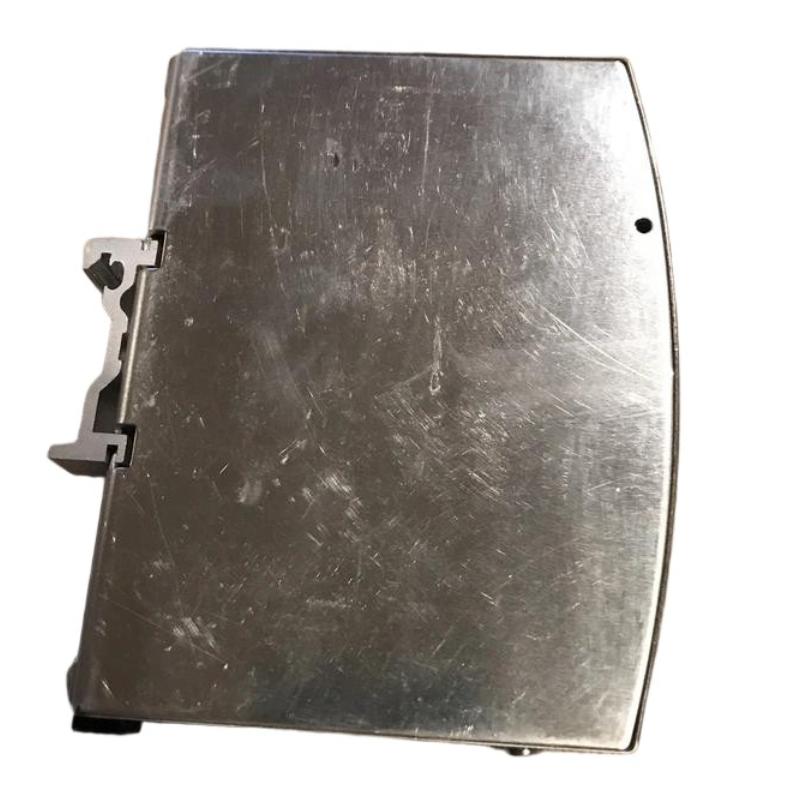
Allen Bradley 1606-XL120D Power Supply Integration With PLC Controller Systems
The Allen Bradley 1606-XL120D Power Supply is commonly used as a control power source in industrial automation applications.
Typical connected equipment includes:
PLC Controller systems
Remote I/O modules
Industrial sensors
Communication modules
Relay interface circuits
A good System Configuration should avoid connecting all devices to a single unrestricted DC branch.
Sensitive equipment such as PLC CPUs and communication modules should have stable power distribution, while inductive loads such as valves and contactors should be separated.
This design reduces:
Voltage fluctuation
Electrical interference
Unexpected controller shutdowns
Allen Bradley 1606-XL120D Installation Guide Field Experience and Maintenance
Long-term reliability depends on how the power system is maintained after commissioning.
In one production facility, an Allen Bradley 1606-XL120D Power Supply operated normally for several years. After additional sensors and control devices were installed, the machine began showing occasional input signal errors.
The maintenance team checked:
Output voltage
Current load
Terminal condition
Field wiring
The final measurement showed:
Before correction:
Operating load: 4.8 A
Voltage fluctuation: noticeable during actuator operation
After correction:
Operating load: 3.6 A
Voltage remained stable at approximately 24V DC
The issue was solved by reorganizing the DC distribution.
Field experience shows that successful Installation Guide work should include future expansion planning, not only initial startup.