Allen Bradley 1606-XL60D Power Supply Installation Guide
Time:2026-07-31 Browse: 9
Allen Bradley 1606-XL60D Power Supply Installation Overview
Allen Bradley 1606-XL60D power supply installation problems are commonly related to incorrect wiring, insufficient protection, or improper system configuration rather than the power supply unit itself. A correct Installation Guide approach helps ensure stable 24V DC output, reliable PLC Controller operation, and long-term industrial system performance.
The Allen Bradley 1606-XL60D is a DIN rail mounted DC power supply designed for industrial automation applications. It provides regulated DC power for PLC systems, Module assemblies, sensors, communication devices, and control components where voltage stability is critical.
In field applications, the Setup and Commissioning process should focus on input voltage verification, output measurement, grounding quality, and load behavior before connecting sensitive automation equipment.
Allen Bradley 1606-XL60D Power Supply Preparation Before Setup
Before starting the commissioning procedure, engineers should confirm the complete System Configuration and power requirements of the control cabinet.
Typical preparation checks include:
Confirming AC input voltage compatibility
Checking cabinet ventilation and installation position
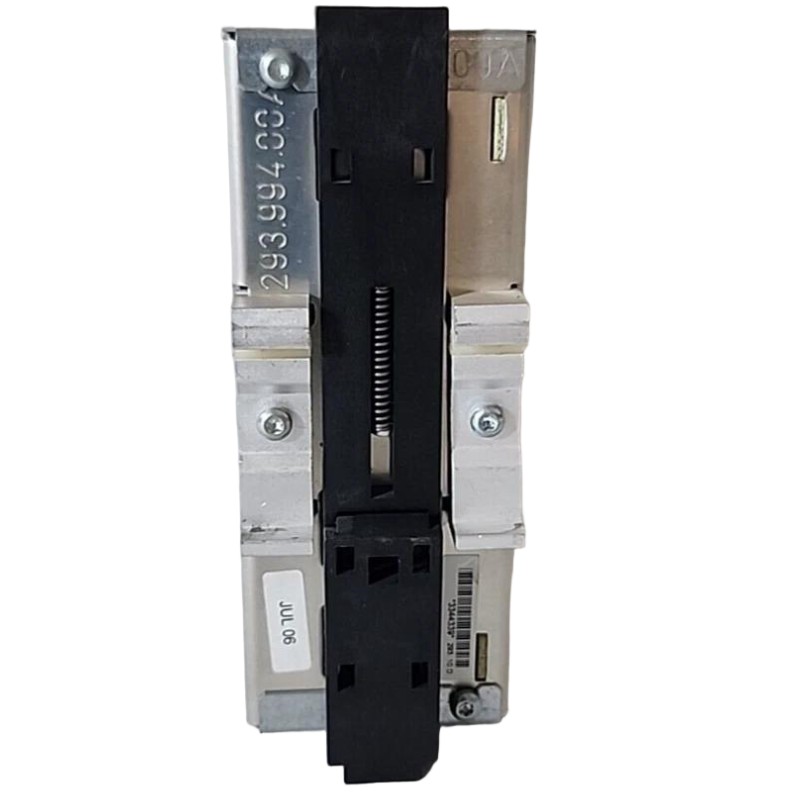
Inspecting DIN rail mounting condition
Reviewing connected PLC Controller and Module power demand
Verifying cable size and terminal tightening torque
The 1606-XL60D should be installed in a clean electrical enclosure with sufficient airflow. Excessive heat accumulation can reduce power supply efficiency and shorten component life.
During one commissioning case, a technician reported unstable PLC operation after replacing an older power unit. The initial assumption was a PLC Controller fault, but voltage measurement showed the DC output dropped from the expected 24V range to 21.8V under load. After correcting the power wiring and improving terminal contact, the system returned to stable operation.
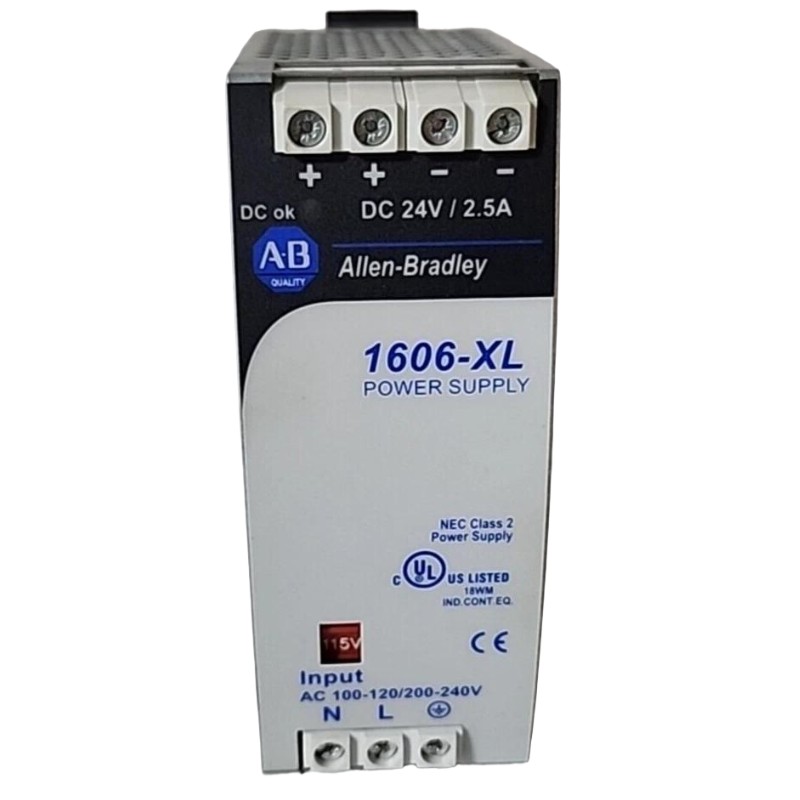
Allen Bradley 1606-XL60D Power Supply Wiring and Electrical Connection
Proper wiring is a key part of the Allen Bradley 1606-XL60D Installation Guide. Incorrect polarity or loose terminals may cause startup failure or intermittent control system shutdown.
Recommended field checks include:
Verify AC line and neutral connections
Confirm DC positive and negative polarity
Separate power cables from high-noise signal cables
Connect protective earth correctly
Check output voltage before connecting automation devices
A practical commissioning sequence is:
Apply AC input power without connecting the load.
Measure DC output voltage.
Connect PLC and control modules gradually.
Monitor voltage stability during operation.
For industrial PLC applications, engineers normally check whether the 24V DC supply remains stable during motor starting, valve activation, and communication module operation.
Allen Bradley 1606-XL60D Setup and Commissioning Validation
The final stage of Allen Bradley 1606-XL60D Setup and Commissioning is load validation.
Engineers should evaluate:
Output voltage stability
Load current behavior
Temperature rise
PLC Controller startup response
Sensor signal reliability
A stable power supply should maintain consistent DC output without excessive fluctuation. If connected devices experience random resets, communication interruptions, or sensor signal loss, the power supply should be included in the diagnostic process.
Field experience shows that many automation failures initially blamed on PLC hardware are actually caused by unstable DC power conditions.
Allen Bradley 1606-XL60D Power Supply Installation Best Practices
For reliable operation, the following practices are recommended:
Avoid operating continuously near maximum load capacity
Keep ventilation paths clear
Use proper grounding methods
Inspect terminals during scheduled maintenance
Record voltage measurements during commissioning
The Allen Bradley 1606-XL60D Power Supply is commonly integrated into industrial control panels where reliable DC power is essential for PLC Controller, Module, and Sensor systems.