August 2026 ICS Security Updates Put PLC, DCS and Industrial Automation Cybersecurity in Focus
Time:2026-08-14 Browse: 15
Published: August 2026
Industrial Automation Cybersecurity Becomes a Major Operational Priority
Cybersecurity has once again moved to the center of industrial automation discussions in August 2026 as major industrial technology vendors released security advisories covering vulnerabilities affecting industrial control system environments.
Recent August Patch Tuesday activity included security advisories from Siemens, Schneider Electric and Phoenix Contact covering vulnerabilities associated with industrial control products and technologies. The disclosures highlight the growing importance of cybersecurity for PLC, DCS, SCADA and other operational technology systems.
For industrial organizations, cybersecurity is no longer limited to protecting office computers and corporate networks.
Modern factories increasingly connect PLCs, HMIs, SCADA servers, engineering workstations, remote I/O, drives and DCS systems to industrial Ethernet networks.
This connectivity provides major operational benefits, but it also creates additional security considerations.
Why PLC and DCS Systems Need Stronger Cybersecurity
Industrial control systems were historically designed primarily around availability and reliability.
A PLC controlling a production machine was often located inside a relatively isolated industrial network.
Today, the architecture is different.
Factories may connect operational technology networks with enterprise IT systems, remote monitoring platforms, cloud applications and external service providers.
Engineers may need remote access for diagnostics.
Production data may be transferred to MES or analytics platforms.
Maintenance teams may use laptops and portable devices to configure controllers.
These connections improve productivity but can increase the potential attack surface.
A cybersecurity incident involving a PLC or DCS environment can have consequences beyond data loss.
It can potentially affect production availability, equipment operation, product quality and operational safety.
Siemens' industrial cybersecurity guidance specifically recognizes threats involving confidentiality, integrity and availability, including risks such as software manipulation, sabotage and production downtime.
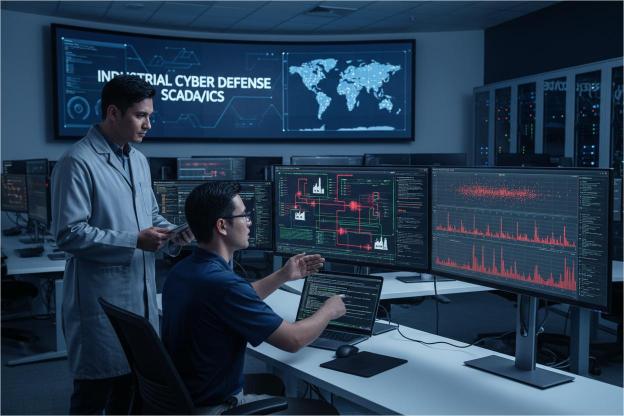
August Patch Tuesday Shows the Importance of Continuous Security
The August 2026 industrial cybersecurity updates demonstrate why cybersecurity must be treated as an ongoing lifecycle activity.
Industrial equipment often remains in service for many years.
A PLC, DCS controller or SCADA server installed several years ago may still be controlling an important production process today.
At the same time, new vulnerabilities can be discovered after the original equipment has been installed.
This creates a long-term maintenance requirement.
Organizations need processes for identifying vulnerabilities, evaluating risk, applying patches where appropriate and verifying that changes do not negatively affect production.
The August industrial security updates from Siemens, Schneider Electric and Phoenix Contact reinforce the need for this approach.
Patching Industrial Systems Is More Complicated Than Patching Office PCs
Industrial cybersecurity is different from conventional IT security.
An office computer can often be restarted after installing a security update.
A production controller may not be so simple.
Restarting a PLC, HMI server or DCS component can interrupt a production process.
In some facilities, downtime can be extremely expensive.
There may also be strict validation requirements in industries such as pharmaceuticals, chemicals, food processing and energy.
For this reason, industrial organizations cannot simply install every available patch immediately.
They need a structured risk-management process.
Engineers may need to determine whether a vulnerability affects their exact product version, whether the vulnerable function is enabled, whether network exposure exists and whether compensating security controls are already in place.
This is why vendor security advisories are important.
They allow plant operators and engineering teams to understand the affected products and recommended mitigation measures.
Network Segmentation Is Becoming Essential
One of the most important cybersecurity strategies for PLC and DCS environments is network segmentation.
Instead of allowing every device to communicate freely, industrial networks can be divided into zones.
A typical architecture may separate:
Enterprise IT networks
Industrial DMZ
SCADA servers
Engineering workstations
PLC networks
DCS control networks
Safety systems
Field devices
Firewalls and controlled communication paths can then regulate traffic between these zones.
The objective is to limit the potential impact of a compromised device.
For example, if an office computer becomes infected, strong segmentation can reduce the likelihood that the same incident will directly reach a PLC network.
This principle is closely related to the Purdue Model, which remains widely used when designing industrial network architectures.
Remote Access Requires Additional Protection
Remote access has become another major cybersecurity issue.
Modern industrial companies often require remote support from equipment manufacturers, system integrators or internal engineering teams.
Remote access can significantly reduce troubleshooting time.
However, an improperly secured remote connection can create a direct pathway into an operational network.
For this reason, industrial organizations increasingly use controlled remote access architectures involving VPNs, jump servers, multi-factor authentication, access logging and strict user permissions.
Remote users should not automatically receive unrestricted access to every PLC or DCS system.
Access should be limited according to job requirements.
An engineer who only needs to diagnose a specific HMI should not necessarily have unrestricted access to the entire control network.
PLC Security Must Include the Engineering Environment
Another frequently overlooked area is the engineering workstation.
PLC and DCS systems depend on engineering software for configuration, programming and maintenance.
If an engineering workstation becomes compromised, the risk may extend beyond the workstation itself.
An attacker could potentially attempt to manipulate configuration files, project data or controller communication.
This means cybersecurity needs to cover the entire engineering environment.
Security measures can include controlled user accounts, application allowlisting, endpoint protection, secure backups, removable-media controls and network segmentation.
Engineers should also maintain reliable backups of PLC programs and DCS configurations.
A clean and verified backup can become extremely valuable during incident recovery.
Backup and Recovery Are Critical for Industrial Automation
Cybersecurity is not only about preventing attacks.
It is also about recovering from incidents.
For industrial organizations, a recovery plan should identify what happens if a PLC, HMI server, SCADA system or engineering workstation becomes unavailable.
Questions should include:
How quickly can the system be restored?
Are PLC programs backed up?
Are HMI and SCADA configurations backed up?
Are DCS databases protected?
Can engineering software be reinstalled?
Are spare controllers available?
Are firmware versions documented?
Are network configurations recorded?
Without these preparations, even a relatively contained security incident can result in extended downtime.
This is particularly important for older automation systems where original engineering files may be difficult to recover.
Legacy PLC and DCS Systems Present Special Challenges
Many industrial facilities operate a mixture of new and legacy automation equipment.
A plant may have a modern Ethernet-based PLC system controlling one production line while older controllers continue operating other processes.
Replacing legacy equipment purely for cybersecurity reasons may not always be economically practical.
Instead, operators may need compensating controls.
These can include network isolation, firewall rules, restricted remote access, application controls and continuous monitoring.
Schneider Electric maintains a security notification process for vulnerabilities affecting its industrial and automation products, illustrating the need for ongoing lifecycle security management across automation platforms.
IEC 62443 and Industrial Cybersecurity
Industrial organizations are also paying greater attention to formal cybersecurity frameworks.
The IEC 62443 family of standards is particularly relevant to industrial automation and control systems.
The standards address areas such as system security, component security, secure development and operational practices.
Modern automation vendors increasingly incorporate cybersecurity into product design rather than treating it as an optional add-on.
Siemens, for example, has highlighted IEC 62443-certified security functions within its Industrial Edge ecosystem.
For system integrators, this trend means cybersecurity knowledge is becoming increasingly important.
An automation engineer may no longer be responsible only for PLC programming and commissioning.
The engineer may also need to understand network segmentation, secure protocols, user authentication, patch management and cybersecurity documentation.
Cybersecurity Is Becoming Part of the Automation Lifecycle
The most important change is that cybersecurity is increasingly becoming part of the entire automation lifecycle.
Security should be considered during:
System Design
Network architecture, segmentation, access control and secure communication should be considered before equipment is installed.
Engineering
PLC programs, HMI applications and DCS configurations should be developed using controlled engineering practices.
Commissioning
Default credentials, unnecessary services and network exposure should be reviewed before the system enters production.
Operation
Security monitoring, user management and vulnerability assessment should continue throughout the system lifecycle.
Maintenance
Firmware updates, patches and security advisories should be reviewed regularly.
Decommissioning
Old systems should be securely removed from the network and sensitive configuration information should be handled appropriately.
What This Means for Automation Equipment Buyers
For companies purchasing PLCs, DCS systems, SCADA software and industrial communication equipment, cybersecurity should now be part of the product evaluation process.
Technical specifications should not stop at processor speed, memory, I/O capacity and communication protocols.
Buyers should also consider:
Secure communication
User authentication
Role-based access
Firmware security
Security update policies
Vulnerability disclosure processes
Network segmentation support
Secure remote access
Backup and recovery
Long-term vendor support
These requirements are becoming increasingly important as industrial networks become more connected.
What This Means for Global Automation Suppliers
For international suppliers and distributors, cybersecurity can also become an important part of product value.
Customers may need more than a replacement PLC or DCS module.
They may need help identifying compatible firmware, understanding lifecycle status, maintaining spare parts and ensuring that replacement equipment fits within the existing cybersecurity architecture.
This is particularly relevant for older automation systems.
A customer replacing a discontinued PLC module may need to consider not only whether the new module is electrically compatible but also how it fits into the plant's current network and security strategy.
Conclusion
The August 2026 industrial cybersecurity updates are a reminder that PLC, DCS and SCADA systems must be treated as critical digital infrastructure.
Industrial automation is becoming more connected, more intelligent and more integrated with enterprise IT systems.
That transformation brings significant benefits, but it also increases the importance of cybersecurity.
For automation engineers, system integrators and industrial equipment suppliers, cybersecurity is becoming an essential part of modern control engineering.
The future industrial plant will not be defined only by faster PLCs, smarter DCS systems or AI-powered analytics.
It will also depend on whether those systems can remain secure, reliable and recoverable throughout their operational lifecycle.
As factories continue to adopt Industrial IoT, remote access, cloud platforms and artificial intelligence, cybersecurity will become increasingly inseparable from industrial automation itself.