ABB Automation Extended Advances DCS Modernization Without Disrupting Industrial Operations
Time:2026-08-16 Browse: 17
Distributed Control Systems have been the foundation of process automation for decades. Refineries, chemical plants, power facilities, mining operations, water treatment plants and other continuous-process industries rely on DCS platforms to maintain stable and reliable operations.
However, many industrial facilities are now facing a difficult modernization problem.
Their existing DCS systems may still be performing reliably, but the surrounding technology landscape is changing rapidly.
Industrial companies increasingly want advanced analytics, artificial intelligence, edge computing, Industrial Internet of Things connectivity and modern software applications.
Replacing an entire DCS system simply to gain access to new digital capabilities can be expensive and disruptive.
ABB's Automation Extended approach, introduced in 2026, addresses this challenge by focusing on gradual DCS modernization.
The concept represents an important direction for the future of process automation: modernize the digital capabilities around the control system while protecting the core control functions that keep the plant running.
Why DCS Modernization Has Become a Major Industry Issue
A DCS is not simply a software application.
In a large process plant, the control system can be connected to thousands of field devices, controllers, I/O modules, operator stations and safety-related systems.
It may contain decades of accumulated engineering knowledge.
Control strategies are often customized for specific processes, and operators may have years of experience working with the existing system.
Replacing the entire architecture can therefore introduce considerable engineering and operational risk.
The problem becomes more complicated when the plant must continue operating during modernization.
A production shutdown can be extremely expensive.
For many industrial facilities, the preferred approach is therefore to modernize gradually rather than replace everything at once.
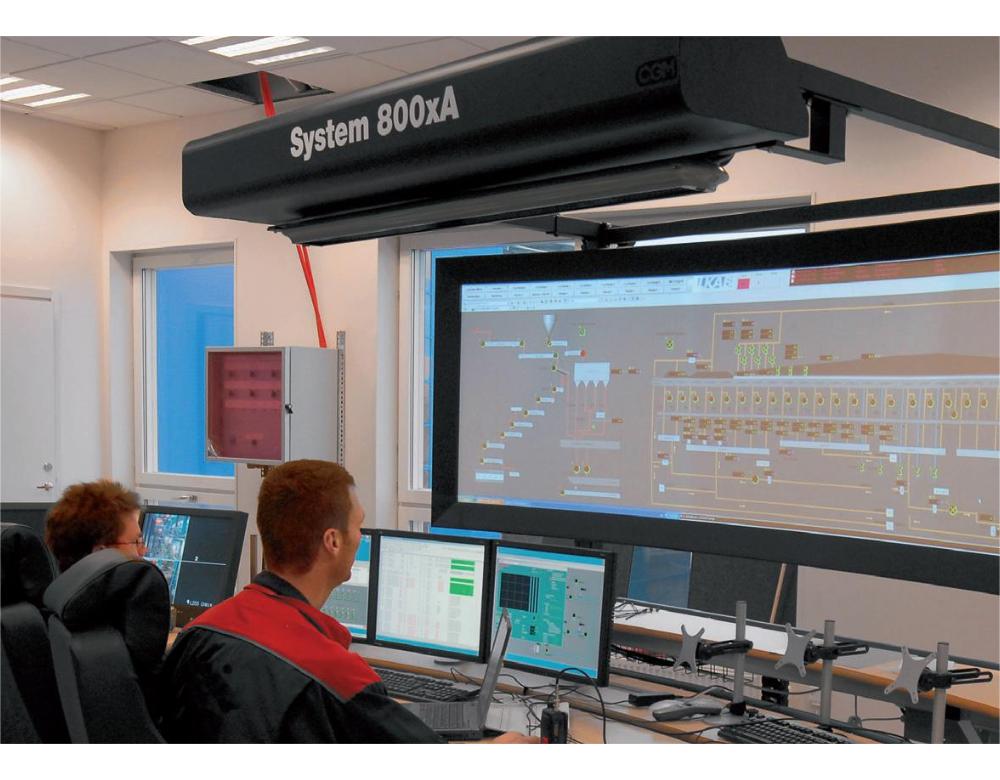
ABB Automation Extended Takes an Evolutionary Approach
ABB describes Automation Extended as an approach for evolving DCS architectures without disrupting ongoing operations.
The concept is designed around existing ABB automation platforms, including ABB Ability System 800xA, ABB Ability Symphony Plus and Freelance.
Rather than treating modernization as a single large project, the architecture allows organizations to introduce new digital capabilities progressively.
This approach is especially relevant for brownfield facilities.
A greenfield plant can be designed around the latest automation technologies from the beginning.
A brownfield plant has to work with existing controllers, I/O, wiring, instrumentation, software and operating practices.
Modernization therefore requires a different strategy.
Separating Core Control From Digital Innovation
One of the central concepts behind Automation Extended is the separation of core control from additional digital capabilities.
Traditional DCS architectures often combine control logic, visualization, data processing and other functions within tightly integrated environments.
This approach provides strong reliability, but it can make modernization more difficult.
ABB's newer architecture aims to separate critical control functions from additional digital applications while maintaining secure communication between them.
This means that advanced analytics or AI-related applications can evolve without necessarily requiring changes to the core control logic.
For industrial operators, this can reduce the risk associated with introducing new technologies.
The plant can continue using proven control functions while gradually adding new capabilities.
AI Is Entering the DCS Environment
Artificial intelligence is becoming an increasingly important topic in industrial automation.
However, AI adoption in process industries requires a different approach from AI applications in consumer software.
A refinery or chemical plant cannot simply allow an experimental algorithm to modify critical control parameters without proper validation.
Reliability, cybersecurity, process safety and operational continuity are essential.
This is why the architecture surrounding industrial AI is becoming increasingly important.
AI applications may analyze operational data, identify abnormal behavior, optimize processes or support maintenance teams.
The core DCS can remain responsible for deterministic control.
This creates a layered architecture.
The control layer maintains stable plant operation.
The digital layer analyzes information and provides additional intelligence.
The two environments communicate securely but do not necessarily have to be completely dependent on each other.
Why This Approach Matters for Existing Plants
Many industrial facilities have automation systems that are still functional but no longer represent the latest available technology.
Operators may want to add advanced analytics without replacing controllers.
They may want to introduce new operator tools without redesigning the entire control room.
They may want to connect plant data with enterprise systems while maintaining strict separation between IT and OT networks.
A modular modernization strategy can address these requirements.
Instead of a single large-scale migration, organizations can prioritize specific areas.
For example, a company might first improve data collection.
The next stage could involve advanced analytics.
Later, it could introduce AI-assisted optimization.
Additional functionality can then be added as business requirements evolve.
This creates a more flexible modernization roadmap.
DCS Modernization and Lifecycle Management
Another important issue is the long lifecycle of industrial automation systems.
A PLC or DCS installation can remain in operation for many years.
Industrial customers therefore need to think about automation as a lifecycle rather than a one-time purchase.
Hardware availability, software compatibility, cybersecurity updates, engineering tools and technical support all influence the long-term value of a control system.
ABB's Automation Extended concept places significant emphasis on lifecycle resilience.
Instead of forcing customers into disruptive replacement cycles, the architecture is designed to allow continuous evolution.
This is increasingly important as digital technology develops faster than traditional industrial equipment replacement cycles.
A control system may remain operational for years, while new analytics and AI technologies can appear every few months.
A modular architecture helps bridge this difference in technology lifecycles.
System 800xA 7.0 Provides a Foundation
ABB's System 800xA 7.0 is positioned as a foundation for the Automation Extended approach.
The platform is designed to provide a stable path for existing installations and new projects while supporting newer technologies.
Long-term support is particularly important for industrial customers.
A process plant does not upgrade its control system every time a new software technology becomes available.
Operators need predictable support and controlled migration paths.
A long-term-support DCS release can therefore provide a stable foundation while organizations introduce new digital functions around it.
This combination of stability and flexibility is becoming a major theme in modern industrial automation.
Open and Modular Architecture
Industrial automation has traditionally relied heavily on vendor-specific technologies.
This provided strong integration between hardware and software but could also create limitations when organizations wanted to connect new systems.
Modern automation architectures are increasingly moving toward open standards and modular software.
The objective is not necessarily to eliminate vendor ecosystems.
Instead, it is to make it easier to integrate new applications without modifying the entire control platform.
For industrial users, this can provide greater flexibility when planning future investments.
A modular architecture also makes it easier to introduce new capabilities at different speeds.
One plant may prioritize cybersecurity.
Another may prioritize predictive maintenance.
A third may focus on energy optimization.
The same core automation system can potentially support different modernization priorities.
The Importance of Brownfield Automation
Brownfield modernization is likely to remain one of the largest opportunities in the global automation industry.
There are thousands of industrial facilities operating with legacy PLC, DCS, SCADA and instrumentation systems.
Many of these systems cannot simply be removed.
The challenge is to modernize them while maintaining production.
This creates demand for migration services, replacement controllers, communication modules, remote I/O, industrial networking equipment, engineering services and cybersecurity solutions.
It also creates a market for spare parts.
When a legacy control system reaches the end of its supported lifecycle, customers often need replacement components quickly.
Reliable industrial automation hardware can therefore remain important even as the industry moves toward software-defined architectures.
What This Means for PLC and DCS Suppliers
The modernization trend affects both PLC and DCS suppliers.
Customers increasingly want control systems that can operate alongside existing equipment.
This means compatibility and migration capability are becoming important purchasing factors.
A new automation system is no longer evaluated only by its processing speed or I/O capacity.
Customers also want to know how easily it can connect with existing infrastructure.
They want to know whether new software can be introduced without replacing core controllers.
They also want predictable lifecycle support.
For automation distributors and exporters, this creates opportunities in both new and legacy equipment.
Customers may require new modules for modernization projects while simultaneously searching for discontinued components needed to maintain existing systems.
DCS Is Moving Toward a Platform Model
The concept of DCS is also evolving.
Historically, a DCS was primarily viewed as a control system.
Modern platforms increasingly combine control, visualization, safety, data management, analytics and lifecycle services.
This broader platform model allows industrial companies to treat automation as a long-term digital infrastructure.
The DCS remains responsible for core control.
Additional software and digital applications can then extend its capabilities.
This creates a more scalable approach to industrial digital transformation.
Why Continuous Modernization Could Become the New Standard
The traditional model of automation modernization often involved a major upgrade every several years.
A plant would plan a large shutdown, replace a significant portion of the control system and then operate the new architecture for another long period.
The emerging model is different.
Modernization can become continuous.
Companies can add new capabilities when they become valuable instead of waiting for the entire control system to reach the end of its lifecycle.
This approach can reduce the gap between industrial automation and rapidly developing digital technologies.
It also allows organizations to spread investment over time.
The Future of DCS Modernization
ABB's Automation Extended approach reflects a broader industry trend.
The future of DCS is unlikely to be defined only by faster controllers or larger I/O capacity.
Instead, the focus is moving toward flexible architectures that combine reliable deterministic control with advanced digital capabilities.
AI, analytics, edge computing, cybersecurity and industrial connectivity will increasingly surround the core automation system.
However, the core control layer will remain critical.
Industrial plants need systems that can continue operating safely and reliably even when digital applications change.
For process industries, this balance between stability and innovation is essential.
The most successful automation architectures will therefore need to provide both.
ABB's Automation Extended strategy demonstrates how DCS technology is evolving toward this model: protecting the core control system while creating a structured path for digital expansion.
For industrial automation users, system integrators and DCS suppliers, this could become one of the most important themes of the next stage of process automation.
SEO Keywords: ABB Automation Extended, ABB DCS, DCS modernization, industrial automation, distributed control system, ABB System 800xA, process automation, DCS upgrade, brownfield automation, PLC and DCS, industrial control system, DCS migration, industrial AI, smart factory, process control system