Rockwell Automation Helps Cranswick Reach 240 Picks per Minute With High-Speed Robotic Packaging
Time:2026-08-16 Browse: 14
Published: August 2026
Industrial automation is increasingly moving beyond traditional PLC control toward integrated systems that combine programmable controllers, motion control, robotics, machine vision and advanced manufacturing software.
A recent project involving Rockwell Automation and UK food manufacturer Cranswick demonstrates how these technologies can address a practical manufacturing challenge.
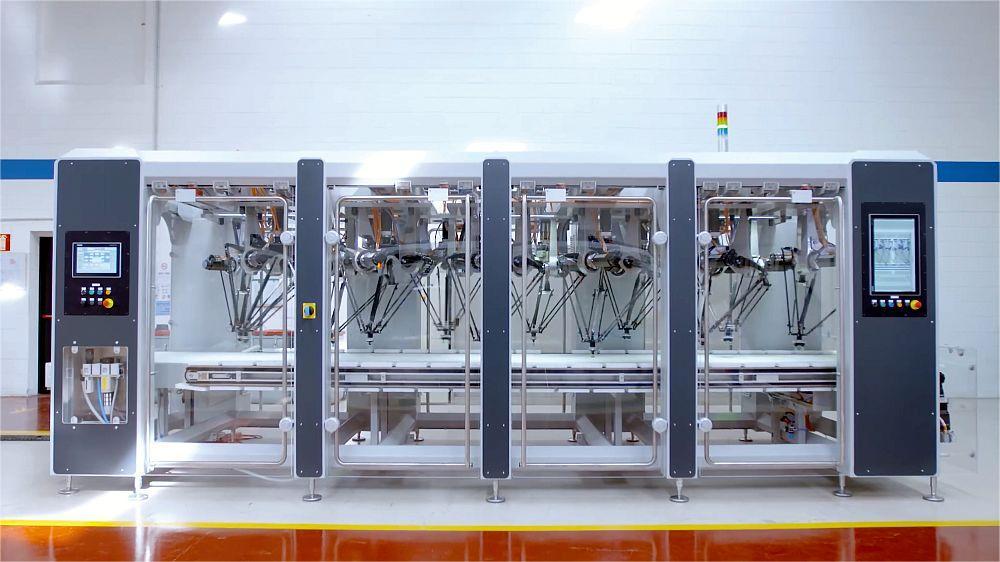
Cranswick has commissioned a new automated end-of-line packaging system for its food production operations. The system uses high-speed robotic pick-and-place technology and Rockwell Automation control technology to automate a packaging process that previously depended on manual labor.
The new system can perform up to 240 pick-and-place cycles per minute, creating a significant increase in packaging speed and consistency.
The project provides a useful example of how PLC-based industrial automation and robotics can work together to improve production efficiency.
A Manual Packaging Process Becomes Automated
Food manufacturing presents unique automation challenges.
Products may vary slightly in shape, position and orientation.
Production speeds can also be extremely high.
Workers performing repetitive pick-and-place operations must maintain consistent performance throughout the production shift.
For high-volume production, manual packaging can become a bottleneck.
Cranswick's automated solution addresses this challenge by introducing robotic handling at the end of the production process.
Instead of relying on operators to manually pick products from a conveyor and place them into packaging, the robotic system performs the task automatically.
The result is a faster and more repeatable production process.
Rockwell Automation Technology Supports the Control System
Rockwell Automation is widely known for its Allen-Bradley PLC, motion control and industrial automation technologies.
In this project, Rockwell Automation worked with CWM Automation and other technology partners to implement the automated packaging solution.
The system incorporates autonox Delta robots for high-speed pick-and-place operations.
The robots are integrated with the wider automation system so that product handling can be synchronized with the production line.
This type of integration is important.
A robot operating independently is not enough for a high-speed production line.
The robot must understand when products are available, where they are located and when they need to be transferred to packaging.
The PLC and motion control system therefore play a critical role in coordinating the complete process.
240 Picks Per Minute
One of the most notable results of the project is the system's ability to achieve up to 240 picks per minute.
At that speed, manual handling would be extremely difficult to maintain consistently.
Automation allows the production line to operate at a high and predictable rate.
The robotic system can repeatedly perform the same movement while maintaining synchronization with the conveyor and packaging equipment.
This is one of the fundamental advantages of industrial robotics.
Robots are particularly effective at repetitive tasks where speed, precision and consistency are important.
When combined with PLC control, they can become part of a larger automated production sequence rather than functioning as standalone machines.
Why PLC and Robotics Integration Matters
The project illustrates an important trend in modern factory automation.
PLC systems and robots are increasingly being integrated into unified production architectures.
The PLC manages the broader machine sequence.
It can coordinate conveyors, sensors, safety devices, packaging equipment and communication networks.
The robot performs high-speed motion tasks.
Motion control technology ensures that the robot moves according to the required production sequence.
Together, these technologies create a coordinated automation system.
This architecture is becoming common in food processing, packaging, automotive manufacturing, pharmaceuticals, logistics and consumer goods production.
High-Speed Automation Requires Precise Synchronization
At 240 cycles per minute, timing becomes critical.
The automation system needs to know exactly when products enter the robot's working area.
Sensors can detect product position.
The control system processes this information.
The robot then performs the required movement at the correct moment.
Any delay can cause the robot to miss the product or interfere with another machine.
This is why high-speed robotic packaging requires more than simply purchasing a fast robot.
The complete automation architecture must be designed around synchronization.
PLC scan times, communication performance, motion control, sensor response and robot programming all contribute to the overall system performance.
Automation Improves Production Consistency
One of the major benefits of robotic automation is repeatability.
Human workers can perform repetitive tasks effectively, but production speed and consistency can vary depending on fatigue, workload and other factors.
A properly configured robotic system can repeat the same operation thousands of times while maintaining consistent motion.
For food manufacturers, consistency can be particularly important.
Products need to be placed correctly in packaging.
Incorrect positioning can create packaging problems or reduce production efficiency.
Automation can therefore improve both throughput and process consistency.
Automation Can Move Workers Toward Higher-Value Tasks
Industrial automation does not necessarily mean eliminating every human role.
In the Cranswick project, automation removes a repetitive packaging task and allows workers to focus on other activities.
This reflects an increasingly common approach to industrial automation.
Machines perform repetitive, physically demanding or high-speed operations.
Employees can then concentrate on machine supervision, quality control, maintenance, process improvement and other tasks that require human judgment.
For manufacturers facing labor shortages, this can be an important advantage.
Automation can help companies maintain production capacity without relying entirely on increasing manual labor.
The Role of Industrial Robots in Modern Manufacturing
Industrial robots have existed for decades, but modern robotics is becoming increasingly integrated with broader automation platforms.
A robot is no longer necessarily an isolated device.
It can communicate with PLCs, HMIs, safety controllers, machine vision systems, drives and manufacturing software.
This creates a connected automation environment.
For system integrators, the challenge is therefore to design the entire system rather than focus only on the robot.
The success of a robotic application depends on mechanical design, electrical engineering, PLC programming, motion control, networking and commissioning.
This creates demand for engineers with multidisciplinary automation knowledge.
Motion Control Is Becoming More Important
High-speed robotic applications also highlight the importance of motion control.
Traditional PLC applications often focus on discrete logic.
A machine waits for an input, executes an action and then moves to the next step.
High-speed robotics requires much more precise coordination.
The controller must manage position, velocity, acceleration and timing.
Motion systems must also coordinate with sensors and mechanical equipment.
Modern industrial automation platforms increasingly combine PLC functionality with motion control.
This allows engineers to manage machine logic and high-performance movement within a coordinated architecture.
Industrial Ethernet and Communication
Communication is another important component of modern robotic automation.
A production line may contain PLCs, robots, drives, safety devices, HMIs and remote I/O modules.
These devices need to exchange information quickly and reliably.
Industrial Ethernet technologies have become increasingly important because they allow multiple automation devices to communicate through standardized network architectures.
For high-speed packaging equipment, communication performance can directly influence machine responsiveness.
Reliable industrial networking therefore becomes part of the machine's overall productivity strategy.
Safety Remains Essential
High-speed robots introduce significant mechanical hazards.
A robotic arm moving hundreds of times per minute requires appropriate safety measures.
Industrial safety systems may include safety controllers, emergency stops, safety sensors, guarding and controlled access.
The safety system must be designed so that the machine can enter a safe state when required.
This is another area where PLC-based automation and robotics need to work together.
The production system must achieve high speed without compromising operator safety.
For system integrators, functional safety engineering is therefore an important part of robotic automation projects.
Food Manufacturing Is a Strong Market for Automation
The food and beverage industry is increasingly adopting automation because production volumes are high and many processes are repetitive.
Packaging is particularly suitable for robotic automation.
Products can arrive continuously on conveyors, allowing robots to perform standardized handling operations.
High-speed packaging systems can increase production capacity while reducing repetitive manual work.
As consumer demand changes and manufacturers face labor constraints, automation can provide greater flexibility.
This may encourage more food manufacturers to invest in robotics, PLCs, motion control and machine vision.
Implications for Allen-Bradley and PLC Users
The project is also relevant to users of Allen-Bradley automation equipment.
Rockwell Automation's PLC and control technologies are widely used in manufacturing environments where machine coordination and production reliability are important.
A robotic packaging project demonstrates how PLC systems can remain at the center of an increasingly sophisticated automation architecture.
The PLC does not have to perform every function itself.
Instead, it coordinates specialized systems.
Robots handle motion.
Sensors provide information.
Safety controllers manage protective functions.
HMIs provide operator interaction.
Industrial networks connect the different components.
The PLC provides the control structure that brings these systems together.
What This Means for Industrial Automation Suppliers
Projects like the Cranswick packaging system also demonstrate why industrial automation demand extends beyond PLC CPUs.
A complete automation project may require controllers, I/O modules, communication cards, safety modules, servo drives, motion controllers, HMIs, sensors and networking components.
Customers may also require replacement parts for existing Allen-Bradley systems.
For industrial automation distributors and exporters, this creates opportunities across both new projects and maintenance markets.
A manufacturer upgrading one machine may need new automation hardware.
Another facility may need a discontinued PLC module to keep an existing production line running.
Both requirements are part of the broader industrial automation market.
The Future of Robotic Packaging
Robotic packaging is likely to become increasingly intelligent.
Future systems may combine robotics with machine vision, AI-based inspection, predictive maintenance and more advanced motion control.
Instead of simply repeating a fixed movement, robots may be able to adapt to changing product positions and production conditions.
Machine vision can help identify products.
AI can assist with quality inspection.
Predictive analytics can monitor equipment performance.
PLC and motion systems can coordinate the entire process.
The result is a more flexible production environment.
Why the Cranswick Project Matters
The Cranswick project is a practical example of industrial automation solving a specific manufacturing problem.
The objective was not simply to install a robot.
The goal was to remove a production bottleneck and improve the efficiency of end-of-line packaging.
The resulting system can operate at up to 240 picks per minute, demonstrating the potential of high-speed robotic automation in food manufacturing.
It also shows the continuing importance of PLC technology.
Even as robots become more sophisticated, they still need to operate within a coordinated machine-control architecture.
This is where PLCs, motion control, industrial networks and safety systems remain essential.
Conclusion
The collaboration between Rockwell Automation, Cranswick and technology partners demonstrates how modern industrial automation is evolving.
PLC control, robotics and motion technology are increasingly being combined to create high-speed manufacturing systems.
The ability to automate repetitive packaging operations can improve production speed, consistency and operational efficiency while allowing employees to focus on higher-value activities.
For manufacturers, this approach can provide a practical response to labor challenges and growing production requirements.
For automation engineers, it highlights the importance of understanding multiple technologies rather than focusing on PLC programming alone.
And for the wider industrial automation market, it reinforces a clear trend: the future of factory automation will be increasingly integrated.
PLCs, robots, motion control, sensors, industrial networking and safety systems will work together as one coordinated production environment.
The Cranswick project provides a real-world example of what that future looks like today.