Schneider Electric Advances Digital Process Control for Lithium Battery Material Manufacturing
Time:2026-08-21 Browse: 22
August 21, 2026 | Industrial Automation & Lithium Battery Manufacturing
As electric vehicles and energy storage systems continue to drive demand for higher-performance lithium-ion batteries, the manufacturing capabilities behind battery materials are becoming increasingly important. For producers of cathode precursors, electrolyte additives, and other battery-grade materials, consistent quality depends not only on chemical formulations but also on precise process control, reliable automation, batch traceability, and efficient energy management.
Schneider Electric is positioning its industrial automation and digital solutions to support these requirements, helping chemical and battery-material manufacturers improve process visibility, production consistency, scalability, and energy efficiency.
Battery Material Quality Starts with Precise Process Control
The performance of a lithium-ion battery is closely linked to the quality and consistency of its materials.
In ternary cathode material production, precursor manufacturing is a critical upstream process. Nickel, cobalt, and manganese ratios, particle morphology, crystal structure, reaction conditions, and other process variables can all influence the characteristics of the final cathode material.
Co-precipitation is widely used for producing ternary precursors. The process requires careful management of variables such as pH, temperature, reactant concentration, feed rate, agitation, and precipitation conditions. Small changes in these parameters can affect particle properties and ultimately influence downstream material performance.
This makes process automation more than a basic equipment-control function. For battery material manufacturers, automation provides a foundation for maintaining repeatable operating conditions and improving batch-to-batch consistency.
The same principle applies to electrolyte manufacturing. Electrolyte additives such as vinylene carbonate (VC) and fluoroethylene carbonate (FEC) are typically used in relatively small quantities, but their chemical purity and formulation accuracy can have a significant influence on battery performance.
Recent battery research continues to demonstrate the importance of high-purity electrolyte components and controlled water content. For example, published research has used battery-grade electrolyte solvents and additives with purity levels around 99.9% to 99.99%, illustrating the stringent material requirements involved in advanced battery development.
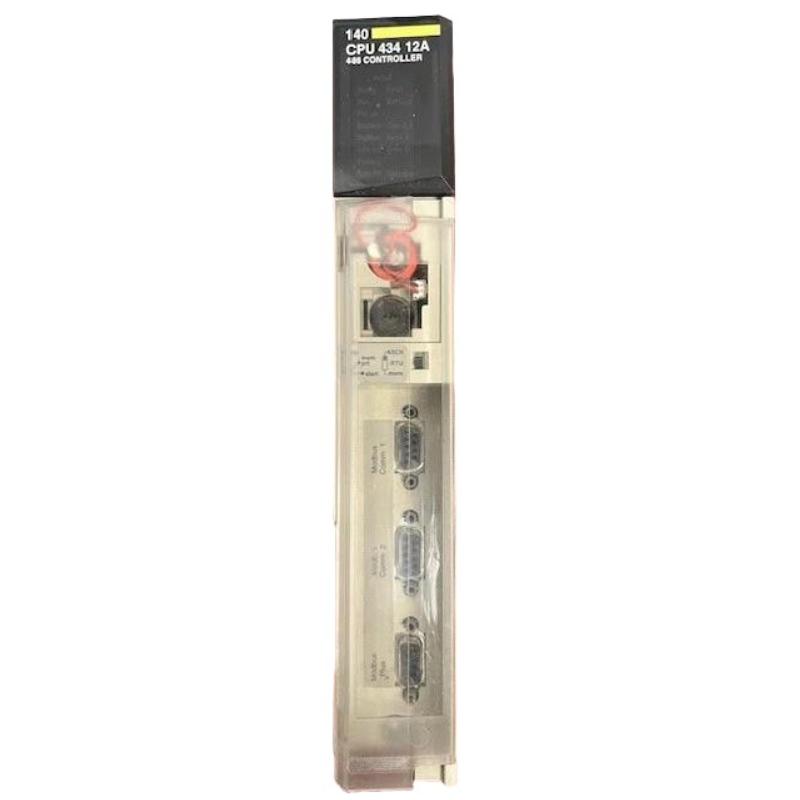
From Laboratory Formulas to Stable Industrial Production
One of the biggest challenges for specialty chemical and battery-material manufacturers is scaling a process from laboratory development to pilot production and then to commercial manufacturing.
A formulation that performs well in a laboratory reactor cannot always be transferred directly to a large production line. Heat transfer, mixing efficiency, residence time, equipment characteristics, raw-material feeding, and control-loop performance can change significantly as production capacity increases.
Digital batch and recipe management can help bridge this gap by standardizing production procedures and reducing dependence on manual parameter entry.
Schneider Electric's ProLeiT Plant iT is a modular, PLC-based process control platform with integrated Manufacturing Execution System functionality. The platform supports process visualization, batch systems, recipe and material management, and integration between production control and higher-level manufacturing systems.
For plants producing multiple material grades, digital recipe management can provide a more structured method for handling product variations while maintaining production records and process history.
Schneider Electric's AVEVA Batch Management also provides automated batch execution, recipe management, equipment coordination, and material traceability. The system is designed for complex batch processes where production flexibility and consistent quality are important.
These capabilities can be particularly relevant to battery-material manufacturers developing multiple formulations or frequently transferring new products from pilot production into commercial manufacturing.
Advanced Process Control for More Stable Chemical Processes
As chemical processes become more demanding, traditional control strategies may not always be sufficient to maintain optimal operation across changing process conditions.
Advanced Process Control (APC) uses process models, data analysis, and optimization techniques to improve control of complex processes. In applications involving highly coupled variables, APC can help operators and control systems manage process interactions more effectively.
Schneider Electric's EcoStruxure Advanced Process Control portfolio is designed to support advanced optimization and control strategies for industrial processes.
For battery-material production, potential applications include tighter control of reaction conditions, temperature management, process optimization, and improved consistency during changing operating conditions. The actual benefits, however, depend on process design, instrumentation quality, control architecture, and the specific production application.
This distinction is important for chemical manufacturers: advanced algorithms cannot replace reliable field instrumentation and basic process control. Instead, APC works on top of a stable automation foundation to help extract additional performance from an already well-instrumented process.
Energy Management Becomes a Manufacturing Issue
Battery-material production is also energy intensive.
Precursor synthesis, drying, calcination, heating, cooling, separation, purification, and other processes can require significant electrical and thermal energy. As production volumes increase, energy management becomes closely connected with manufacturing cost and environmental performance.
Schneider Electric's EMS+ energy management platform is designed to collect and centralize operational and energy-related data for analysis and reporting. Schneider Electric also provides energy monitoring, power management, and digital solutions for battery manufacturing facilities.
For battery plants, integrating energy information with production data can help manufacturers identify high-consumption processes, monitor equipment performance, and evaluate opportunities for energy optimization.
This approach is particularly relevant as manufacturers face increasing pressure to improve energy efficiency while maintaining product quality and production stability.
Safety and Traceability Remain Critical in Chemical Manufacturing
Lithium battery material production involves chemical reactions, high-temperature operations, corrosive substances, and other process hazards. Safety therefore needs to be considered together with automation and production management.
A modern industrial control architecture can provide continuous monitoring of process conditions, equipment status, alarms, and production data. When combined with appropriate safety systems, instrumentation, procedures, and risk-management practices, digital technologies can improve visibility into plant operations.
Traceability is equally important.
For specialty chemical manufacturers supplying global battery producers, the ability to track raw materials, process parameters, equipment conditions, recipes, and batch results can support quality management and customer requirements.
Digital batch records and historian systems can provide a structured production history rather than relying heavily on manually maintained records. Schneider Electric's industrial software portfolio includes batch management and historian capabilities designed to support this type of production visibility.
Schneider Electric's Role in the Battery Manufacturing Automation Landscape
Schneider Electric's approach combines industrial automation, process control, energy management, and digital software rather than treating each function as an isolated system.
Its broader EcoStruxure architecture for battery manufacturing is designed to address production efficiency, quality management, sustainability, and standardized plant architectures. Schneider Electric also provides solutions for electrical distribution and power monitoring within battery manufacturing facilities.
This combination is becoming increasingly relevant as battery-material manufacturers move toward larger plants, more product variants, tighter quality requirements, and higher expectations for energy efficiency.
For industrial automation buyers, the value is not simply in selecting an individual PLC, controller, HMI, drive, or power meter. The larger opportunity is to build an integrated automation architecture in which field devices, process control, batch management, production data, and energy information can work together.
What Battery Material Manufacturers Should Watch
The next stage of lithium battery manufacturing will place greater emphasis on process consistency and digital manufacturing capabilities.
For producers of cathode precursors and electrolyte materials, several areas are likely to remain important:
High-precision process control for temperature, pressure, flow, pH, concentration, and other critical variables.
Digital recipe management to reduce manual intervention and support multiple product grades.
Batch traceability to connect raw materials, process parameters, equipment, and final product results.
Advanced process control for complex and highly coupled chemical processes.
Energy monitoring and optimization across heating, cooling, drying, separation, and other energy-intensive operations.
Scalable automation architectures that can support pilot plants, production expansion, and future process changes.
Integrated production and operational data to improve decision-making and long-term process optimization.
Conclusion
The competitive advantage of lithium battery materials is increasingly determined by more than chemical formulation alone. As battery manufacturers demand higher consistency, energy density, safety, and cycle life, upstream material producers must strengthen their ability to control and reproduce complex manufacturing processes.
Schneider Electric's process control, batch management, industrial software, energy management, and EcoStruxure solutions provide technologies that can support this transition.
For chemical and battery-material manufacturers, the long-term objective is clear: transform laboratory innovation into repeatable industrial production while improving quality, traceability, energy efficiency, and operational visibility.
In this environment, industrial automation is becoming an essential link between advanced battery-material chemistry and reliable large-scale manufacturing.