BP Expands Collaboration with Emerson to Maximize Gas Recovery and Processing Efficiency
Time:2026-09-01 Browse: 19
September 1, 2026
BP has expanded its long-standing collaboration with Emerson through a new automation contract for the Shah Deniz Compression (SDC) project off the coast of Azerbaijan. The agreement will bring Emerson’s integrated control and safety systems to a new offshore compression platform designed to improve natural gas recovery and processing efficiency.
The development represents another step in BP’s ongoing efforts to extend production from the Shah Deniz gas field in the Caspian Sea. Emerson previously served as the main automation contractor for the Azeri Central East and Shah Deniz Stage 2 developments, making the new contract an extension of an established automation relationship between the two companies.
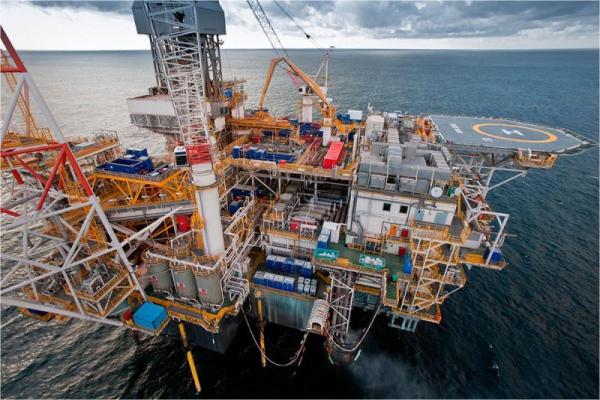
Automation Technology for the Shah Deniz Compression Project
The Shah Deniz Compression project has an estimated value of $2.9 billion and is designed to access lower-pressure gas reserves as reservoir pressure declines over time.
The new offshore platform will be electrically powered and normally unattended. It will include four 11 MW compressors and act as a central compression hub for gas coming from the existing Shah Deniz Alpha and Shah Deniz Bravo platforms.
Gas from the two production platforms will be routed to the new compression facility before being transported to BP’s onshore Sangachal terminal, approximately 55 kilometers south of Baku.
For industrial automation systems, the project highlights the increasing importance of integrated control, safety and remote-operation technologies in offshore oil and gas facilities.
Emerson to Supply DeltaV Control and Safety Systems
Under the contract, Emerson will provide an integrated automation solution based on its DeltaV Distributed Control System (DCS) and DeltaV Safety Instrumented System (SIS).
The systems are designed to provide several critical functions, including:
Process control
Safety shutdown
Fire and gas detection
Power management
Real-time operational monitoring
Remote control of critical offshore processes
By combining process control and safety functions within an integrated architecture, the system is intended to provide operators with greater visibility of offshore operations while reducing the need for personnel on the normally unattended platform.
This approach is particularly relevant to offshore automation, where limited physical access, harsh operating conditions and high safety requirements make remote monitoring and control increasingly important.
Remote Operations Could Improve Offshore Efficiency
One of the key features of the SDC project is its remote operating model. The platform is expected to be operated remotely from BP’s Sangachal terminal rather than relying on a permanently staffed offshore workforce.
Emerson says its automation architecture will provide real-time visibility and control of critical operations. The company also plans to use cloud engineering services and digital twin technology for virtual testing, system integration and operator training.
For an offshore facility, these technologies can help identify control and integration issues before commissioning while supporting more efficient engineering and training processes.
Project Expected to Extend Shah Deniz Gas Production
The Shah Deniz Compression project is intended to recover gas that becomes more difficult to produce as reservoir pressure decreases.
According to Emerson, the project is expected to enable approximately 50 billion cubic meters of additional gas and around 25 million barrels of condensate production and export.
Construction of the compression platform is scheduled for completion in 2029. First gas compression is expected from the Shah Deniz Alpha platform in 2029, followed by the Shah Deniz Bravo platform in 2030.
The project therefore combines a major offshore compression investment with a modern industrial automation architecture, illustrating how automation can support the recovery of additional resources from mature gas fields.
Significance for Industrial Automation
The BP–Emerson collaboration is also significant from an industrial automation perspective.
Offshore oil and gas operators are increasingly looking beyond individual control components toward integrated automation platforms capable of managing process control, safety systems, instrumentation, power management and remote operations within a unified environment.
The Shah Deniz Compression project provides a practical example of this trend. Instead of relying solely on traditional offshore control rooms and manually intensive operations, the project is designed around integrated systems and remote supervision.
For automation suppliers and industrial equipment users, this highlights continued demand for reliable DCS, SIS, industrial controllers, process instrumentation, safety systems and communication technologies in large-scale energy infrastructure projects.
As offshore facilities become more digitally connected and increasingly autonomous, automation systems are expected to play a larger role in improving operational availability, safety and resource recovery.
Industry Outlook
The latest BP and Emerson agreement demonstrates that automation remains a critical part of large-scale natural gas infrastructure development.
The combination of offshore compression, integrated control and safety systems, remote operation and digital engineering is likely to become increasingly important as energy companies seek to improve recovery from existing fields while controlling operating costs and maintaining high safety standards.
For the industrial automation market, projects such as Shah Deniz Compression also create demand across a broad range of equipment categories, including DCS systems, PLCs, safety controllers, remote I/O, industrial communication equipment, pressure and flow instrumentation, control valves and related automation components.