Allen Bradley MPL-B310P-HJ72AA Servo Motor Overheating Troubleshooting Guide
Time:2026-09-02 Browse: 15
Allen Bradley MPL-B310P-HJ72AA servo motor overheating is not automatically a motor failure. Excessive load, poor mechanical alignment, incorrect tuning, restricted cooling, or abnormal duty cycles can all increase motor temperature. Effective Troubleshooting starts by determining whether the heat originates from the motor, the mechanical load, or the motion profile.
Allen Bradley MPL-B310P-HJ72AA Servo Motor Overheating Symptoms
An overheating condition may appear gradually rather than as an immediate drive fault. Typical observations include increasing motor temperature, thermal protection warnings, reduced machine availability, or a servo drive that repeatedly reports an overload-related condition.
The most useful initial comparison is between the present operating condition and the machine's normal baseline.
Record:
Motor temperature
Motor current
Operating speed
Acceleration rate
Load condition
Duty cycle
Drive diagnostic information
A temperature increase by itself does not identify the root cause. Current and operating conditions provide much more useful information.
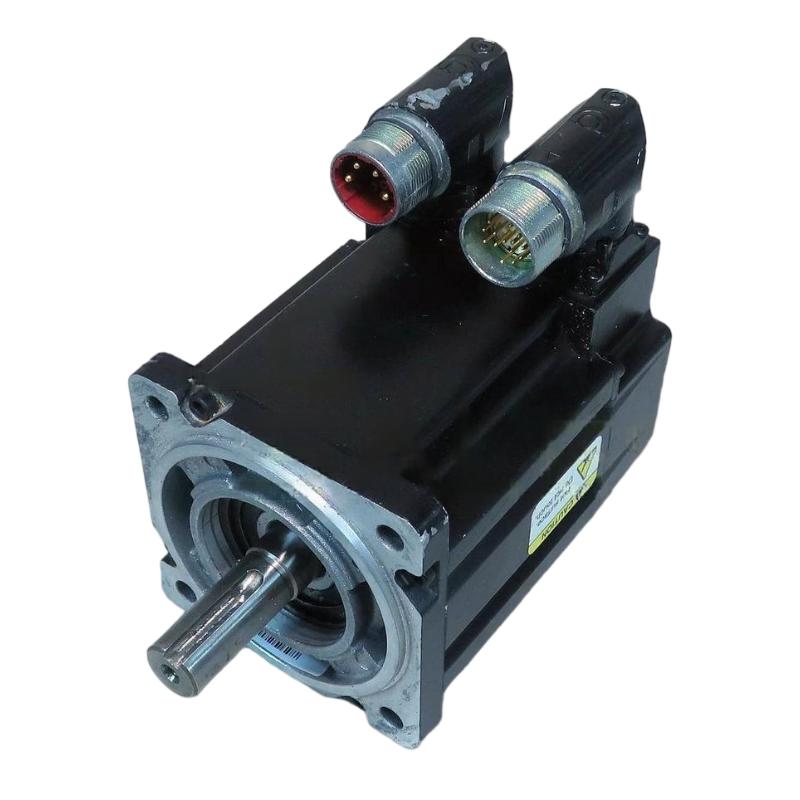
MPL-B310P-HJ72AA Servo Motor Fault Diagnosis
Start the Fault Diagnosis by asking when the temperature rises.
If the motor becomes hot only during acceleration, investigate acceleration torque and mechanical load. If temperature continues increasing while the axis remains at a relatively constant speed, inspect continuous load, friction, cooling, and motor sizing.
If the motor overheats even when disconnected from the mechanical load, the investigation should shift toward the motor, feedback system, drive configuration, or electrical condition.
This diagnostic split prevents unnecessary replacement of the MPL-B310P-HJ72AA.
Allen Bradley MPL-B310P-HJ72AA Mechanical Load Investigation
A servo motor can appear electrically healthy while operating under excessive mechanical resistance.
Check the driven mechanism for:
Bearing damage
Excessive friction
Coupling misalignment
Mechanical interference
Excessive belt tension
Unexpected process load
In one field case, an MPL-series servo motor repeatedly became hot during extended operation. The drive initially appeared normal and no obvious electrical fault was present. Measurement showed that the motor current remained higher than the established operating baseline during steady-state motion.
The investigation then moved away from the servo parameters and toward the machine. Increased mechanical resistance was found in the driven assembly. After the mechanical problem was corrected, the steady-state current returned toward its previous level and the overheating problem was eliminated.
The important clue was not simply the temperature. It was the combination of temperature rise + elevated current + steady mechanical operation.
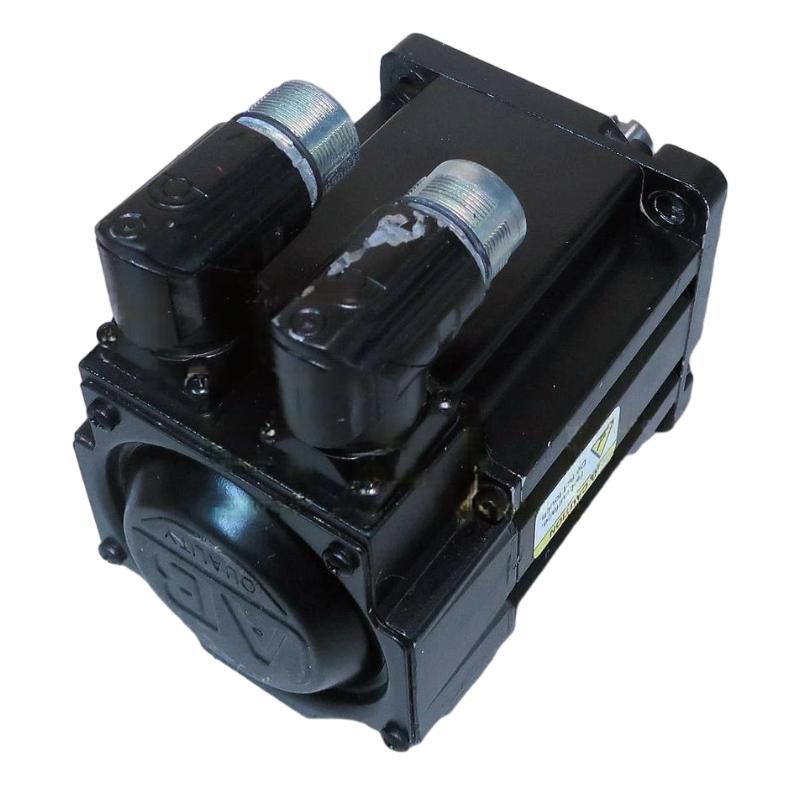
Allen Bradley MPL-B310P-HJ72AA Servo Configuration Troubleshooting
If the mechanical system passes inspection, review the servo configuration.
Check whether the commanded acceleration, deceleration, velocity, and torque requirements are appropriate for the application. Excessively aggressive motion profiles can increase RMS motor loading even when the peak speed appears acceptable.
Review tuning parameters carefully as well. Poor tuning can cause unnecessary oscillation or repeated corrective motion, increasing motor heating over time.
Do not modify multiple parameters at once. Make one controlled change, run the same motion profile, and compare the measured current and temperature with the baseline.
MPL-B310P-HJ72AA Servo Motor Repair Decision
Repair or replacement should be considered only after the external causes have been eliminated.
A suspected motor problem becomes more credible when abnormal heating remains present under a controlled load condition and the drive configuration, feedback, mechanical system, and wiring have already been verified.
Before replacing the MPL-B310P-HJ72AA, compare its behavior with a known-good operating condition whenever possible. This provides stronger evidence than relying solely on a thermal alarm.
Allen Bradley MPL-B310P-HJ72AA Troubleshooting Field Approach
A practical Troubleshooting sequence is:
Temperature trend → motor current → mechanical load → motion profile → tuning → feedback → motor condition
This sequence is particularly useful when the servo motor does not produce an immediate hard fault. Gradual overheating often provides more diagnostic information than a single alarm code.
The same approach also applies when the MPL-B310P-HJ72AA is used as part of a larger PLC Controller and motion system. The motor should be diagnosed as one component of the complete system rather than in isolation.
Allen Bradley MPL-B310P-HJ72AA Fault Troubleshooting Keywords
Relevant long-tail searches include Allen Bradley MPL-B310P-HJ72AA overheating, MPL-B310P-HJ72AA servo motor troubleshooting, Allen Bradley MPL-B310P-HJ72AA fault diagnosis, MPL-B310P-HJ72AA motor temperature problem, Allen Bradley servo motor overheating troubleshooting, and MPL-B310P-HJ72AA servo repair.