Allen-Bradley MPL-B320P-SJ72AA Servo Motor Troubleshooting Guide: Fault Diagnosis
Time:2026-09-07 Browse: 19
Allen-Bradley MPL-B320P-SJ72AA servo motor faults should be diagnosed from the motion symptoms and feedback behavior rather than by immediately replacing the motor. A particularly useful fault pattern is unexpected position error during acceleration, where the motor can rotate normally at low load but the axis trips when acceleration increases.
The MPL-B320P-SJ72AA uses a single-turn high-resolution encoder, a keyed shaft, a 5000 RPM rating, and a SpeedTEC DIN connector. These characteristics provide several useful checkpoints during Fault Diagnosis.
MPL-B320P-SJ72AA Servo Motor Following Error Symptoms
A typical field symptom is an axis that enables normally but faults when a movement command becomes more demanding.
For example, the sequence may look like this:
Servo enable succeeds.
Low-speed jogging works.
Position feedback appears reasonable.
Acceleration increases.
Actual position begins to lag.
Following error rises.
The drive eventually disables the axis.
This pattern should not automatically be classified as a failed MPL-B320P-SJ72AA motor.
The key diagnostic question is whether the error appears because the motor cannot generate sufficient mechanical response, because the feedback becomes unreliable, or because the load itself is mechanically restricted.
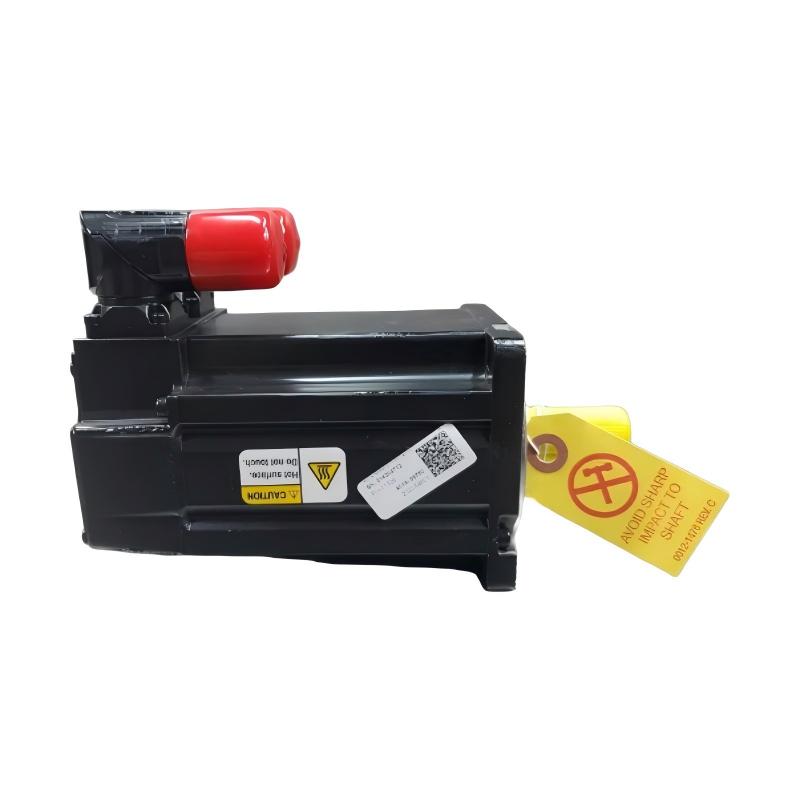
Allen-Bradley MPL-B320P-SJ72AA Fault Diagnosis Logic
I normally separate this fault into three branches: electrical, feedback, and mechanical.
First, examine the axis status and drive diagnostics. If the drive reports a feedback-related fault, investigate the encoder circuit before changing tuning parameters.
If feedback remains stable but following error increases mainly during acceleration, inspect the mechanical load and acceleration settings.
If the motor current rises sharply while the axis remains slow or nearly stationary, mechanical resistance becomes more suspicious.
This diagnostic separation prevents a common troubleshooting mistake: changing several servo parameters at once and losing the original fault condition.
MPL-B320P-SJ72AA Encoder and Feedback Troubleshooting
Because the MPL-B320P-SJ72AA uses a single-turn high-resolution encoder, encoder feedback should be one of the first areas checked when the actual-position signal behaves unexpectedly.
Inspect the SpeedTEC DIN connection for incomplete engagement or damaged contacts. Also inspect the feedback cable for mechanical damage, especially near cable carriers and connector transitions.
A useful test is to observe the actual-position value while manually moving the axis or running a low-speed command under controlled conditions.
If the reported position suddenly jumps while the mechanical shaft moves smoothly, the problem is more consistent with a feedback path issue than with ordinary servo tuning.
Do not immediately replace the encoder or motor. First isolate whether the abnormal signal follows the cable, connector, drive input, or motor.
Allen-Bradley MPL-B320P-SJ72AA Mechanical Fault Investigation
Mechanical resistance can produce symptoms that look almost identical to an electrical servo fault.
The MPL-B320P-SJ72AA has a keyed shaft and is intended for flange mounting. If the coupling is misaligned, the driven mechanism can place unwanted radial or axial forces on the motor shaft.
A practical inspection should therefore include:
Coupling alignment
Shaft key installation
Bearing condition in the driven mechanism
Linear guide or gearbox resistance
Unexpected load interference
Mechanical hard stops
Cable drag
Excessive acceleration
If the axis moves freely when disconnected from the load but faults after the load is coupled, the motor itself becomes a less likely root cause.
MPL-B320P-SJ72AA Overload Fault Pattern
Consider a machine where the axis operates correctly during an unloaded test but faults repeatedly after several production cycles.
One possible explanation is thermal or load-related rather than encoder failure.
For example, suppose the commanded speed remains around 1500 RPM, but the axis requires substantially more torque during repeated acceleration. The motor may complete individual movements while operating close to its torque capability. As the production cycle continues, the fault becomes more frequent.
The correct Troubleshooting approach is to compare motor load behavior between unloaded and production conditions rather than judging the motor only from a static resistance measurement.
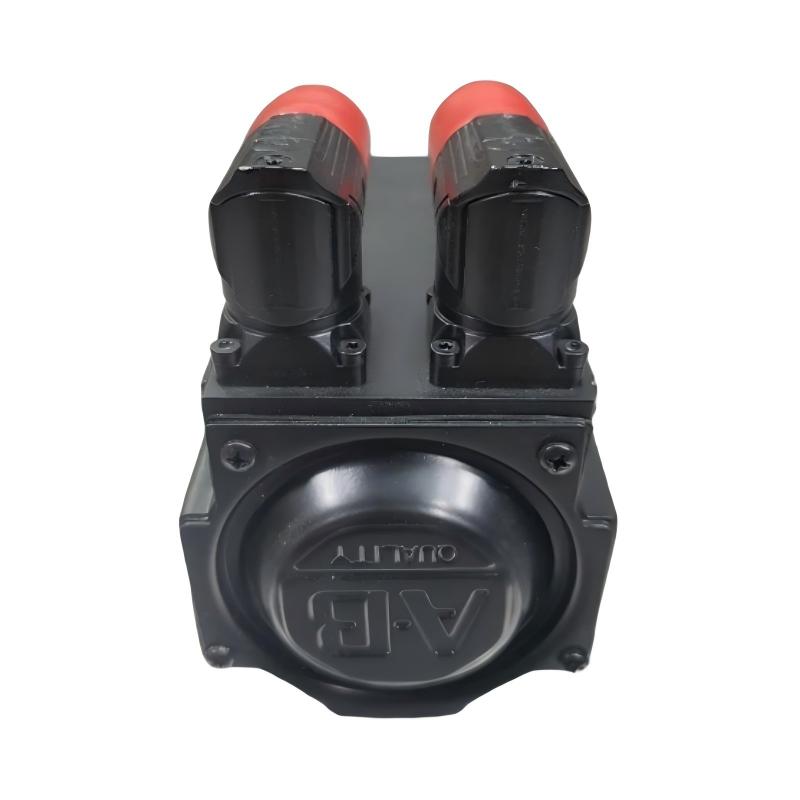
Allen-Bradley MPL-B320P-SJ72AA Repair Decision
A servo motor should not be sent for repair simply because an axis has generated a fault.
Before removing the MPL-B320P-SJ72AA, record the exact drive alarm, axis state, commanded position, actual position, velocity, and relevant load information.
A repair decision becomes more reasonable when the same motor continues to show abnormal feedback, excessive mechanical noise, or abnormal electrical behavior after the external wiring, drive configuration, and mechanical load have been verified.
If another known-good motor or approved test setup is available, substitution can also help separate motor-side faults from drive-side faults. The replacement test should preserve the correct motor and feedback configuration.
MPL-B320P-SJ72AA Troubleshooting Case: Position Error During Acceleration
In one representative troubleshooting case, an MPL-Series axis operated normally during slow jogging but generated a position-error fault whenever acceleration was increased.
The first observation was that the encoder position remained stable while the motor was stationary. That made a continuous feedback dropout less likely.
The next check focused on mechanical loading. The driven mechanism showed noticeably higher resistance near one portion of its travel. The motor therefore had to produce substantially more torque during that section.
Instead of replacing the servo motor, the mechanical restriction was corrected and the acceleration profile was retested. The axis subsequently completed the same movement without the previous position-error event.
The important Fault Diagnosis principle is that a servo fault code describes the condition detected by the drive; it does not necessarily identify the failed component.
Allen-Bradley MPL-B320P-SJ72AA Servo Troubleshooting Checklist
For an MPL-B320P-SJ72AA axis that repeatedly faults, collect the evidence in this order:
Axis status: Determine exactly when the fault occurs.
Feedback: Check whether actual position and velocity remain believable.
Wiring: Inspect motor and encoder connections, especially the SpeedTEC DIN interface.
Mechanical system: Check coupling alignment, load resistance, shaft condition, and interference.
Configuration: Confirm that the exact motor model and feedback type are correctly represented in the System Configuration.
Operating profile: Compare acceleration, speed, load, and duty cycle with the actual machine requirement.
Motor condition: Only after the external causes have been excluded should motor repair or replacement become the primary decision.
Long-Tail Keywords for MPL-B320P-SJ72AA Troubleshooting
Allen-Bradley MPL-B320P-SJ72AA troubleshooting guide, MPL-B320P-SJ72AA servo motor fault diagnosis, MPL-B320P-SJ72AA following error troubleshooting, MPL-B320P-SJ72AA encoder fault, MPL-B320P-SJ72AA position error, Allen-Bradley MPL servo motor repair, MPL-B320P-SJ72AA servo drive fault, MPL-B320P-SJ72AA feedback troubleshooting, Allen-Bradley MP-Series servo motor Fault Diagnosis.