Schneider Electric Introduces New Industrial Automation Modernization Model for PLC and DCS Systems
Time:2026-09-07 Browse: 23
Industrial manufacturers around the world are facing a difficult automation challenge: how to modernize aging control systems without interrupting production.
Factories, power facilities, water plants, chemical facilities, and other process industries often depend on automation systems that have been operating for many years. These systems can still perform essential control functions, but maintaining older hardware and software becomes increasingly difficult as components reach the end of their support lifecycle.
In June 2026, Schneider Electric announced a new Industrial Automation Modernization as a Service offering designed to help industrial organizations modernize automation environments incrementally while continuing to operate existing production systems.
The solution combines Schneider Electric's EcoStruxure Automation Expert platform with HPE hybrid cloud infrastructure and is designed to support a gradual transition toward open and software-defined automation.
Why Automation Modernization Has Become Critical
Industrial automation systems are usually designed for long operating lifecycles.
A PLC, DCS, SCADA system, industrial network, or control workstation may remain in service for many years. Replacing the entire automation architecture at once can be expensive and risky.
For many factories, the control system is directly connected to production. A major migration can affect PLC logic, I/O modules, field devices, HMIs, communication networks, historian systems, MES connections, and operator procedures.
A failure during modernization can result in production downtime.
This is one reason why many industrial companies continue to operate legacy automation systems even when newer technology is available.
However, aging systems create several problems.
Spare parts can become difficult to obtain. Engineering software may no longer receive regular updates. Cybersecurity capabilities may be limited. New data applications may be difficult to connect. At the same time, manufacturers increasingly want to introduce artificial intelligence, cloud services, advanced analytics, and digital twins.
The result is a growing gap between legacy control infrastructure and modern industrial requirements.
Schneider Electric Focuses on Incremental Modernization
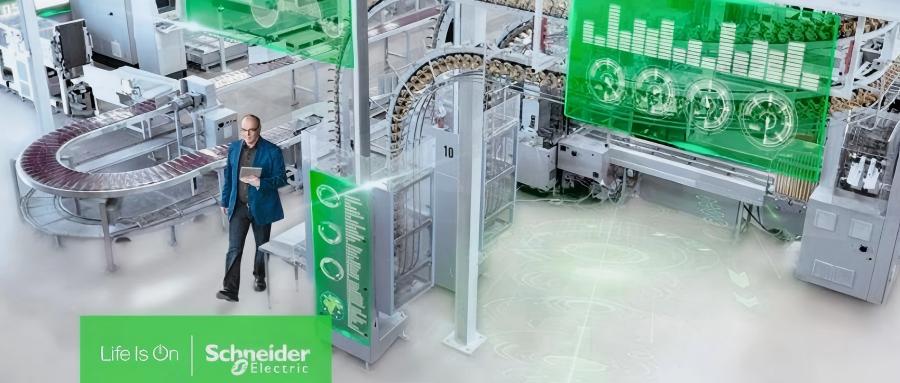
Schneider Electric's new modernization approach addresses this problem by allowing organizations to modernize in stages instead of replacing everything at once.
The concept is particularly relevant to companies operating existing PLC and DCS systems.
Rather than immediately removing the entire control architecture, organizations can introduce new software-defined automation technologies alongside existing infrastructure.
This creates a gradual migration path.
For industrial operators, this can be important because modernization does not have to become a single large project. Different production areas, machines, control functions, or data applications can be modernized according to operational priorities.
A factory could therefore begin with a specific production line or automation function before expanding the modernization strategy to other areas.
Software-Defined Automation Becomes More Important
One of the key ideas behind the new offering is software-defined automation.
Traditional automation systems often depend heavily on dedicated hardware platforms. The controller, operating system, engineering environment, and control software are closely connected.
Software-defined automation aims to separate control software from specific hardware architectures to create a more flexible environment.
This can provide greater flexibility for future modernization.
Instead of replacing an entire control architecture whenever new technology becomes available, organizations may be able to upgrade software capabilities, computing infrastructure, and digital services independently.
This approach also aligns with the broader movement toward virtualization, edge computing, hybrid cloud infrastructure, and industrial software platforms.
Supporting Existing PLC and DCS Investments
A major concern for industrial companies is the protection of existing investments.
A modern factory may contain thousands of sensors, motors, drives, valves, instruments, PLC modules, remote I/O devices, communication interfaces, and control stations.
Replacing all of these components at the same time is rarely practical.
A modernization strategy therefore needs to recognize that legacy systems may remain part of the plant for many years.
Schneider Electric's approach is designed to allow new automation technologies to coexist with existing PLC and DCS systems.
This is particularly important for process industries.
Chemical plants, oil and gas facilities, power plants, water treatment facilities, and pharmaceutical production sites often use DCS platforms for continuous process control while also relying on PLCs for package equipment, auxiliary systems, safety functions, and machine-level control.
A successful modernization strategy must therefore support a mixed automation environment.
Cybersecurity Is Driving Automation Upgrades
Cybersecurity is another major reason industrial companies are reviewing legacy control systems.
Older automation equipment was often designed for isolated environments. Modern industrial networks, however, are increasingly connected to enterprise systems, remote services, cloud applications, analytics platforms, and external communication networks.
Connectivity creates new opportunities, but it also increases the potential attack surface.
Industrial organizations therefore need to consider cybersecurity when planning automation modernization.
Newer architectures can provide stronger security controls, better monitoring capabilities, more systematic software management, and improved visibility into industrial assets.
Modernization is consequently no longer only about replacing old equipment.
It is increasingly connected to risk management.
Preparing Industrial Systems for AI
Artificial intelligence is another factor accelerating modernization.
AI applications require access to reliable industrial data.
For example, predictive maintenance systems may need information from motors, drives, pumps, compressors, temperature sensors, vibration sensors, and process instruments.
Production optimization may require information from PLCs, DCS platforms, SCADA systems, MES platforms, and enterprise applications.
If these systems operate in isolated environments or use outdated communication structures, collecting and contextualizing the required data becomes difficult.
Modern automation architectures can help create a more structured connection between operational technology and digital applications.
This does not mean that every PLC or DCS must immediately be replaced.
Instead, companies can develop a data and automation architecture that allows legacy equipment to participate in a broader digital environment.
The Shift From CapEx to OpEx
Another notable part of Schneider Electric's modernization strategy is the move from traditional capital expenditure toward an as-a-service model.
Historically, industrial automation upgrades have often required large upfront investments.
Companies purchase controllers, servers, engineering software, networking equipment, workstations, and other infrastructure as part of a major modernization project.
An as-a-service approach changes this model.
Instead of treating automation modernization entirely as a one-time capital project, organizations can consume parts of the technology and infrastructure as an ongoing service.
This may make modernization more manageable for organizations that cannot justify a large replacement project all at once.
It also creates a different relationship between automation technology and lifecycle management.
Automation modernization becomes an ongoing process rather than a project that ends once new equipment is installed.
What This Means for DCS Users
For DCS users, the modernization trend is particularly relevant.
Process control systems often have extremely long lifecycles because replacing a DCS can involve extensive engineering, testing, commissioning, operator training, and production validation.
The ability to introduce modern software technologies without immediately replacing every existing control component could reduce the pressure associated with full-system migration.
The long-term objective is likely to create hybrid environments in which traditional process control continues to perform critical real-time functions while modern software platforms provide additional capabilities for data analysis, optimization, visualization, and AI.
A Practical Path for Legacy Automation
The most important lesson from the latest development is that industrial modernization does not have to be an all-or-nothing decision.
Many companies cannot simply shut down a plant and replace an automation system.
Instead, modernization can be approached as a roadmap.
The first step may involve identifying aging PLCs, DCS controllers, HMIs, communication modules, engineering workstations, and network infrastructure.
The second step is to identify operational and cybersecurity risks.
The third step is to determine which areas can benefit most from modernization.
Companies can then introduce new technologies gradually while maintaining production continuity.
This approach can reduce technical risk and allow engineering teams to learn new platforms before they become responsible for a larger migration.
The Future of Industrial Automation Modernization
Schneider Electric's latest initiative reflects a broader shift in the industrial automation industry.
Manufacturers are no longer looking only for faster PLCs, larger DCS systems, or more powerful hardware.
They are increasingly looking for automation architectures that can evolve.
Open software, hybrid infrastructure, industrial cybersecurity, cloud connectivity, AI, digital engineering, and lifecycle services are becoming part of the same modernization discussion.
For industrial operators, the challenge is to modernize without creating unnecessary production risk.
For automation engineers and system integrators, this creates opportunities to develop migration strategies that combine legacy PLC and DCS systems with new digital technologies.
The future industrial plant is unlikely to be built entirely from new equipment. Instead, many plants will evolve through gradual modernization.
Existing automation assets will continue to operate while new software, computing, networking, cybersecurity, and AI capabilities are added around them.
This gradual transition could become one of the most important directions in industrial automation over the coming years.