AI-Enhanced Cyberattacks Put PLC and Industrial Control Systems Under Growing Security Pressure
Time:2026-09-07 Browse: 24
Industrial automation cybersecurity has become one of the most important issues facing manufacturers, energy companies, utilities, and process industries in 2026.
Programmable logic controllers, distributed control systems, remote I/O devices, industrial networks, engineering workstations, and other operational technology systems were traditionally designed primarily for reliability and continuous operation.
Today, these systems are becoming increasingly connected.
Industrial networks now exchange data with enterprise systems, cloud platforms, remote monitoring services, analytics applications, and digital production platforms. While this connectivity creates significant operational benefits, it also creates new cybersecurity challenges.
Recent security warnings and incidents involving industrial control systems have highlighted an important development: artificial intelligence is increasingly being used by attackers to improve the speed and efficiency of cyber operations.
For organizations operating PLC and DCS infrastructure, industrial cybersecurity is no longer an IT issue alone. It is becoming a fundamental part of automation engineering.
PLCs Are Becoming a Strategic Cybersecurity Concern
PLCs are at the center of many automated industrial processes.
They control motors, pumps, valves, conveyors, production machines, water treatment systems, electrical equipment, and other industrial assets.
In many facilities, a PLC failure can stop production. In critical infrastructure environments, unauthorized changes to PLC logic can potentially affect physical processes.
This makes programmable logic controllers an attractive target.
Recent cybersecurity activity has demonstrated that attackers are paying increasing attention to industrial control equipment from major automation manufacturers, including Siemens, Rockwell Automation, and Schneider Electric.
The concern is not limited to a single manufacturer or product family.
The broader issue is that industrial environments often contain a mixture of new and legacy equipment with different levels of cybersecurity capability.
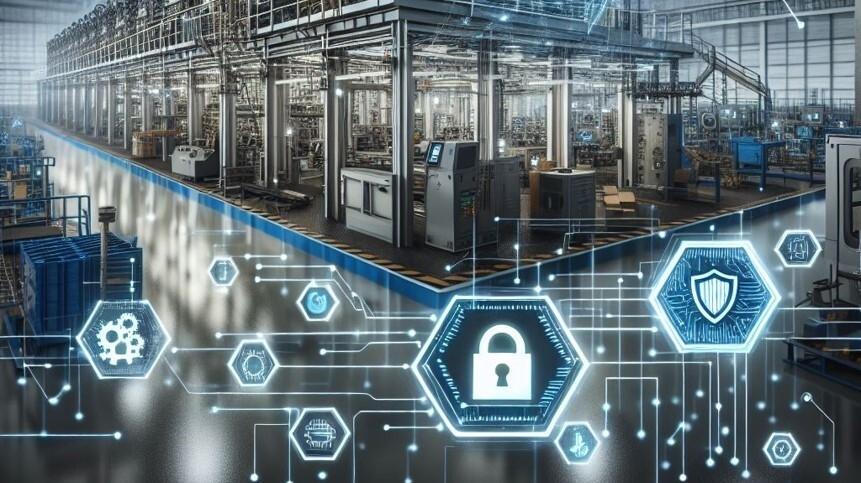
AI Changes the Cybersecurity Equation
Artificial intelligence is changing the cybersecurity landscape on both sides.
Defenders can use AI to analyze security events, identify abnormal behavior, prioritize vulnerabilities, and accelerate incident response.
Attackers can also use AI to automate reconnaissance, generate scripts, analyze technical information, and accelerate parts of an attack.
This creates a difficult situation for industrial organizations.
Traditional cyberattacks often require specialized knowledge of industrial protocols and equipment. AI tools can reduce some of the technical barriers by helping attackers understand documentation, analyze network information, and generate technical content more quickly.
The result is a potential increase in the scale and speed of attacks.
Operational Technology Is Different From IT
One of the biggest challenges in industrial cybersecurity is that operational technology cannot always be protected in the same way as ordinary IT systems.
In an office environment, installing a software update or restarting a computer may be inconvenient.
In a production environment, restarting a controller can potentially stop a production line.
A patch that is harmless on an office computer may also require extensive testing before being deployed to an industrial control system.
This is because automation systems interact with physical processes.
A software problem can affect a motor, pump, valve, production machine, electrical system, or process parameter.
For this reason, industrial cybersecurity requires a balance between security and operational continuity.
Legacy Automation Creates Additional Risk
Many industrial facilities continue to operate older PLCs, DCS platforms, HMIs, engineering workstations, and network devices.
These systems may have been installed years or even decades ago.
Some legacy equipment was designed before cybersecurity became a major consideration.
The systems may have limited authentication capabilities, outdated communication protocols, unsupported operating systems, or restricted patching options.
Replacing them can be expensive and technically complicated.
As a result, companies may need to protect legacy automation equipment while gradually developing a modernization plan.
This is one reason industrial automation modernization and cybersecurity are becoming increasingly connected.
Industrial Networks Need Better Visibility
One of the most important cybersecurity requirements for an industrial facility is visibility.
Companies need to know what equipment exists on their industrial networks.
This sounds simple, but large plants can contain thousands of devices.
A typical industrial network may include PLCs, DCS controllers, remote I/O, HMIs, variable frequency drives, industrial Ethernet switches, gateways, sensors, engineering workstations, historians, safety systems, and third-party package equipment.
If an organization does not have an accurate asset inventory, it becomes difficult to determine which systems are exposed and which vulnerabilities are most important.
Asset discovery is therefore an essential first step in industrial cybersecurity.
Network Segmentation Becomes More Important
Industrial networks should also be designed with appropriate segmentation.
A PLC controlling a production process should not necessarily have unrestricted communication with every device in the corporate network or the public internet.
Segmentation can reduce the ability of an attacker to move from one compromised system to another.
Industrial organizations can use zones, firewalls, controlled remote access, secure gateways, and monitoring systems to create separation between different parts of the environment.
The objective is not simply to disconnect everything.
Modern factories depend on connectivity.
Instead, the goal is to make industrial connectivity controlled, monitored, and appropriately protected.
Remote Access Requires Special Attention
Remote access has become increasingly common in industrial automation.
Manufacturers and system integrators may need remote access to diagnose PLC problems, update software, monitor equipment, or support customers.
Remote engineering capabilities can reduce downtime and improve maintenance efficiency.
However, poorly protected remote access can create a significant cybersecurity risk.
Industrial organizations should therefore carefully control who can access automation systems, when access is permitted, and what activities can be performed.
Strong authentication, controlled access paths, monitoring, and appropriate authorization are important components of a secure remote-access strategy.
Cybersecurity Must Become Part of Automation Engineering
Historically, industrial automation projects often focused on process control.
Engineers concentrated on PLC logic, DCS configuration, instrumentation, HMI development, industrial networking, and commissioning.
Cybersecurity was sometimes treated as a separate IT responsibility.
That model is becoming increasingly difficult to maintain.
Automation engineers now need to understand basic cybersecurity principles because cybersecurity directly affects the design and operation of control systems.
When selecting a PLC, engineers should consider its lifecycle support, communication capabilities, authentication features, firmware management, and security architecture.
When designing an industrial network, cybersecurity should be considered at the beginning rather than added after commissioning.
AI Can Also Help Defenders
Although AI creates new cybersecurity risks, it can also become a valuable defensive technology.
Industrial organizations generate large quantities of operational data.
AI systems can analyze network activity, device behavior, system events, and historical patterns to identify anomalies.
For example, an unexpected change in PLC communication behavior may indicate a potential security event.
Similarly, unusual engineering workstation activity or unexpected configuration changes may deserve investigation.
AI can help security teams prioritize these events.
However, AI should not be treated as a replacement for industrial cybersecurity fundamentals.
A poorly segmented network remains vulnerable even if an AI monitoring platform is installed.
Basic measures such as asset inventory, secure remote access, network segmentation, vulnerability management, backups, monitoring, and tested incident response procedures remain essential.
Protecting PLC and DCS Systems Requires a Lifecycle Strategy
Industrial cybersecurity cannot be solved by installing a single security product.
It requires a lifecycle strategy.
Organizations need to consider cybersecurity during system design, procurement, commissioning, operation, maintenance, modernization, and decommissioning.
This is particularly important for long-life automation systems.
A PLC installed today may remain in service for many years.
Therefore, organizations need to understand how firmware updates, security patches, spare parts, engineering software, and vendor support will be managed throughout the system lifecycle.
This also reinforces the importance of working with reliable automation suppliers and system integrators.
The Growing Connection Between Automation and Cybersecurity
The latest cybersecurity developments demonstrate how closely automation and cybersecurity are now connected.
PLC and DCS systems are no longer isolated islands inside factories.
They are becoming part of highly connected industrial ecosystems.
At the same time, AI is accelerating both industrial automation and cyber threats.
Manufacturers are using AI to improve engineering, production, predictive maintenance, and optimization.
Attackers can use similar technologies to increase the speed of reconnaissance and exploit development.
This creates a new industrial security environment in which organizations must improve both automation technology and cybersecurity practices.
What Industrial Companies Should Consider
Companies operating PLC and DCS systems should consider several practical priorities.
First, maintain an accurate inventory of automation assets.
Second, identify systems that are no longer supported or difficult to patch.
Third, review remote access pathways and remove unnecessary exposure.
Fourth, segment industrial networks according to operational requirements.
Fifth, monitor critical PLC, DCS, HMI, and engineering workstation activity.
Sixth, maintain reliable backups of important automation configurations.
Finally, integrate cybersecurity into future automation modernization projects.
These steps can help reduce risk while allowing industrial facilities to continue benefiting from digital transformation.
Conclusion
The cybersecurity environment surrounding industrial automation is changing rapidly.
PLCs, DCS systems, SCADA platforms, industrial networks, and remote engineering environments are increasingly connected to modern digital infrastructure.
At the same time, AI is making cyber operations faster and potentially more accessible.
For industrial organizations, this means cybersecurity can no longer be treated as an optional addition to automation.
It needs to become part of the engineering lifecycle.
The factories of the future will depend on highly connected PLC, DCS, robotics, AI, cloud, and industrial data systems. To make those technologies reliable, manufacturers will need to combine automation innovation with strong operational technology security.
The future of industrial automation will therefore not be defined only by how intelligent or efficient a control system becomes.
It will also be defined by how securely that system can operate.