Schneider Electric Launches Open Software-Defined DCS for Next-Generation Industrial Automation
Time:2026-09-08 Browse: 23
Schneider Electric Unveils Open Software-Defined DCS to Reshape Industrial Automation
Schneider Electric has announced a major development in industrial process control with the introduction of EcoStruxure Foxboro Software Defined Automation, an open and software-defined distributed control system designed for modern industrial operations.
The announcement reflects a broader change taking place across the automation industry. Traditional distributed control systems have historically depended heavily on dedicated hardware, proprietary engineering environments and vendor-specific architectures. While these systems have provided stability and reliability for decades, industrial operators are increasingly looking for greater flexibility, easier integration and longer-term technology choices.
The new Foxboro Software Defined Automation approach is intended to address these challenges by separating automation software from specific hardware platforms. For process industries, this represents a significant shift in the way DCS architectures can be designed, deployed and maintained.
Moving Beyond Hardware-Defined Control Systems
Industrial plants typically operate for many years, and control systems installed during the original construction of a facility may remain in service for decades. During this period, production requirements change, cybersecurity expectations increase, field devices evolve and new digital technologies become available.
A hardware-dependent control architecture can make these changes difficult.
Replacing controllers, I/O systems and other automation hardware can require extensive engineering work, system testing and plant downtime. In some cases, organizations may also become dependent on a particular supplier for spare parts, upgrades and engineering services.
Software-defined automation introduces a different philosophy.
Instead of treating the hardware platform as the center of the control system, the software and automation applications become more portable. Control applications can potentially be deployed across validated computing environments while maintaining the performance and availability required by industrial processes.
For plant operators, the importance of this approach is not simply technological. It can influence the entire lifecycle of an automation project, from engineering and procurement to commissioning, operation and future modernization.
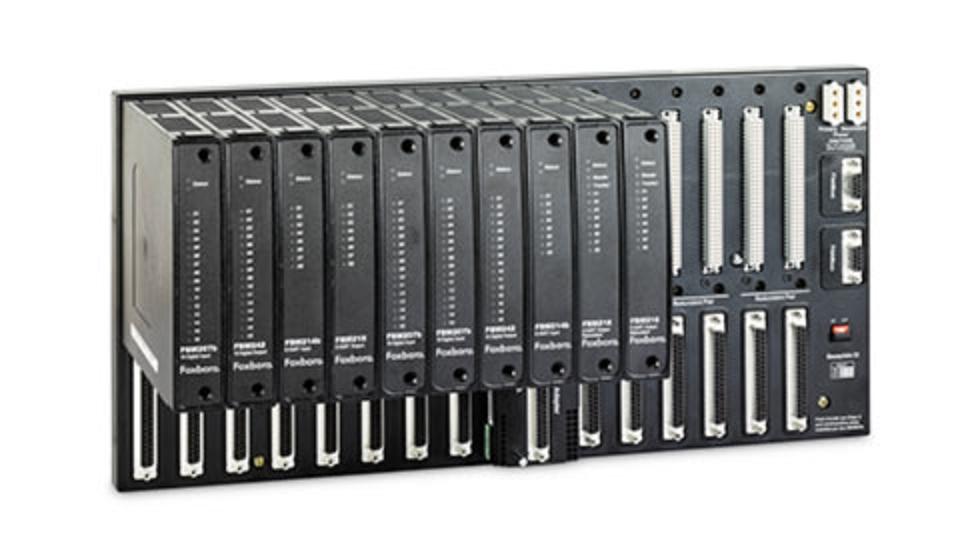
Foxboro SDA Targets Process and Hybrid Industries
EcoStruxure Foxboro Software Defined Automation is designed for process and hybrid industries where reliable continuous control is critical.
These industries include chemical processing, oil and gas, energy, water and wastewater, pharmaceuticals, food and beverage, and other manufacturing environments where production processes depend on coordinated control of large numbers of instruments, valves, motors and other field devices.
A modern DCS must do more than execute control logic.
It must also manage large volumes of operational data, communicate with field equipment, provide operators with real-time information, support engineering workflows and increasingly connect industrial operations with enterprise systems.
The software-defined approach is intended to make these connections easier to manage.
Instead of building automation around a rigid collection of proprietary components, the architecture emphasizes openness, interoperability and software flexibility.
Universal I/O and Greater Engineering Flexibility
One of the important concepts associated with the new architecture is software-configurable I/O.
Traditional I/O architectures often require engineers to determine the type of signal and corresponding hardware configuration at an early stage of a project. If project requirements change later, hardware changes may be required.
Universal I/O approaches can reduce this limitation by allowing channels to be configured through software.
This can be particularly valuable for engineering contractors and system integrators working on large industrial projects.
During the engineering phase, project teams often deal with incomplete information, changing equipment specifications and evolving process requirements. A more flexible I/O architecture can make it easier to accommodate these changes without redesigning the entire control system.
For international automation projects, this flexibility can also help simplify procurement and project planning.
The Growing Importance of Open Automation
The announcement also highlights one of the industry's most important trends: the transition from proprietary automation toward open automation architectures.
Open automation does not mean removing the reliability requirements associated with industrial control. A process plant still needs deterministic control, high availability, redundancy, functional safety and cybersecurity.
Instead, open automation seeks to combine those requirements with greater interoperability.
This is particularly important because modern plants rarely operate as isolated DCS environments.
A process facility may include a DCS, PLC-based packaged equipment, safety instrumented systems, variable frequency drives, intelligent field instruments, historians, MES platforms, energy management systems and cloud-based analytics.
If these systems cannot exchange data efficiently, engineers may need to build additional interfaces and integration layers.
Software-defined automation attempts to make interoperability part of the architecture rather than treating it as an afterthought.
Cybersecurity Becomes a Core Automation Requirement
Industrial cybersecurity is another important factor behind the modernization of control systems.
As industrial networks become increasingly connected, the boundary between operational technology and information technology continues to become less distinct.
Remote monitoring, cloud services, predictive maintenance and industrial analytics can create substantial operational benefits, but they also introduce additional cybersecurity considerations.
Modern DCS platforms therefore need to consider cybersecurity throughout the system lifecycle.
The Foxboro SDA architecture incorporates cybersecurity into the automation environment while supporting broader IT/OT integration.
This is becoming increasingly important for companies operating critical infrastructure and regulated production facilities.
Cybersecurity is no longer simply an IT responsibility. Automation engineers, control engineers, system integrators and maintenance teams are increasingly involved in securing industrial control environments.
DCS and PLC Systems Are Becoming More Connected
The rise of software-defined DCS technology does not mean PLC systems are becoming less important.
In modern industrial facilities, DCS and PLC technologies often work together.
A DCS may manage continuous process control, while PLCs handle machine-level automation, packaged equipment or specialized sequences. Safety systems may operate independently while exchanging carefully controlled information with the wider automation architecture.
The challenge is therefore not choosing between PLC and DCS technology.
The larger challenge is creating an automation environment in which these systems can communicate effectively while maintaining reliability and security.
This is one reason open communication protocols, standardized interfaces and software-based architectures are receiving increasing attention across the automation industry.
Preparing Industrial Automation for AI
Another major reason software-defined automation is gaining attention is the rapid development of industrial artificial intelligence.
AI applications require access to reliable industrial data.
That data can come from PLCs, DCS controllers, historians, sensors, drives and other automation equipment. If operational data remains isolated inside proprietary systems, deploying AI applications becomes more difficult.
A modern software-defined architecture can provide a more flexible foundation for connecting control data with analytics and AI applications.
This does not mean that AI should directly control every industrial process.
Critical process control still requires deterministic logic, engineering validation and appropriate safety mechanisms.
However, AI can increasingly support areas such as predictive maintenance, process optimization, energy management, anomaly detection and operator decision support.
The combination of industrial automation and AI is therefore likely to become one of the most important development areas for DCS and PLC technology over the next several years.
What the Announcement Means for Automation Engineers
For automation engineers and system integrators, software-defined DCS technology may change the engineering workflow itself.
Traditional automation engineering often begins with hardware selection, I/O planning and controller architecture. Software-defined automation places more emphasis on application design, system architecture and software configuration.
This could create demand for engineers with broader skills.
Future automation professionals may need to understand PLC programming, DCS configuration, industrial networking, cybersecurity, data management and AI-assisted engineering.
The boundaries between control engineering and industrial software engineering are becoming increasingly blurred.
A Significant Direction for the DCS Market
Schneider Electric's latest announcement is part of a larger transformation in industrial automation.
The DCS market is not disappearing. Instead, the architecture of the DCS is evolving.
Industrial companies still need stable, high-availability process control, but they also need systems that can adapt to changing production requirements and integrate with new technologies.
Software-defined automation provides one possible answer to this challenge.
By separating control applications from fixed hardware dependencies, increasing interoperability and supporting modern data architectures, the new generation of DCS platforms could make industrial automation easier to modernize over a longer lifecycle.
For process industries planning their next control system upgrade, software-defined automation is therefore becoming a technology trend worth watching closely.