Rockwell Automation Deploys AI to Reduce Industrial Refrigeration Energy Use by 17%
Time:2026-09-08 Browse: 21
Rockwell Automation Uses AI and PlantPAx DCS to Cut Refrigeration Energy Use by 17%
Artificial intelligence is increasingly moving from experimental industrial applications into real production environments, and a recent deployment involving Rockwell Automation and Actemium provides a practical example of how AI can be integrated with industrial control systems.
The companies have deployed an autonomous AI application for industrial refrigeration at a large frozen food manufacturer. The solution uses Rockwell Automation's PlantPAx modern distributed control system to continuously optimize refrigeration equipment operation.
The reported result is a 17% reduction in refrigeration energy consumption.
The project is significant because it demonstrates how industrial AI can work directly with an automation architecture rather than operating as an isolated analytics system.
For manufacturers dealing with high energy costs, this approach could become increasingly attractive.
Why Industrial Refrigeration Matters
Refrigeration is one of the most energy-intensive processes in frozen food manufacturing.
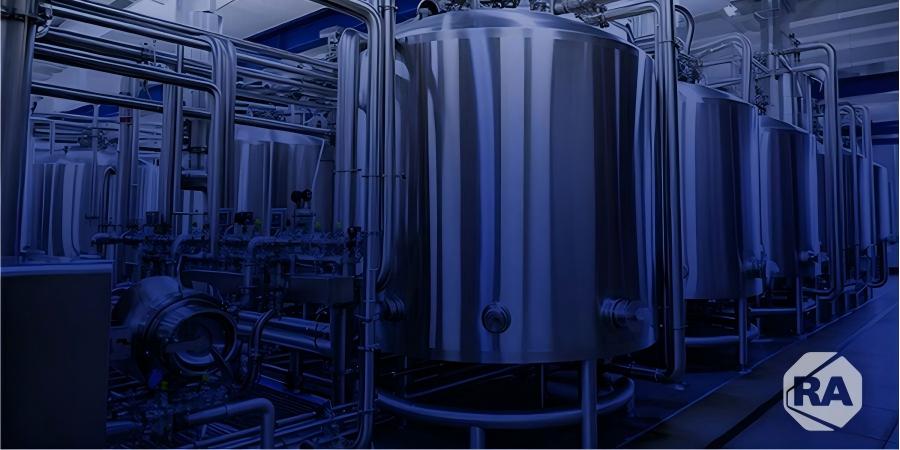
Large food production facilities can operate extensive networks of compressors, condensers, evaporators, pumps and associated equipment. These systems must maintain strict temperature conditions while production continues around the clock.
Traditionally, refrigeration equipment has often been operated using predefined control strategies and fixed operating parameters.
Although these systems can provide stable operation, they may not always select the most energy-efficient combination of equipment under changing conditions.
Production schedules, ambient temperatures, product loads and equipment conditions can change throughout the day.
A control strategy that is efficient at one moment may not be optimal several hours later.
This creates an opportunity for advanced optimization.
How AI Can Improve Refrigeration Control
The Rockwell and Actemium solution uses an application known as Real-Time Coefficient of Performance, or RtCOP.
The objective is to continuously identify more energy-efficient operating configurations for industrial refrigeration equipment.
Instead of relying exclusively on fixed operating strategies, the system can evaluate changing operating conditions and determine more efficient combinations of refrigeration equipment.
The result is a more dynamic approach to industrial energy management.
This is an important development for manufacturers because energy optimization does not necessarily require replacing the existing control system.
In many cases, significant improvements can come from making better use of existing equipment.
The Role of PlantPAx DCS
PlantPAx serves as the control platform supporting the application.
This is particularly relevant for automation engineers because it demonstrates how AI can be introduced into an existing DCS architecture.
The DCS remains responsible for industrial control, while the AI-based application provides optimization capabilities.
This separation allows the system to maintain the deterministic characteristics required for industrial operations while adding another layer of intelligence.
The approach can be compared with the way advanced optimization systems are increasingly being used in process industries.
The basic control system maintains stable operation.
The optimization layer analyzes process information and identifies opportunities to improve efficiency.
This model may become increasingly common as industrial AI matures.
From Cloud Analytics to Control-Level Intelligence
Industrial companies have been using analytics platforms for years.
Production data can be collected from PLCs, DCS systems, historians and sensors and then transferred to enterprise systems for analysis.
However, there is a major difference between analyzing data after the fact and using intelligence to influence operational decisions in real time.
The refrigeration deployment illustrates the second approach.
The optimization system continuously evaluates operating conditions and selects more efficient configurations.
This creates a much closer relationship between industrial AI and the control layer.
Instead of simply telling plant managers that energy consumption is high, an intelligent application can help determine how the equipment should operate differently.
That distinction could have major implications for future industrial automation systems.
Energy Efficiency Is Becoming an Automation Priority
Energy management is becoming increasingly important for manufacturers.
Electricity and natural gas prices can have a significant impact on production costs, particularly for energy-intensive industries.
At the same time, manufacturers face increasing pressure to reduce emissions and improve resource efficiency.
These factors are creating new demand for automation technologies capable of optimizing energy consumption.
PLC and DCS systems are well positioned for this development because they already have access to much of the operational information required for optimization.
A control system may know the operating status of compressors, pump speeds, temperatures, pressure values, valve positions and production conditions.
When this information is combined with advanced analytics, it can provide a detailed picture of how energy is being used.
AI Can Turn Existing Automation Data Into Value
One of the most important lessons from industrial AI projects is that manufacturers do not necessarily need completely new automation hardware to begin using AI.
Many factories already contain large amounts of valuable data.
The challenge is making that data accessible, contextualized and usable.
For example, a temperature value by itself may not tell an AI system much.
But when the temperature is associated with a specific production line, product type, compressor condition and operating mode, the information becomes much more useful.
Industrial automation platforms are therefore becoming important data sources for AI applications.
The future of industrial AI may depend as much on data architecture and control-system integration as on the AI algorithms themselves.
Why the 17% Reduction Matters
A 17% reduction in refrigeration energy use is meaningful because refrigeration can represent a substantial operating cost in frozen food production.
Even a relatively small percentage improvement can translate into significant savings when equipment operates continuously.
The result also demonstrates a broader principle.
AI does not necessarily need to transform the entire factory to generate measurable value.
Targeting a single energy-intensive process can produce a clear return on investment.
This approach may make industrial AI easier to justify for manufacturers.
Instead of launching a large digital transformation program covering an entire facility, a company can identify one high-value process, integrate AI with the existing automation infrastructure and measure the result.
If the project succeeds, the same methodology can potentially be applied to other production systems.
Implications for PLC-Based Automation
Although the project is built around PlantPAx, the underlying concept is relevant to PLC-based automation as well.
Many industrial machines are controlled by PLCs that collect large amounts of operational data.
AI applications can use this information to support predictive maintenance, quality optimization, energy management and process improvement.
For example, an AI model could analyze motor current, vibration, temperature and cycle time to identify changes in machine performance.
The PLC would continue to perform deterministic machine control while the AI system provides higher-level analysis.
This architecture allows manufacturers to introduce intelligent functionality without fundamentally changing the existing control philosophy.
The Importance of Real-Time Decision Making
Traditional energy analysis often involves monthly reports or historical dashboards.
These tools can identify trends, but they may not provide immediate operational benefits.
Real-time optimization works differently.
When operating conditions change, the system can react to the new situation.
For refrigeration systems, this could mean adjusting the operating configuration as production demand or environmental conditions change.
For other industries, the same principle could apply to compressed air systems, boilers, pumps, HVAC systems, water treatment equipment or production machinery.
This is why real-time industrial AI is becoming an increasingly important topic in automation engineering.
AI and the Future of DCS Systems
The development also provides a useful example of how DCS technology is evolving.
Traditional DCS systems were primarily designed to control processes.
Modern DCS platforms increasingly function as industrial data and intelligence platforms as well.
They collect information from field devices, controllers and equipment while providing connectivity to historians, analytics applications and enterprise systems.
The next stage is likely to involve more intelligent applications operating directly alongside these control environments.
AI can help identify optimization opportunities while the DCS continues to provide reliable control.
This combination could become a standard architecture for advanced manufacturing facilities.
What This Means for Industrial Automation
The Rockwell Automation and Actemium project demonstrates a practical direction for industrial AI.
Rather than treating artificial intelligence as a separate technology, manufacturers can integrate AI into existing automation architectures to solve specific operational problems.
Energy optimization is particularly attractive because the financial benefits can be measured directly.
The approach also shows that industrial AI does not necessarily mean replacing PLCs or DCS systems.
Instead, AI can operate above or alongside existing control systems, using real-time industrial data to support better decisions.
For automation engineers, this means that knowledge of PLC and DCS technology will remain important even as AI becomes more widespread.
The engineers who understand both industrial control and data-driven optimization may become increasingly valuable.
Looking Ahead
The 17% reduction achieved in the refrigeration application is more than a single energy-saving result.
It represents a broader transition in industrial automation.
Factories are moving from simple automation toward systems capable of continuously analyzing their own operating conditions and improving performance.
PLC and DCS platforms provide the foundation.
Industrial networks provide connectivity.
Sensors provide data.
AI provides new methods for analyzing that data and identifying better operating strategies.
The combination of these technologies could help manufacturers reduce energy consumption, improve equipment utilization and increase operational efficiency without requiring a complete replacement of their existing automation infrastructure.
As industrial companies continue to search for measurable returns from digital transformation, practical AI applications such as real-time energy optimization are likely to receive increasing attention.
For the automation industry, this may be one of the clearest signs yet that industrial AI is moving from demonstration projects toward everyday production operations.