ABB Automation Extended Brings a New Approach to DCS Modernization and Industrial Digital Transforma
Time:2026-09-09 Browse: 21
September 2026 | Industrial Automation News
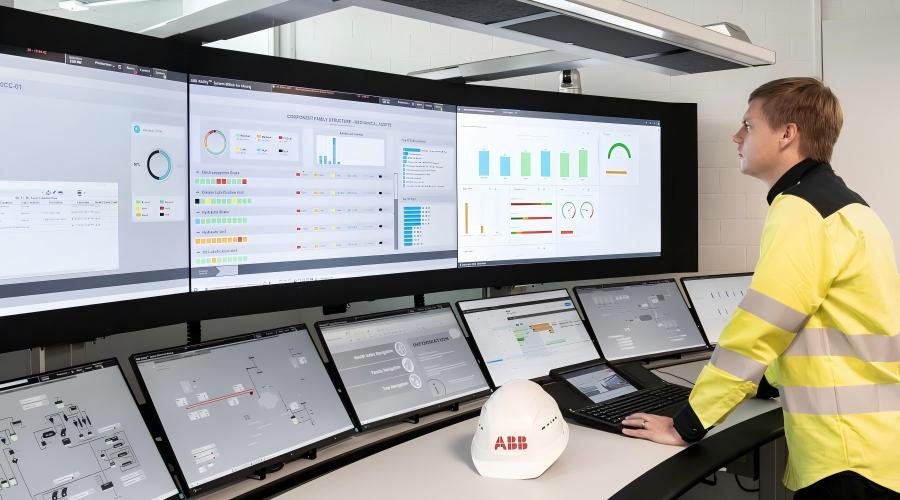
The industrial automation industry is entering a new phase in which modernization no longer necessarily means replacing an entire control system. In 2026, ABB introduced Automation Extended, a new approach designed to help industrial companies modernize distributed control systems while maintaining the stability of existing operations.
The development is particularly important for companies operating large process plants where the control system may have been running for many years. Oil and gas facilities, chemical plants, power stations, mining operations, water treatment facilities, pulp and paper plants, pharmaceutical production sites and other process industries often depend on automation systems that cannot simply be shut down for a complete technology replacement.
ABB Automation Extended addresses this challenge by separating the core control environment from a digital environment while allowing both sides to remain securely connected.
The approach represents a significant change in the way industrial companies can think about DCS modernization, digital transformation, artificial intelligence, industrial analytics and lifecycle management.
Why DCS Modernization Has Become a Major Industrial Automation Issue
Distributed control systems are designed for long operating lifecycles.
A DCS installed in a large process plant can remain part of the facility's core control architecture for many years. Replacing such a system is therefore very different from upgrading an ordinary business software application.
A plant cannot simply stop production for an extended period whenever a new automation technology becomes available.
This creates a common challenge for industrial operators.
On one side, existing DCS technology continues to provide reliable control and is deeply integrated with field instrumentation, PLCs, remote I/O, safety systems, operator stations and engineering tools.
On the other side, industrial companies increasingly want access to artificial intelligence, advanced analytics, predictive maintenance, cloud connectivity, modern visualization and other digital technologies.
The problem is how to introduce these capabilities without disturbing the control functions responsible for keeping the plant operating.
This is the problem that ABB Automation Extended is designed to address.
A Different Model for Industrial Automation Modernization
Traditional automation modernization projects often involve a major upgrade cycle.
A company may eventually need to replace servers, controllers, engineering stations, software and other infrastructure.
Such projects can require extensive engineering and commissioning work.
Automation Extended takes a more incremental approach.
The concept is based on a separation between the control environment and the digital environment.
The control environment continues to handle deterministic real-time process control.
This is where the critical functions of a DCS remain.
Control logic, process regulation, operator interaction and other essential automation functions continue to operate within the established control architecture.
The digital environment, meanwhile, can provide additional capabilities such as analytics, condition monitoring, predictive maintenance and AI-enabled applications.
This separation is important because it allows companies to introduce digital technology without forcing every new application directly into the core control layer.
Protecting the Core Control System
One of the most important ideas behind the new approach is that the core control system should remain protected.
Industrial control systems have different requirements from ordinary IT environments.
Availability is critical.
Predictability is critical.
Cybersecurity is critical.
A process plant may operate continuously for months or years.
A software change that causes an unexpected control issue can have much greater consequences than a temporary failure of an office application.
By keeping the core control environment separate from the digital environment, industrial companies can create additional flexibility without constantly changing the system responsible for real-time control.
This architecture is particularly relevant as AI becomes more common in industrial environments.
AI models may need frequent updates.
Analytics applications may change.
New digital services may be added.
The underlying control system, however, should not need to change every time a new digital application becomes available.
AI Is Moving Above the Traditional Control Layer
Artificial intelligence is becoming increasingly important in industrial automation.
However, AI does not necessarily need to replace PLC or DCS control logic.
In many applications, the most practical architecture is layered.
The PLC or DCS remains responsible for deterministic control.
Sensors and field devices provide real-time information.
Industrial networks transfer data between control components.
SCADA and visualization systems allow operators to monitor processes.
Above these layers, analytics and AI can identify patterns and provide recommendations.
This architecture allows each technology to perform the task it is best suited for.
The DCS remains responsible for control.
AI becomes a tool for optimization, diagnosis and decision support.
That distinction can be especially important for safety-critical and mission-critical processes.
Supporting Predictive Maintenance
Predictive maintenance is another important application for digital automation.
Traditional maintenance programs may rely on fixed schedules.
Equipment is inspected or serviced after a certain number of operating hours.
However, industrial equipment does not always fail according to a predictable calendar.
A pump, motor, compressor, valve or other asset can experience changing conditions that affect its actual health.
Industrial analytics can use operating data to identify abnormal behavior.
For example, changes in vibration, temperature, pressure, flow or power consumption can provide useful indicators of equipment condition.
A digital environment connected to the automation system can process this information without changing the fundamental control strategy.
Maintenance teams can then receive earlier warnings and investigate equipment before a failure becomes a major production problem.
Why This Matters for Existing DCS Installations
The biggest potential advantage of this approach is for companies with large installed automation bases.
Industrial plants often contain significant investments in existing control hardware.
A company may have thousands of I/O points, hundreds of control loops and large numbers of connected instruments.
Replacing everything at once would be expensive and operationally disruptive.
A gradual modernization strategy can provide another option.
Companies can preserve the existing control foundation while adding new capabilities over time.
This allows digital transformation to become a continuous process rather than a single major project.
For industrial operators, that can improve both financial planning and operational risk management.
The Role of System 800xA
ABB Automation Extended is closely associated with ABB's established process automation platforms, including ABB Ability System 800xA, Symphony Plus and Freelance.
This is important because modernization becomes easier when new technology can build on an installed automation architecture.
System continuity matters greatly in process industries.
Engineers already understand the existing system.
Maintenance teams already have experience with the hardware and software.
Operators already know the control environment.
Training requirements can therefore be reduced when modernization is introduced progressively.
This is one reason lifecycle support has become such an important part of industrial automation.
Open Architecture Is Becoming More Important
Another important element of modern automation is openness.
Industrial companies increasingly need to connect information from multiple systems.
A modern facility may contain equipment from different manufacturers.
A plant may use PLCs from one vendor, a DCS from another supplier and specialized equipment from several OEMs.
Data may also need to move into MES, ERP, cloud or analytics platforms.
This creates a strong demand for standard communication technologies.
ABB's Automation Extended architecture incorporates an OPC UA backbone and a container-based approach for digital applications.
These technologies can help create a more flexible environment in which software applications can be added without redesigning the entire control architecture.
For system integrators, this trend is particularly important.
The future of automation is unlikely to be based entirely on isolated control systems.
Interoperability is becoming a fundamental requirement.
Cybersecurity Must Be Part of Modernization
Increasing connectivity also creates cybersecurity considerations.
The more systems communicate with external applications, the more important it becomes to control how data and commands move between environments.
Separating the control environment from the digital environment can therefore provide a useful architectural principle.
The goal is not to isolate the plant completely from digital technology.
Instead, industrial companies need controlled connectivity.
Operational data should be available where it creates value.
At the same time, critical control functions must remain protected.
This approach reflects the growing convergence between OT and IT while recognizing that industrial control systems have different operational requirements from traditional enterprise networks.
Reducing the Risk of Digital Transformation
Digital transformation projects often fail because companies attempt to change too much at once.
Industrial environments are particularly sensitive to this problem.
A production facility cannot treat every new technology as an experiment.
Any change needs to consider engineering, commissioning, operator training, cybersecurity, maintenance and lifecycle support.
A modular approach can reduce this risk.
Companies can introduce one capability at a time.
They might begin with condition monitoring.
Then they could introduce advanced analytics.
Later, they may add predictive maintenance or AI-assisted decision support.
This allows the organization to learn from each implementation before expanding the technology further.
Implications for PLC and DCS Suppliers
The shift toward incremental modernization is also important for the wider PLC and DCS market.
Industrial customers will continue to require replacement controllers, I/O modules, communication devices, operator stations and engineering equipment.
At the same time, they will increasingly need digital integration components.
This means the automation supply chain is becoming broader.
A traditional PLC supplier may now need to understand industrial networking.
A DCS specialist may need expertise in analytics.
A system integrator may need knowledge of cloud and cybersecurity.
A spare-parts supplier may need to understand lifecycle status and compatibility.
The customer is no longer purchasing only a controller or a module.
The customer is maintaining an automation ecosystem.
A New Direction for Long-Lifecycle Automation
The introduction of Automation Extended reflects a broader shift in industrial automation.
The industry is moving away from the idea that modernization must always involve a complete replacement.
Instead, automation systems are increasingly being designed as platforms that can evolve over time.
This is especially relevant for industries where assets operate for decades.
Oil refineries, chemical plants, power stations, mining facilities and water infrastructure cannot continuously replace their control systems.
They need automation technology that can adapt.
That means future DCS platforms must be reliable enough for today's operations while flexible enough for tomorrow's digital technologies.
What Industrial Operators Should Watch
Industrial companies considering DCS modernization should evaluate several areas.
First, they should understand the current lifecycle status of their automation platform.
Second, they should identify which parts of the system genuinely require modernization.
Third, they should determine which digital applications can deliver measurable operational value.
Fourth, cybersecurity should be considered from the beginning.
Finally, modernization should be planned around the actual operating requirements of the plant.
The objective should not simply be to install the newest technology.
The objective should be to create a more capable automation system without unnecessarily increasing operational risk.
Conclusion
ABB Automation Extended represents an important development in the evolution of industrial DCS technology.
Rather than treating digital transformation as a complete replacement project, the approach provides a framework for introducing new capabilities while preserving the core control environment.
This is particularly relevant as industrial companies adopt AI, advanced analytics, predictive maintenance, cloud technologies and other digital applications.
The future of DCS is therefore unlikely to be defined only by faster controllers or more advanced operator stations.
It will increasingly be defined by how effectively a control system can evolve.
For industrial operators, the ability to modernize without disrupting production could become one of the most important factors in automation investment decisions.
For PLC, DCS, SCADA and industrial automation suppliers, the message is equally important.
The next generation of automation will need to combine reliability with openness, cybersecurity with connectivity, and proven control technology with continuous digital innovation.