Honeywell Reshapes Process Technology Leadership as Industrial Automation Moves Toward Autonomy
Time:2026-09-09 Browse: 19
September 2026 | Process Automation News
Honeywell Technologies is making a leadership transition within its Process Automation & Technology business as the industrial automation sector continues moving from traditional automation toward more intelligent and increasingly autonomous operations.
In August 2026, Honeywell Technologies announced that Billal Hammoud would become President and CEO of Process Technology, effective October 1, 2026. Hammoud will move from his role leading Building Automation, while Juan Picon will succeed him as President and CEO of Building Automation.
Although a leadership appointment may appear different from a conventional PLC or DCS product announcement, the development is relevant to the industrial automation industry because Process Technology sits within Honeywell's broader Process Automation & Technology organization.
The transition comes at a time when process industries are placing greater emphasis on digitalization, industrial AI, automation software, asset intelligence, cybersecurity and the long-term evolution from automation toward autonomy.
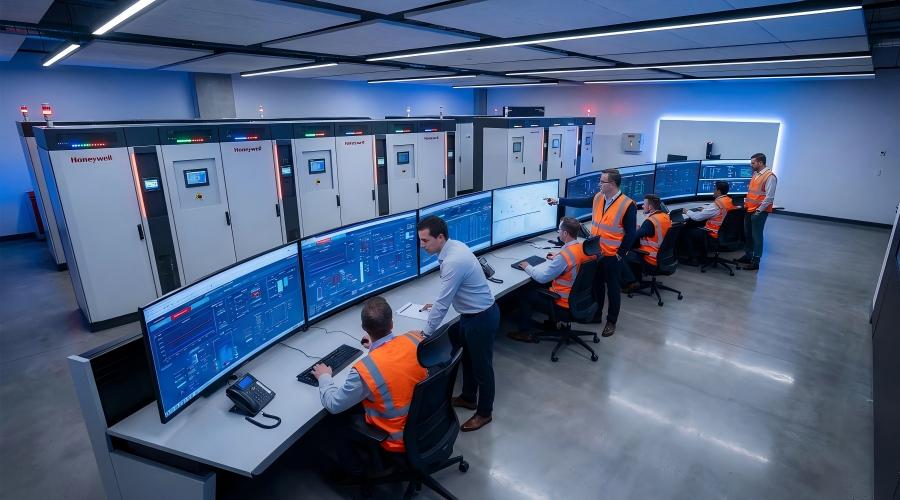
Why Process Automation Is Changing
Process automation has traditionally focused on maintaining stable and reliable industrial operations.
Refineries, chemical plants, pharmaceutical facilities, power plants and other process industries require precise control of complex operations.
DCS platforms manage process variables.
Sensors provide measurements.
Control loops maintain operating conditions.
Safety systems protect personnel and equipment.
SCADA and supervisory applications provide visibility.
This architecture has proven highly effective.
However, industrial operators now expect automation systems to do more than simply control a process.
They want systems that can identify problems earlier.
They want better predictive maintenance.
They want improved energy efficiency.
They want higher asset utilization.
They want more automation of engineering and operational decisions.
This is driving the industry toward a new concept: autonomous operations.
From Automation to Autonomy
Automation and autonomy are related but not identical.
Automation executes predefined instructions.
A PLC can execute a control program whenever a defined condition occurs.
A DCS can maintain a process variable within a specified range.
Autonomy introduces a higher level of decision support.
An autonomous system can potentially analyze changing conditions, identify patterns and recommend or execute actions with less direct human intervention.
This does not mean industrial operators will disappear.
Highly complex industrial environments still require experienced engineers and operators.
Instead, autonomy can help people manage increasingly complex systems.
The objective is to allow automation technology to handle more routine analysis and decision-making while humans remain responsible for oversight and higher-level decisions.
Honeywell's Process Automation Position
Honeywell has a long history in process control and industrial automation.
Its automation portfolio has served industries where reliability, process knowledge and lifecycle support are critical.
The company's process automation business operates in environments where control systems can remain in service for many years.
This creates a strong connection between traditional DCS technology and the newer generation of digital automation.
Industrial customers do not want to abandon reliable control systems simply because new digital technologies become available.
They want to extend the value of their installed infrastructure.
This means future process automation strategies will increasingly need to combine established control technology with advanced software.
Why Leadership Matters in Automation
Leadership changes can influence technology priorities, investment decisions and market strategy.
The appointment of Billal Hammoud to lead Process Technology comes at an important time for industrial automation.
The automation industry is experiencing several simultaneous changes.
Artificial intelligence is becoming more important.
Cybersecurity requirements are increasing.
Industrial customers are facing workforce shortages.
Manufacturing operations are becoming more connected.
Data center and energy infrastructure demand is increasing.
Process industries are also under pressure to improve efficiency while maintaining safety and reliability.
The next stage of automation therefore requires both technology and operational discipline.
Industrial AI Is Changing Process Control
Artificial intelligence is becoming increasingly relevant to process industries.
Traditional DCS systems rely on control strategies designed by engineers.
These strategies remain essential because process control must be predictable.
AI can provide another layer.
It can analyze historical process data.
It can identify correlations.
It can detect unusual operating conditions.
It can support optimization.
It can assist maintenance teams.
This creates a hybrid architecture.
The DCS remains responsible for real-time process control.
AI provides higher-level intelligence.
This approach can help industrial operators gain value from AI without making the control system dependent on unpredictable software behavior.
Predictive Maintenance in Process Industries
Predictive maintenance is especially important in process automation.
A refinery, chemical plant or power facility may contain thousands of assets.
Pumps, compressors, motors, valves, heat exchangers and other equipment can all influence production.
A failure in one critical asset can have significant consequences.
Traditional preventive maintenance schedules equipment service according to time or operating hours.
Predictive maintenance attempts to understand actual equipment condition.
Data from sensors and control systems can be analyzed to identify changes in equipment behavior.
A small change in vibration, temperature or pressure may indicate developing mechanical problems.
If detected early, maintenance can sometimes be scheduled before the asset causes an unplanned shutdown.
This is one of the areas where digital process automation can deliver measurable value.
The Importance of Industrial Data
Advanced analytics depend on data.
A process plant may already generate enormous amounts of information.
The challenge is turning that information into useful knowledge.
Data may be distributed across PLCs, DCS controllers, historians, SCADA systems, laboratory systems and enterprise databases.
Without proper context, large amounts of data may be difficult to use.
Modern process automation therefore needs strong data architectures.
The system should know what a measurement represents, where it came from, when it was generated and how it relates to the production process.
This is one reason industrial digitalization is becoming closely connected to automation engineering.
Cybersecurity Becomes More Important
Increasing connectivity also changes the cybersecurity environment.
A modern process plant may connect its control system to engineering networks, maintenance systems, enterprise applications and remote support environments.
Every connection must be carefully managed.
Industrial cybersecurity is different from ordinary IT security because the consequences of a failure can extend into the physical world.
A cybersecurity incident can affect equipment availability, process stability and potentially safety.
As process automation becomes more digital, security must therefore be included in the architecture from the beginning.
Workforce Challenges Are Driving Automation
Another important factor behind industrial automation development is the workforce.
Many industrial organizations face an aging workforce and difficulty recruiting experienced technical personnel.
At the same time, industrial systems are becoming more complicated.
A modern engineer may need knowledge of control systems, instrumentation, networking, cybersecurity, data analytics and process engineering.
This creates a difficult skills requirement.
Automation can help by simplifying some tasks.
Digital tools can provide operators with better information.
AI systems can assist with troubleshooting.
Predictive analytics can highlight potential problems.
Automated engineering tools can reduce repetitive configuration work.
The goal is not necessarily to remove human expertise.
It is to make experienced personnel more effective.
Digital Tools Can Support Less Experienced Operators
Industrial facilities often require employees with highly specialized knowledge.
However, not every facility can maintain a large team of experts on site at all times.
Digital systems can help distribute expertise.
For example, an operator may receive contextual information when an abnormal process condition occurs.
A maintenance engineer may receive automated analysis of equipment behavior.
A remote expert may be able to review operational data without traveling to the plant.
This can improve response times and help organizations manage workforce shortages.
The Role of DCS Technology in the Autonomous Plant
DCS technology will remain important even as industrial operations become more autonomous.
A DCS provides the control foundation.
It connects field instrumentation to control strategies.
It manages alarms and operator interfaces.
It provides historical information.
It maintains process stability.
Future autonomous systems will build on these capabilities.
The DCS may increasingly become a source of structured operational data for AI applications.
This means that modern DCS architecture needs to support both reliable control and secure data access.
The challenge is finding the right balance.
Too little connectivity limits digital value.
Too much uncontrolled connectivity increases risk.
Why Lifecycle Management Is Critical
Process automation systems can remain in service for decades.
This creates an important difference between industrial automation and many consumer technologies.
A consumer device may be replaced after several years.
A process control system may continue operating for much longer.
Customers therefore need long-term support.
They need replacement components.
They need firmware updates.
They need engineering services.
They need migration strategies.
They need compatible spare parts.
This is particularly relevant for international industrial automation buyers.
When an old controller, I/O module or communication card fails, the customer often cannot simply redesign the entire plant.
They need a practical replacement.
Modernization Without Disruption
The future of process automation will therefore depend heavily on modernization strategies.
Industrial customers want new capabilities but cannot accept unnecessary production risk.
This creates demand for incremental upgrades.
A company may modernize operator stations first.
Then it may upgrade servers.
Later, it may introduce virtualization.
After that, it may add advanced analytics.
AI capabilities can then be introduced once the data architecture is ready.
This step-by-step model can reduce operational disruption.
It also allows companies to evaluate return on investment at each stage.
Process Automation and Energy Efficiency
Energy efficiency is another major priority.
Process industries can consume large amounts of electricity, gas and other energy resources.
Even small improvements in process efficiency can produce meaningful savings at plant scale.
Automation systems can monitor energy consumption and operating conditions.
Analytics can identify inefficient equipment or operating states.
Optimization algorithms can help engineers determine better operating conditions.
AI can potentially identify patterns that would be difficult to discover through traditional analysis.
This creates another area where automation and digital technology can work together.
Industrial Autonomy Will Not Happen Overnight
Despite the rapid development of AI, fully autonomous industrial plants are not likely to appear everywhere immediately.
Industrial processes have different levels of complexity.
Safety requirements vary.
Regulations differ between industries and regions.
Legacy systems remain widespread.
Human oversight remains important.
The more realistic path is progressive autonomy.
Automation will first support routine tasks.
Analytics will provide recommendations.
AI will help identify abnormal conditions.
Operators will gradually delegate additional decisions to software where the risk is acceptable.
Over time, selected processes may become increasingly autonomous.
What Honeywell's Leadership Transition Could Mean
The Honeywell Process Technology leadership transition is therefore taking place against a broader industry transformation.
The future of process automation will be influenced by several technologies at the same time.
DCS systems will remain the control foundation.
Industrial AI will add analytical capabilities.
Cloud and edge technologies will expand data processing options.
Cybersecurity will become increasingly important.
Digital twins and simulation can improve engineering and training.
Predictive maintenance can reduce equipment downtime.
Remote operations can provide access to expertise.
These technologies are not independent.
They need to work together within a coherent automation architecture.
Opportunities for Industrial Automation Suppliers
This transformation creates opportunities for companies involved in PLC, DCS, SCADA, instrumentation and industrial networking.
Customers will continue to need replacement hardware.
They will also need modernization components.
Legacy systems will require lifecycle support.
New projects will require advanced control technology.
System integrators will need compatible modules and communication equipment.
Industrial buyers will increasingly value suppliers that understand the complete control environment rather than only individual products.
This is especially important for spare parts.
A customer purchasing a DCS module is often trying to restore an operating plant.
Fast identification, accurate specifications and compatibility can therefore be more important than simply offering the lowest price.
Conclusion
Honeywell Technologies' 2026 leadership transition in Process Technology comes at an important moment for the industrial automation industry.
Process automation is evolving beyond traditional control toward a more connected and intelligent operating model.
DCS platforms will continue to provide the foundation for reliable process control.
AI and analytics will increasingly support optimization and decision-making.
Predictive maintenance will help industrial companies manage complex assets.
Cybersecurity will become an essential part of connected automation.
And workforce challenges will encourage companies to use digital tools to extend the capabilities of experienced engineers and operators.
The long-term direction is clear: industrial automation is moving toward greater intelligence and autonomy while continuing to depend on reliable control technology.
For PLC and DCS professionals, this means the future will not be about choosing between traditional automation and digital technology.
The real opportunity will be combining the two.
Reliable controllers, field devices and control systems will continue to run industrial processes.
Digital technologies will increasingly help those systems understand what is happening, predict what may happen next and support better decisions.
That combination will define the next generation of process automation.