Schneider Electric to Acquire Cognite for $3.1 Billion, Strengthening Industrial AI and Automation
Time:2026-09-14 Browse: 0
Schneider Electric Makes Major Move Into Industrial AI
Schneider Electric has announced an agreement to acquire Cognite, a company specializing in industrial data and artificial intelligence software, in an all-cash transaction valued at approximately $3.1 billion. The deal represents one of the most significant recent moves in the industrial automation sector and highlights the growing importance of artificial intelligence, industrial data and software-driven operations.
The proposed acquisition is designed to strengthen Schneider Electric’s position in industrial intelligence by combining its existing automation and energy management technologies with Cognite’s industrial data and AI capabilities. Following completion of the transaction, Cognite is expected to be integrated with AVEVA, Schneider Electric’s industrial software business.
The development is particularly important for manufacturers and process industries that are looking beyond traditional automation architectures. PLCs, DCS platforms, SCADA systems, industrial networks and field devices have traditionally focused on controlling and monitoring physical processes. Increasingly, however, industrial companies want to connect these systems with advanced data platforms and AI applications that can analyze information and support operational decisions.
From Industrial Data to Industrial Intelligence
Modern industrial facilities generate enormous amounts of data every day. PLCs collect machine signals, sensors measure operating conditions, DCS platforms monitor process variables, historians store production information, and enterprise systems manage maintenance, inventory and production planning.
The challenge is not simply collecting this information. The greater challenge is understanding the relationship between different sources of data.
A temperature measurement from a process instrument may have little meaning by itself. When combined with equipment information, maintenance records, production data and operating conditions, however, the same measurement can provide valuable information about asset health and process performance.
This is where industrial data contextualization becomes increasingly important.
Cognite has developed technologies designed to integrate and contextualize industrial information from different sources. Its platform uses a unified industrial data model and knowledge graph technologies to help organizations connect engineering, operational and enterprise information.
For industrial automation users, this approach could make it easier to move from isolated automation systems toward a more connected industrial intelligence architecture.
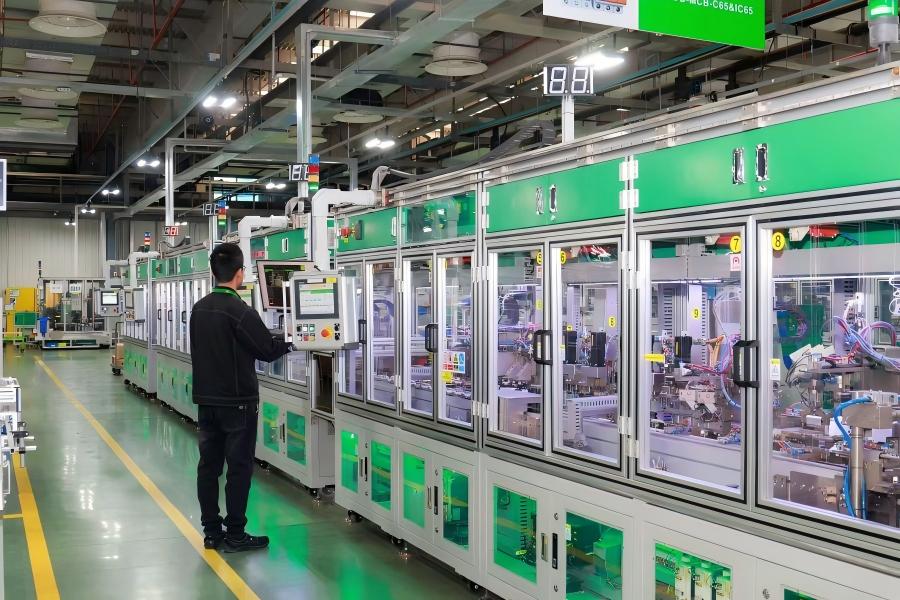
Why the Acquisition Matters for PLC and DCS Users
The acquisition is not simply an AI software story. It has potential implications for the wider automation architecture used in factories, power plants, chemical facilities, oil and gas operations, mining sites and other process industries.
PLCs and DCS systems remain responsible for real-time control. They execute logic, manage inputs and outputs, regulate processes, coordinate equipment and maintain operational safety. AI does not replace these fundamental control functions.
Instead, AI can operate above the control layer by using historical and real-time data to identify patterns, detect anomalies, recommend actions and optimize operations.
This creates a layered automation architecture.
At the field level, sensors, actuators, drives and instruments interact with physical equipment. At the control level, PLCs, PACs and DCS controllers execute automation logic. Above the control layer, SCADA, HMI and historian systems provide visualization and data collection. Industrial data platforms can then connect information from these systems with enterprise applications and AI tools.
This architecture allows companies to maintain established control strategies while adding new intelligence capabilities.
For plants with large installed bases of automation equipment, this is particularly attractive because modernization does not necessarily require replacing every PLC, controller or I/O module.
Industrial AI Moves Toward Operational Applications
One of the most important changes in industrial AI is the movement from analytics toward operational applications.
Earlier industrial AI projects often focused on dashboards, reporting and predictive analytics. Engineers could use machine learning models to identify abnormal equipment behavior or predict potential maintenance problems.
The next stage is more closely connected with operational workflows.
AI systems can help engineers investigate alarms, identify potential causes of equipment problems, compare current operating conditions with historical patterns and prioritize maintenance activities. In some applications, AI can also assist with engineering workflows and production optimization.
However, industrial AI has significantly different requirements from consumer AI.
Industrial environments demand reliability, traceability, cybersecurity and human oversight. A recommendation generated by an AI system may affect a production line, an expensive machine or a continuous process. In safety-critical industries, inappropriate automated decisions can have serious consequences.
For this reason, the integration of industrial data and AI must be carefully managed.
The Role of AVEVA and Industrial Software
The proposed Cognite acquisition also strengthens Schneider Electric’s broader industrial software strategy.
AVEVA provides software used across engineering, operations, asset management and industrial lifecycle management. By combining industrial data contextualization and AI capabilities with existing engineering and operational software, Schneider Electric is positioning industrial intelligence as a more integrated part of the automation ecosystem.
For manufacturers, this could eventually reduce the distance between engineering information, operational data and business decisions.
A digital model of a production asset, for example, could potentially combine engineering documentation, equipment information, sensor data, maintenance history and operating conditions. AI applications could then use this information to assist engineers and operators.
This approach is particularly relevant to digital twins.
A useful industrial digital twin is more than a three-dimensional model. It needs reliable operational information and a connection to the real equipment. Industrial data platforms can provide the information layer needed to make digital twins more useful for real-world operations.
Implications for Industrial Automation Modernization
Many factories are currently dealing with aging automation systems. A plant may contain PLCs, DCS controllers, remote I/O systems, drives and industrial communication networks installed over many years.
Replacing an entire automation system can be expensive and disruptive.
A data-driven modernization strategy offers another possibility. Companies can retain critical control infrastructure while gradually adding communication gateways, historians, edge computing, industrial data platforms and AI applications.
This can create a bridge between legacy automation and newer digital technologies.
For automation engineers, this means that knowledge of PLC programming and DCS configuration will remain important, but additional skills in industrial networking, data integration, cybersecurity and AI-assisted engineering are becoming increasingly valuable.
A Broader Shift in the Automation Industry
Schneider Electric’s proposed acquisition reflects a broader trend across the automation industry.
Industrial automation companies are increasingly combining hardware, software, data and AI. The competitive advantage of the future may not come from a PLC or DCS controller alone. Instead, it may come from how effectively a complete automation ecosystem can connect machines, processes, data and people.
The physical control layer remains essential, but intelligence is increasingly being added above it.
For manufacturers, this creates opportunities to improve asset performance, energy efficiency, production planning and maintenance without abandoning proven control technologies.
For system integrators and automation engineers, it also creates a new technical landscape. Projects may increasingly involve PLCs, DCS, SCADA, industrial Ethernet, edge computing, cloud platforms, digital twins and AI within the same architecture.
What This Means for the Future of Industrial Automation
The Schneider Electric and Cognite transaction is therefore more than a large technology acquisition. It reflects the direction in which industrial automation is developing.
The factory of the future will still need reliable controllers, sensors, drives, I/O systems and industrial networks. But these technologies will increasingly operate as part of a larger digital ecosystem.
The ability to turn industrial data into useful operational intelligence could become one of the most important factors in improving manufacturing efficiency and resilience.
As industrial AI continues to mature, the relationship between automation control and artificial intelligence will become increasingly important. PLCs and DCS systems will continue to provide deterministic control, while industrial AI platforms can help organizations understand complex operating data and make better decisions.
For companies planning their next stage of automation modernization, the message is clear: industrial data is becoming as important as industrial control, and the integration of the two is shaping the next generation of smart manufacturing.