Siemens Launches Meet at the Machine Initiative to Accelerate CNC and Industrial Automation Producti
Time:2026-09-16 Browse: 0
Siemens has introduced a new industrial automation initiative designed to help manufacturers move from machine installation to productive manufacturing faster. Called Meet at the Machine, the initiative brings together machine builders, engineering software, automation hardware and manufacturing expertise into a more connected workflow.
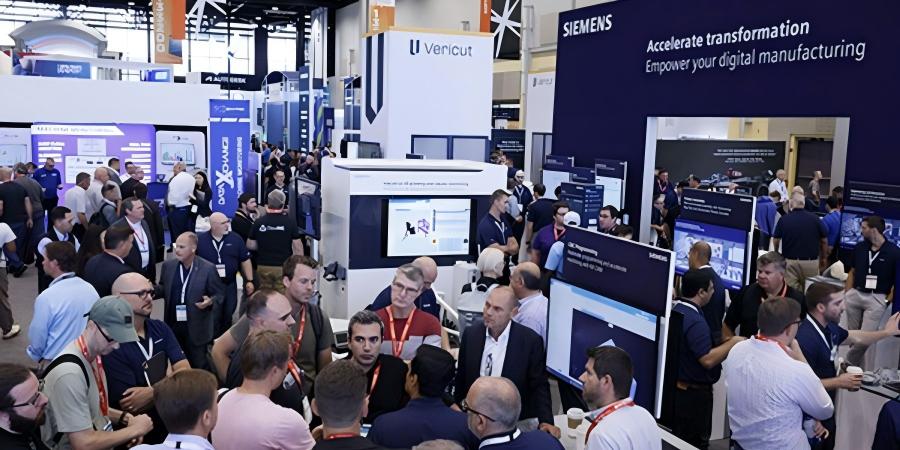
The announcement was made on September 15, 2026, during the International Manufacturing Technology Show (IMTS) in Chicago. TRAK Machine Tools is the first machine builder to participate in the initiative, marking a practical application of Siemens' approach to connecting automation technology with machine manufacturing.
The development reflects a broader change taking place across industrial automation. Manufacturers are no longer looking only for individual PLCs, CNC controllers, drives or software packages. Increasingly, they need these technologies to work together across the entire production lifecycle.
Connecting Engineering, Automation and Machine Operations
Traditional CNC machine deployment often involves several separate stages. Engineers may create programs in one software environment, validate processes using another system and then wait until the physical machine is delivered before completing testing and commissioning.
This approach can create delays between equipment delivery and actual production.
Siemens' Meet at the Machine initiative is designed to move important preparation activities earlier in the process. Manufacturers can use connected software, automation technology and machine expertise to prepare production programs, simulate machining processes and validate manufacturing operations while the machine is still being built.
This concept creates a more continuous digital workflow between engineering and production.
Instead of beginning the programming and validation process after installation, production teams can prepare much of the work in advance. This can reduce the amount of engineering and commissioning work that has to be completed after the machine arrives at the customer's facility.
Digitalization Becomes Part of Machine Deployment
Digital twins are becoming increasingly important in modern industrial automation. A digital twin can represent a machine, production process or manufacturing environment in software, allowing engineers to test processes before they are executed on physical equipment.
In CNC manufacturing, this can be particularly valuable.
A machining program can be evaluated before production begins. Engineers can examine tool paths, identify potential collisions, check process sequences and make adjustments before the machine is operating with real material.
Siemens has been expanding its use of digital technologies across CNC and manufacturing applications. At IMTS 2026, the company is demonstrating technologies that connect engineering, simulation, CNC programming, robotics and production.
This creates a broader digital thread between engineering and manufacturing.
Instead of treating engineering data, machine data and production information as separate resources, manufacturers can connect them throughout the product lifecycle.
For industrial automation engineers, this means that the role of automation technology increasingly extends beyond controlling a machine. Automation data can become part of engineering, production planning, maintenance and optimization.
Siemens and TRAK Machine Tools Establish the First Application
TRAK Machine Tools is the first partner involved in the Meet at the Machine initiative.
The collaboration focuses on helping manufacturers become productive from the first day of machine operation. A key part of the concept is allowing production preparation to begin before the physical machine reaches the customer's facility.
This can be particularly useful for manufacturers operating multiple CNC machines or producing complex parts.
Machine installation traditionally requires a combination of mechanical setup, electrical commissioning, CNC configuration, programming, operator training and process validation. If programming and validation can begin before installation, some of these activities can be moved forward.
Siemens states that the initiative can reduce machine ramp-up time by up to 50 percent. Actual results can vary depending on the machine configuration, production process, application requirements and level of digital preparation.
Nevertheless, the initiative demonstrates how industrial automation is increasingly moving toward integrated engineering and production environments.
The Growing Role of Industrial AI
Another important element of the current industrial automation landscape is the connection between automation and artificial intelligence.
AI is increasingly being introduced into manufacturing environments for applications such as process optimization, engineering assistance, predictive maintenance, quality inspection and production planning.
However, industrial AI depends heavily on reliable production data.
A CNC controller, PLC, drive, sensor or industrial network generates information about machine operation. When this information is connected with engineering software and manufacturing systems, it can provide a more complete picture of the production process.
This is one reason the integration of automation hardware and software has become increasingly important.
Industrial AI does not replace the underlying automation infrastructure. Instead, AI applications require access to structured and reliable information from machines and control systems.
For manufacturers, this makes the connection between PLCs, CNC systems, industrial networks, edge computing and engineering software increasingly significant.
What This Means for CNC Automation
The Meet at the Machine initiative is particularly relevant to CNC automation because machining requires close coordination between mechanical equipment, control systems, software and production processes.
A modern CNC machine can include CNC controllers, servo drives, motors, sensors, HMIs, industrial communication networks and production software.
When these systems are engineered independently, integration can become complicated.
A more connected workflow can reduce unnecessary engineering steps and improve consistency between the virtual and physical machine.
This approach also has implications for machine builders.
OEMs increasingly need to provide customers with more than physical equipment. They need to deliver a complete manufacturing solution that can be configured, simulated, tested and commissioned efficiently.
Software-defined automation and digital engineering are therefore becoming increasingly important parts of machine design.
Workforce Challenges Increase the Need for Integrated Automation
Manufacturing companies continue to face challenges related to skilled labor availability.
Experienced CNC programmers, automation engineers and machine operators can be difficult to replace quickly.
Integrated digital tools can help standardize processes and make technical information more accessible.
For example, a digital model of a machine can be used for simulation and training before the physical equipment is available. Engineers can test different production scenarios without interrupting an operating machine.
This does not eliminate the need for experienced personnel. Instead, it can allow engineers and operators to spend more time on higher-value tasks such as optimization, troubleshooting and process improvement.
A Broader Shift Toward Connected Industrial Automation
The Siemens announcement also reflects a wider transformation in industrial automation.
PLC and CNC technologies remain fundamental to manufacturing, but modern automation systems are increasingly connected to software platforms, digital twins, industrial networks, edge computing, cloud services and AI technologies.
The boundaries between automation engineering and software engineering are becoming less distinct.
For manufacturers, the goal is to create a continuous flow of information from product design to engineering, machine programming, production and optimization.
For automation professionals, this means that knowledge of PLCs, CNC systems and industrial networks increasingly needs to be combined with an understanding of data, simulation and digital manufacturing.
Looking Ahead
Siemens' Meet at the Machine initiative provides another example of how automation suppliers are addressing the need for faster machine deployment and more integrated manufacturing workflows.
By combining machine expertise, automation hardware and engineering software, the initiative aims to reduce the gap between machine construction and production.
The first collaboration with TRAK Machine Tools focuses on CNC manufacturing, but the underlying concept is relevant to the wider industrial automation market.
As manufacturers continue to adopt digital twins, industrial AI, connected CNC systems and software-defined automation, future machine commissioning may increasingly begin before the physical equipment reaches the factory floor.
For companies investing in CNC equipment and industrial automation, the ability to simulate, validate and prepare production processes in advance could become an increasingly important part of modern manufacturing strategy.