Allen-Bradley MPL-A520K-MK72AA Servo Motor Troubleshooting Guide (Fault Diagnosis)
Time:2026-09-17 Browse: 0
When an Allen-Bradley MPL-A520K-MK72AA servo motor suddenly produces unstable positioning, encoder-related alarms, or abnormal axis behavior, replacing the motor should not be the first troubleshooting action. A useful Fault Diagnosis process starts by determining whether the problem follows the motor, the feedback circuit, the drive configuration, or the mechanical load.
Allen-Bradley MPL-A520K-MK72AA Servo Fault Symptoms
Typical symptoms that require MPL-A520K-MK72AA Troubleshooting include:
Servo drive reports a feedback-related fault
Motor does not respond to a motion command
Actual position changes unexpectedly
Axis oscillates during low-speed movement
Motor runs but positioning accuracy deteriorates
Drive faults immediately after enable
Motor temperature increases abnormally
Axis direction does not correspond to the commanded direction
These symptoms can have completely different causes. The diagnostic process should therefore begin with the timing of the fault.
Ask one simple question first:
Did the fault appear before the motor moved, during movement, or only after the machine reached operating speed?
That distinction often eliminates several possible causes immediately.
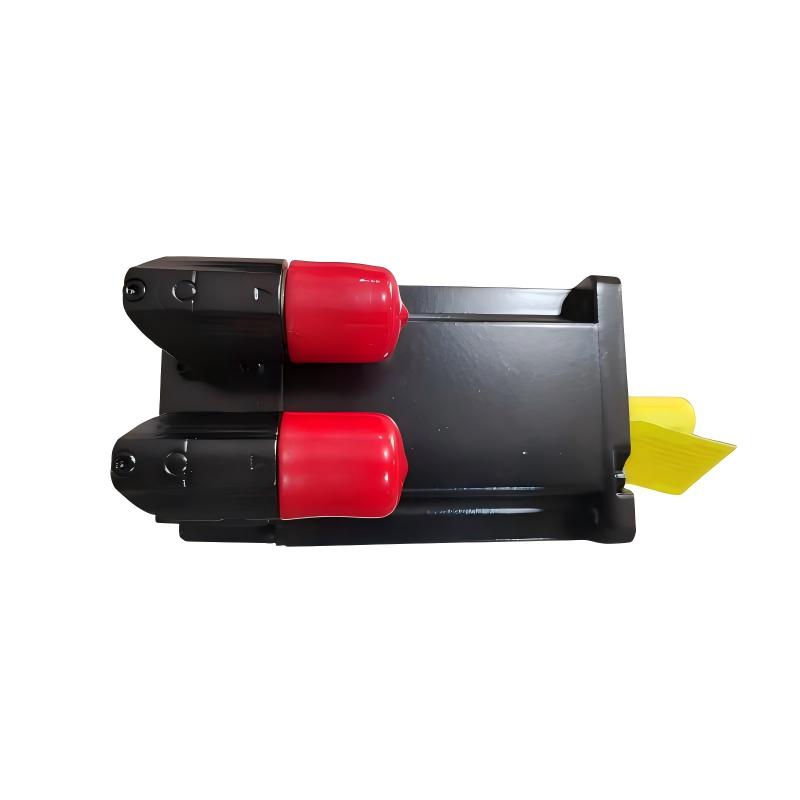
MPL-A520K-MK72AA Fault Diagnosis by Timing
If the fault appears immediately when the axis is enabled, investigate the electrical and feedback path first.
If the motor enables normally but faults when motion begins, inspect mechanical loading, feedback behavior, and acceleration settings.
If the axis operates correctly at low speed but becomes unstable at higher speed, investigate feedback integrity, tuning, mechanical resonance, and cable routing rather than assuming a defective motor.
This approach is more effective than changing several parameters simultaneously because it preserves the relationship between the symptom and the test.
Allen-Bradley MPL-A520K-MK72AA Encoder Fault Troubleshooting
The MPL-A520K-MK72AA uses an absolute multi-turn encoder.
When a feedback fault occurs, inspect the connector and feedback cable before condemning the encoder.
A useful diagnostic sequence is:
Check 1 — Connector
Inspect the SpeedTec DIN connector for incomplete engagement, mechanical damage, contamination, or cable strain.
Check 2 — Cable
Look for crushed sections, tight bends, abrasion, or evidence that the feedback cable has been routed alongside a high-current switching path.
Check 3 — Feedback consistency
Monitor actual position while the motor remains stationary. A stable motor with changing position feedback points toward a feedback or electrical noise issue.
Check 4 — Movement correlation
If the feedback value becomes unstable only while the motor rotates, inspect the cable and connector again before assuming an internal encoder defect.
The diagnostic principle is simple: determine whether the feedback error is present at rest or is generated by movement.
MPL-A520K-MK72AA Position Error Troubleshooting
Position error should be divided into two categories:
Electrical/feedback error: The commanded and actual positions disagree because the control system is receiving incorrect or unstable feedback.
Mechanical error: The motor reports movement correctly, but the machine output does not move as expected because of backlash, coupling slip, excessive compliance, or load-related problems.
This distinction is especially important with a keyless-shaft servo motor.
If the encoder position is correct but the machine's mechanical position is incorrect, replacing the encoder will not solve the problem.
A practical test is to compare motor-side position with the machine-side reference during repeated low-speed movements. If the motor returns consistently but the mechanical output does not, investigate the transmission.
Real Fault Case: Servo Motor Runs but Axis Position Drifts
A useful field pattern is an axis that completes its commanded movement but gradually develops a larger position error after repeated cycles.
The first assumption is often that the servo motor has lost feedback accuracy.
However, the diagnostic sequence should be broader.
The engineer first checked the actual position feedback with the machine unloaded. The feedback returned to the expected position after each commanded movement.
The mechanical load was then reconnected. The position deviation returned.
This observation changed the diagnosis from an encoder problem to a mechanical transmission problem. Inspection found movement at the coupling interface.
The important evidence was not the final repair itself. It was the comparison between motor-side feedback with and without the load.
That is the type of diagnostic separation that prevents unnecessary servo motor replacement.
Allen-Bradley MPL-A520K-MK72AA Overheating Troubleshooting
The MPL-A520K-MK72AA is a low-inertia servo motor, so abnormal temperature should be investigated together with the machine load and motion profile rather than evaluated from temperature alone. The available product information identifies the motor as a 4000 RPM low-inertia model with no brake.
Check:
Continuous load torque
Acceleration and deceleration profile
Duty cycle
Mechanical binding
Coupling alignment
Motor current
Drive thermal status
Ambient conditions
Cooling around the motor
A motor that becomes hot only during high-duty operation should be evaluated differently from one that heats rapidly while unloaded.
The engineer's question should be:
What changed immediately before the temperature increased?
If the motor current increased at the same time, investigate mechanical load and motion parameters. If current remains normal but temperature rises unusually quickly, investigate the motor's physical condition and environmental conditions.
MPL-A520K-MK72AA Repair Decision and Recovery
Repair should begin only after the fault has been isolated.
If the problem is caused by a loose connector, damaged cable, incorrect System Configuration, coupling problem, or excessive load, correcting that condition is preferable to replacing the servo motor.
If feedback remains unstable after the external wiring and configuration have been verified, the motor can then be treated as a potential hardware failure.
Before returning the axis to production, verify:
Fault remains cleared after power cycling
Feedback remains stable
Motor direction is correct
Low-speed movement is repeatable
Position error remains within the machine requirement
Motor current is reasonable for the load
No abnormal mechanical noise or vibration is present
Full-speed testing does not recreate the original fault
Allen-Bradley MPL-A520K-MK72AA Troubleshooting Logic
For field technicians, the most useful diagnostic path can be reduced to four questions:
Does the drive detect the motor?
If no, investigate wiring, feedback, configuration, and drive compatibility.
Does feedback remain stable while stationary?
If no, investigate the encoder circuit and feedback cable.
Does the fault appear only under mechanical load?
If yes, investigate coupling, transmission, inertia, binding, and load conditions.
Does the problem appear only at higher speed?
If yes, investigate tuning, resonance, feedback integrity, and dynamic mechanical behavior.
This approach avoids treating every servo fault as a motor failure.
Long-Tail Keywords for MPL-A520K-MK72AA Fault Diagnosis
Relevant search terms for this troubleshooting topic include:
Allen-Bradley MPL-A520K-MK72AA troubleshooting guide
MPL-A520K-MK72AA fault diagnosis
MPL-A520K-MK72AA servo motor feedback fault
Allen-Bradley MPL-A520K-MK72AA encoder troubleshooting
MPL-A520K-MK72AA position error
MPL-A520K-MK72AA servo motor repair
Allen-Bradley MPL servo motor troubleshooting
For an MPL-A520K-MK72AA fault, the fastest route to a reliable repair is usually to isolate the fault domain first—drive configuration, feedback circuit, motor, or mechanical load—and only then replace hardware.