Emerson to Automate Europe’s First Greenfield Sustainable Aviation Fuel Plant with Advanced DeltaV D
Time:2026-09-20 Browse: 0
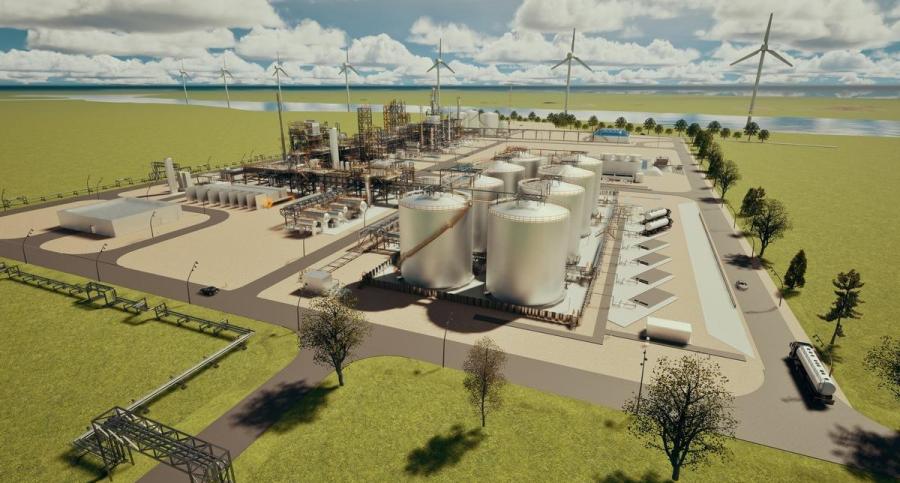
The industrial automation industry is playing an increasingly important role in the development of new energy and sustainable manufacturing projects. In September 2026, Emerson announced that it had been selected by Technip Energies to provide automation technologies for the SkyNRG sustainable aviation fuel facility being constructed in Delfzijl, the Netherlands. The project is positioned as Europe’s first dedicated greenfield sustainable aviation fuel production facility.
The project is particularly relevant to the process automation market because Emerson will provide an integrated control and safety architecture based on its DeltaV Distributed Control System and DeltaV Safety Instrumented System. The automation platform is designed to support safe startup, stable production, asset management and long-term plant operations.
For engineers and automation professionals, the project demonstrates how modern DCS, safety systems, asset management software and intelligent field devices are increasingly being designed as part of one integrated plant automation architecture.
A New Application for Process Automation in Sustainable Fuel Production
The SkyNRG facility is being developed to produce sustainable aviation fuel, commonly known as SAF. The plant is expected to become operational in 2028 and is designed to produce approximately 100,000 tonnes of SAF annually.
The facility will convert residual fats and greases into sustainable aviation fuel. Unlike some alternative fuels that require significant changes to aircraft systems or airport infrastructure, this type of SAF is designed as a drop-in fuel that can be blended with conventional aviation fuel.
The development of such a plant requires sophisticated process control because feedstock preparation, hydrogen production, chemical conversion, separation and product handling all involve tightly controlled industrial processes.
Automation therefore becomes a fundamental part of the plant rather than simply an auxiliary technology.
A modern process automation system must continuously monitor process variables such as pressure, temperature, flow, level and equipment condition. It must also coordinate control loops, alarms, safety functions and operator interfaces across multiple process units.
This is where a DCS architecture can provide significant value.
Emerson DeltaV DCS Forms the Core of the Control Architecture
Emerson will provide its DeltaV integrated control and safety system for the facility.
The DeltaV Distributed Control System is designed to provide centralized process control while maintaining distributed control capabilities throughout the plant. For a complex process facility, this architecture allows operators to monitor and control multiple production areas through an integrated automation environment.
The system will be used together with a DeltaV Safety Instrumented System. The combination is designed to address both normal process control and safety-related functions.
This distinction is important in modern process industries.
The basic control system is responsible for maintaining the production process within its intended operating conditions. A safety instrumented system, by contrast, is designed to respond to hazardous process conditions and initiate defined protective actions.
For a greenfield facility handling chemical processes, these functions need to be carefully engineered from the beginning.
The integrated architecture can help reduce the complexity associated with implementing separate control, safety and monitoring systems while maintaining the required functional separation between process control and safety functions.
Automation of Multiple Process Units
The SAF facility will include several major process areas.
One of these is the hydroprocessed esters and fatty acids process used to produce sustainable aviation fuel. The plant will also include a feedstock pre-treatment unit and an on-site hydrogen production facility.
Each of these units introduces different control requirements.
Feedstock pre-treatment requires consistent monitoring of material properties and process conditions before the feedstock enters the main conversion process. The main SAF production process requires accurate control of temperature, pressure, flow and other process variables. Hydrogen production introduces another layer of process and safety requirements.
The automation system therefore needs to coordinate different equipment packages and process units while providing operators with a consistent view of plant performance.
For automation engineers, this is one of the major advantages of an integrated process control architecture.
Instead of treating every production unit as an isolated system, the plant can use common control, alarm management, operator interface and asset management concepts.
This approach can also simplify commissioning and troubleshooting.
Safety Instrumented Systems Become Increasingly Important
Safety is one of the most important considerations in process automation.
A sustainable aviation fuel facility combines chemical processing, hydrogen production, high-temperature operations and potentially hazardous materials. The control system must therefore be complemented by independent safety functions designed to protect people, equipment and the environment.
Emerson's DeltaV Safety Instrumented System will provide safety shutdown functionality, while fire and gas detection will form another important part of the facility's protection architecture.
A properly designed safety system continuously evaluates predefined process conditions.
For example, if a critical process variable exceeds an established safety limit, the system may initiate a predefined shutdown sequence. The objective is not simply to stop production but to move the process into a safer state.
This type of automation requires careful engineering of sensors, logic solvers, final control elements, safety functions and validation procedures.
It also demonstrates why industrial automation projects cannot be evaluated only by looking at PLCs, DCS controllers or field instruments individually. The overall architecture and interaction between these components are equally important.
Asset Management and Predictive Maintenance
Another important component of the SkyNRG project is Emerson AMS Device Manager plant asset management software.
Modern automation systems generate large amounts of diagnostic information from intelligent field devices. Traditionally, maintenance teams often focused on whether an instrument was currently functioning.
Modern asset management takes a broader approach.
Instead of simply identifying whether a device has failed, asset management software can provide information about device health, diagnostics and maintenance requirements.
For example, intelligent transmitters and other field devices can provide additional diagnostic information through digital communication technologies.
This information can help maintenance engineers identify developing problems before they become production interruptions.
For a new greenfield facility, integrating asset management into the automation architecture from the beginning can create a foundation for more systematic maintenance.
The result is a shift from reactive maintenance toward condition-based maintenance and more data-driven plant operations.
Digital Automation Starts Before Production
The project also illustrates a broader trend in process automation: automation is increasingly becoming part of plant design rather than something installed after mechanical construction.
For a first-of-a-kind production facility, early automation engineering can help identify integration problems before commissioning.
Control strategies, safety functions, operator graphics, equipment interfaces and field device configurations can be developed alongside process engineering.
This can reduce the amount of manual work required during startup and provide engineers with a clearer understanding of how different plant systems will interact.
The use of distributed automation also makes it easier to manage a large number of process signals.
Instead of concentrating every input and output in a central location, modern architectures distribute control functions throughout the facility while connecting them through industrial communication networks.
The Role of Industrial Communication
Communication is another critical part of a modern process automation system.
A large process plant may contain thousands of instruments, valves, analyzers, motors and packaged equipment systems.
The automation architecture therefore needs reliable communication between field devices, remote I/O, controllers, operator stations, safety systems and higher-level applications.
Digital communication can also provide more information than traditional analog signals.
A conventional analog signal may provide a process measurement such as a temperature or pressure value. A modern intelligent device can potentially provide additional information such as device status, diagnostics and configuration data.
This additional information can support both process control and maintenance activities.
As industrial facilities become more connected, industrial communication networks will continue to become an important part of automation engineering.
Why Greenfield Projects Matter for Industrial Automation
Greenfield facilities provide automation engineers with an opportunity that is not always available in existing plants.
Instead of replacing legacy equipment step by step, engineers can design the control architecture from the beginning.
This allows process automation, cybersecurity, safety systems, asset management and industrial networking to be considered together.
For automation suppliers and system integrators, greenfield projects also provide opportunities to implement standardized engineering practices.
Equipment modules, control strategies, alarm philosophies and operator interface designs can be developed consistently across the plant.
This can improve maintainability over the operating life of the facility.
A Growing Role for Automation in Sustainable Manufacturing
The SkyNRG project shows that the growth of sustainable manufacturing is creating new demand for industrial automation.
Producing sustainable fuels is not simply an energy or chemical engineering challenge. The production facilities require precise process control, safety systems, instrumentation, data management and reliable industrial communication.
As new plants are constructed in areas such as sustainable aviation fuel, hydrogen, renewable chemicals, carbon management and advanced materials, automation systems will increasingly become a core part of the infrastructure.
For companies operating in the PLC, DCS, SCADA, industrial instrumentation and process automation markets, these projects represent an important area of industrial technology development.
The future process plant is likely to combine conventional control technologies with advanced analytics, asset management, cybersecurity and increasingly intelligent field devices.
Conclusion
Emerson's automation project for the SkyNRG sustainable aviation fuel facility represents a significant example of how modern DCS and safety automation technologies are being applied to a new generation of industrial plants.
The combination of DeltaV Distributed Control System, DeltaV Safety Instrumented System and AMS Device Manager demonstrates a comprehensive approach to process control, safety, commissioning and asset management.
As the sustainable fuel industry develops, reliable industrial automation will remain essential for achieving stable production, efficient operations and long-term plant performance.
For process engineers, automation engineers, system integrators and industrial equipment suppliers, projects such as this highlight the continuing evolution of DCS technology and the growing importance of integrated automation architectures in modern manufacturing.