Siemens Launches Meet at the Machine Initiative to Accelerate CNC Automation and Digital Manufacturi
Time:2026-09-20 Browse: 0
Manufacturing companies are under increasing pressure to bring new production equipment online faster while maintaining quality, flexibility and operational efficiency. In September 2026, Siemens introduced a new initiative called Meet at the Machine, designed to bring together machine builders, software technologies and industrial automation into a more connected manufacturing workflow.
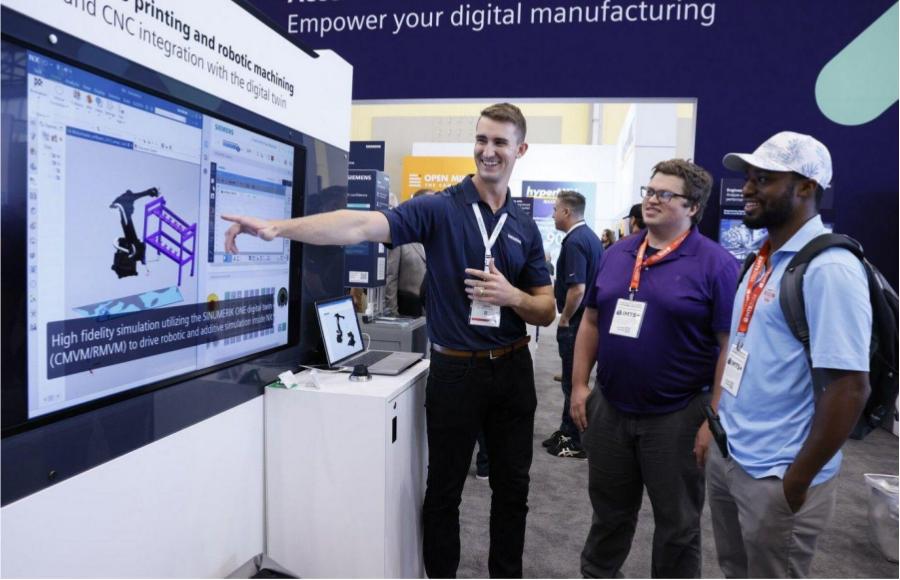
The initiative was announced during the IMTS 2026 manufacturing technology event in Chicago. Siemens is working with TRAK Machine Tools as the first partner to implement the framework.
Rather than treating engineering software, machine automation and production operations as separate stages, Meet at the Machine is designed to connect them through a continuous digital workflow.
For manufacturers using CNC equipment, PLCs, industrial software and automation systems, the concept represents a significant shift in how machines can be prepared for production.
From Machine Delivery to Production Readiness
One of the most common challenges associated with new manufacturing equipment is the time required to move from machine delivery to actual production.
A machine may arrive physically complete, but production cannot necessarily begin immediately.
Engineers may still need to prepare CNC programs, validate toolpaths, configure automation, train operators, test processes and verify production quality.
This creates a gap between equipment installation and productive manufacturing.
Siemens' new initiative focuses on moving some of these activities earlier in the machine lifecycle.
Instead of waiting until a machine is installed on the factory floor, manufacturers can prepare production processes while the machine is still being built.
The approach combines engineering software, programming, simulation, virtual validation and automation technologies.
The goal is to create a more continuous workflow from digital engineering to physical machine operation.
Connecting Engineering and Automation
Modern CNC manufacturing involves much more than the CNC controller itself.
A production machine may include CNC control, PLC logic, servo drives, HMIs, sensors, tooling systems, industrial robots, safety equipment and manufacturing software.
When these systems are engineered independently, integration can become complicated.
A change to the production process may require updates to several different systems.
The Meet at the Machine concept aims to address this problem by connecting machine builders and software providers earlier in the process.
The digital workflow can allow engineering teams to work with a virtual representation of production before the physical machine is available.
This provides an opportunity to identify programming problems, process issues and integration challenges before they affect the factory installation.
For machine builders, this can also improve the ability to deliver customized automation solutions.
The Importance of Virtual Validation
Virtual validation has become increasingly important in industrial automation.
Traditionally, engineers often had to wait until equipment was physically available before testing the complete production process.
This could make commissioning expensive and time-consuming.
Virtual engineering changes that sequence.
A digital environment can be used to simulate parts of the manufacturing process before physical equipment is installed.
Engineers can develop programs, test sequences and validate production concepts using digital models.
For CNC applications, this can include programming and simulation of machining operations.
The objective is not to completely replace physical testing. Instead, virtual validation allows more problems to be discovered before the physical commissioning stage.
This can reduce the number of issues that engineers encounter during startup.
A Continuous Digital Thread
A key concept behind Meet at the Machine is the idea of a continuous digital thread.
In traditional manufacturing workflows, information can become fragmented between engineering departments, machine builders and production teams.
A CAD model may exist in one system. CNC programming may occur in another. Machine configuration information may be stored separately. Production data may then be collected by a manufacturing system.
If these systems do not communicate effectively, engineers may need to manually transfer information.
A connected digital workflow attempts to reduce these information gaps.
The engineering model, production program, machine configuration and operational information can become part of a more connected lifecycle.
This is particularly important as factories adopt more industrial software.
Manufacturing companies increasingly need to connect engineering systems with automation hardware, manufacturing execution systems and production analytics.
PLC and CNC Automation in the Connected Factory
PLC technology remains an important part of modern manufacturing automation.
Although CNC systems have their own control functions, PLCs are frequently responsible for machine sequences, auxiliary equipment, safety-related logic and communication with other factory systems.
A CNC machine may therefore operate as part of a larger automation architecture.
For example, a production cell may include multiple CNC machines connected to a material handling robot.
The PLC can coordinate machine states, robot requests, safety signals and peripheral equipment.
The HMI can provide operators with production information and machine status.
The manufacturing execution system can provide production orders and collect operational information.
This creates a multi-layer automation architecture.
A digital workflow that connects engineering and machine operation can potentially simplify the management of these relationships.
Reducing Commissioning Complexity
Commissioning is often one of the most demanding stages of an automation project.
Engineers need to verify electrical connections, PLC programs, CNC programs, communication networks, safety functions, sensors, actuators and production sequences.
Any issue can delay production.
If a production program has not been validated, operators may discover problems only after the machine is installed.
If a communication configuration is incorrect, engineers may need to troubleshoot the issue on the factory floor.
Virtual preparation provides an opportunity to move some of this work forward.
This does not eliminate the need for commissioning, but it can change the type of work performed during commissioning.
Instead of spending large amounts of time discovering basic configuration problems, engineering teams can focus more heavily on final validation, physical machine testing and production optimization.
Workforce Challenges Are Driving Automation Integration
Another important factor behind this trend is the changing manufacturing workforce.
Manufacturers are facing increasing demand for skilled CNC programmers, automation engineers, controls engineers and technicians.
At the same time, experienced engineers may be responsible for multiple production projects.
This creates pressure to improve engineering productivity.
Integrated software and automation workflows can help reduce repetitive engineering tasks.
Standardized machine configurations, reusable software components and virtual commissioning can make it easier to develop new production systems.
The objective is not simply to automate the factory floor. It is also to automate and improve parts of the engineering process itself.
This is an important distinction in the development of Industry 4.0 manufacturing.
Machine Builders Become Part of the Digital Ecosystem
The initiative also highlights the increasingly important role of machine builders.
Machine builders traditionally focused on designing and delivering physical equipment.
Today, customers increasingly expect machines to arrive with integrated software, automation, connectivity and digital capabilities.
A modern machine may need to communicate with factory networks, MES platforms, industrial databases and cloud or edge computing systems.
Machine builders therefore need expertise beyond mechanical engineering.
They increasingly need knowledge of PLC programming, industrial networking, cybersecurity, data integration and digital simulation.
Collaborative initiatives between automation companies and machine builders can help address these requirements.
The Role of Industrial Software
Industrial software is becoming a central part of modern automation.
Manufacturers are no longer evaluating automation hardware separately from engineering software.
Instead, they are looking at the entire production lifecycle.
This includes product design, process planning, CNC programming, simulation, machine configuration, commissioning, operation and maintenance.
A connected software environment can make it easier to transfer information between these stages.
For automation engineers, this means software skills are becoming increasingly important.
Knowledge of PLC programming remains valuable, but engineers may also need to understand digital twins, simulation, industrial data, machine connectivity and software-based engineering workflows.
What This Means for Future CNC Manufacturing
The Meet at the Machine initiative reflects a broader direction in industrial automation.
Manufacturing companies are increasingly moving toward systems in which physical machines and digital engineering environments are closely connected.
The factory of the future will not simply contain smarter machines.
The process used to design, configure, commission and operate those machines will also become more digital.
For CNC manufacturing, this could mean that production preparation begins before the machine arrives at the factory.
Programming and simulation can be completed earlier.
Automation configurations can be reviewed digitally.
Operators can receive training before physical installation.
Engineering teams can use virtual environments to identify problems.
And machine builders can collaborate more closely with manufacturers during the development process.
Impact on Industrial Automation Suppliers
The trend is also relevant to companies supplying PLCs, HMIs, CNC controllers, industrial PCs, drives, sensors and automation software.
As industrial automation becomes more integrated, compatibility and communication between products become increasingly important.
Customers may expect automation equipment to work as part of a larger digital architecture rather than as isolated components.
This increases demand for industrial communication protocols, open interfaces, standardized engineering tools and software integration.
For distributors and industrial automation suppliers, this creates an opportunity to provide not only hardware but also engineering knowledge and application support.
Conclusion
Siemens' Meet at the Machine initiative highlights an important development in CNC and industrial automation: the transition from isolated machine engineering toward connected digital manufacturing workflows.
By bringing together machine builders, software and automation technologies, the initiative is designed to allow manufacturers to prepare production earlier, use virtual validation and reduce the time between machine delivery and productive operation.
The concept also demonstrates why PLC, CNC, HMI, industrial networking and engineering software should increasingly be viewed as interconnected technologies.
As manufacturers continue to modernize production facilities, digital engineering and automation integration are likely to become an increasingly important part of machine design and factory commissioning.
For CNC manufacturers, system integrators, automation engineers and industrial technology suppliers, the development represents another step toward a more connected and software-driven manufacturing environment.