Rockwell Automation Launches TechConnectIQ to Transform Remote PLC Troubleshooting and Industrial Au
Time:2026-09-20 Browse: 0
Industrial automation systems are becoming increasingly connected, sophisticated and software-driven. At the same time, manufacturers are facing a practical challenge: maintaining complex PLC, HMI, motion control, industrial networking and automation systems when experienced technical personnel are not always available on site.
In August 2026, Rockwell Automation introduced TechConnectIQ Support, a new remote support service designed to help manufacturers troubleshoot automation systems, resolve technical problems and maintain software and firmware across their installed equipment.
The new service combines access to Rockwell technical support engineers with digital knowledge resources, artificial intelligence-supported troubleshooting tools, augmented reality guidance and remote support capabilities. The service is designed to provide manufacturers with faster access to technical expertise while reducing dependence on physical service visits.
For companies operating Allen-Bradley PLCs, HMIs, drives, controllers and other industrial automation equipment, the development reflects a broader change in the way automation systems are maintained.
Instead of relying entirely on an engineer traveling to a factory, manufacturers can increasingly combine local maintenance teams with remote technical expertise and digital troubleshooting tools.
Rockwell Automation Expands the Traditional Technical Support Model
Industrial automation maintenance has traditionally depended heavily on local expertise.
When a PLC stops communicating, an HMI fails to display process information, a variable frequency drive generates a fault or an industrial network experiences intermittent communication problems, maintenance engineers typically begin troubleshooting directly at the machine.
For simple problems, this approach can be effective.
However, complex automation systems can involve multiple layers.
A production line may contain Allen-Bradley ControlLogix or CompactLogix controllers, remote I/O modules, PanelView terminals, PowerFlex drives, industrial Ethernet networks, safety controllers, sensors and third-party equipment.
A problem that initially appears to be a PLC fault may actually be related to network configuration, firmware compatibility, I/O communication, a drive configuration or an application-level issue.
This makes troubleshooting increasingly dependent on specialized knowledge.
TechConnectIQ is designed to provide another layer of support by connecting plant personnel with Rockwell technical expertise through digital channels.
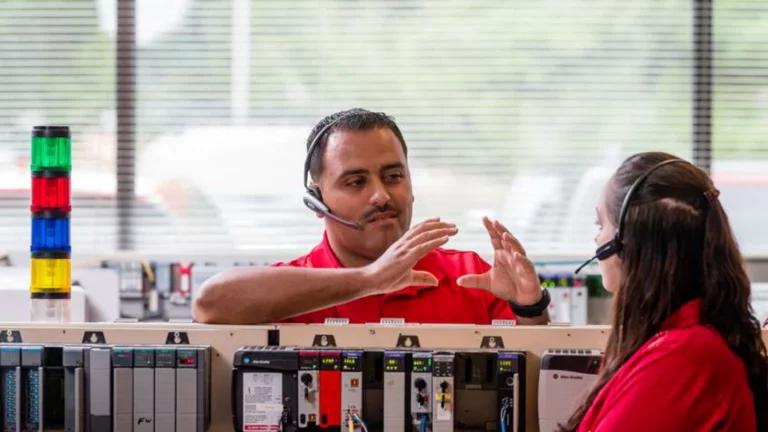
24/7 Remote Support for Industrial Automation
One of the central features of TechConnectIQ is continuous technical support.
The service provides 24/7/365 access to technical support engineers for eligible customers. Support can cover installation, configuration, troubleshooting and issue resolution across industrial automation systems.
This is particularly relevant to manufacturers operating multiple shifts.
A production facility does not necessarily experience equipment problems during normal office hours. A controller fault may occur during a night shift, weekend production run or holiday period.
Waiting until the next business day can extend downtime.
Remote support can potentially shorten this gap by allowing plant personnel to communicate with technical specialists when a problem occurs.
The service is initially available to single-site contract customers in North America, with additional regions planned for 2027.
This phased rollout provides an example of how industrial automation service models are increasingly moving toward digital and remote delivery.
AI Becomes Part of PLC Troubleshooting
Artificial intelligence is another major component of the new support environment.
AI is increasingly being introduced into industrial automation, but its practical value depends heavily on how it is integrated into existing engineering workflows.
In the case of TechConnectIQ, AI-supported tools are intended to assist with finding technical information and troubleshooting automation problems.
This is different from simply using a general-purpose AI chatbot.
Industrial automation troubleshooting requires specific technical context.
An engineer working with a PLC may need information about a controller's firmware, module compatibility, error codes, network configuration, programming environment or hardware revision.
A useful support system therefore needs access to relevant technical information.
Rockwell's support platform combines AI capabilities with its technical knowledge resources and engineering expertise.
This combination can provide maintenance personnel with multiple ways to investigate a problem.
A Large Technical Knowledge Base
Another important component of TechConnectIQ is its digital knowledge base.
The platform provides access to more than 100,000 technical articles authored and updated by Rockwell Automation technical support engineers.
For industrial automation engineers, a searchable technical knowledge base can be valuable because many PLC and automation problems are highly specific.
A controller fault may depend on a particular firmware revision.
A communication issue may involve a specific Ethernet module.
A software error may appear only under a particular programming environment.
A general search engine may return a large amount of unrelated information.
A manufacturer-specific knowledge base can narrow the search to information associated with the relevant automation ecosystem.
This can help engineers move from symptom identification toward possible causes and troubleshooting procedures.
Augmented Reality for Remote Maintenance
One of the more notable elements of the TechConnectIQ platform is its use of augmented reality.
Remote technical support is often limited by what the support engineer can see.
A maintenance technician may describe a problem over the phone, but verbal descriptions can leave out important details.
An engineer may need to know which terminal is connected, which indicator light is active or how a specific module is installed.
Augmented reality can provide a more direct way to communicate this information.
TechConnectIQ includes a Live View Support capability that allows remote technicians to see a live view and provide visual guidance and annotations.
This can be particularly useful when maintenance personnel need help identifying hardware or performing a physical troubleshooting procedure.
For example, an experienced remote engineer could guide a local technician through an inspection while viewing the equipment through a live camera feed.
This approach can reduce some of the limitations of conventional telephone-based technical support.
Remote Support for Allen-Bradley PLC Systems
The relevance to PLC maintenance is significant.
Allen-Bradley PLC systems are widely used in manufacturing applications, including discrete manufacturing, packaging, food and beverage, automotive, material handling and process-related operations.
A typical control architecture may include a PLC processor, I/O modules, network adapters, HMIs, drives and field devices.
When one component fails, the impact can extend throughout the production cell.
Consider a production line where a CompactLogix controller communicates with distributed I/O over an industrial Ethernet network.
If an I/O module stops communicating, the production sequence may stop.
The problem could originate from the module itself, the network connection, a configuration mismatch, a firmware issue or an electrical problem.
The maintenance team therefore needs a systematic troubleshooting process.
Digital technical support can provide additional information while the engineer on site performs physical checks.
Software and Firmware Updates Become Part of Maintenance
Modern automation maintenance is no longer limited to replacing failed hardware.
Software and firmware have become increasingly important.
A PLC controller, network module or drive may depend on specific firmware compatibility.
Industrial software applications also require updates to maintain functionality and security.
TechConnectIQ includes access to software updates and eligible firmware releases as part of its support structure.
This reflects a broader trend in industrial automation.
As factories become more connected, maintaining software versions becomes part of maintaining the physical automation system.
A plant may have perfectly functional hardware but still face problems if software and firmware versions are outdated or incompatible.
For engineering teams, lifecycle management therefore needs to include both hardware and software.
Industrial Automation Troubleshooting Is Becoming More Data-Driven
Traditional troubleshooting often follows a simple sequence.
An alarm appears.
The technician checks the machine.
The technician identifies the failed component.
The component is repaired or replaced.
The machine is restarted.
Modern automation systems create an opportunity to make this process more data-driven.
Controllers, drives and intelligent field devices can generate diagnostic information.
Network devices can provide communication status.
HMIs can record alarms.
Maintenance systems can record previous failures.
Support platforms can combine this information with technical documentation.
This creates a more comprehensive troubleshooting environment.
The objective is not necessarily to automate every maintenance decision.
Instead, digital tools can help engineers access relevant information faster and make better-informed technical decisions.
Addressing the Industrial Skills Gap
The development of remote technical support also reflects a major challenge facing manufacturers.
Many industrial facilities rely on experienced controls engineers and technicians who have spent years working with specific automation systems.
When these employees retire or move to other positions, their knowledge can be difficult to replace.
A new maintenance engineer may understand basic PLC programming but have limited experience diagnosing complex production problems.
Digital support tools can help bridge part of this knowledge gap.
Technical articles, instructional content, remote experts and augmented reality guidance can provide additional assistance to less experienced personnel.
This does not replace engineering expertise.
Instead, it creates another mechanism for transferring knowledge from experienced specialists to technicians working directly on the equipment.
Reducing Dependence on On-Site Service Visits
Another potential benefit is reducing the number of situations that require an engineer to travel to the factory.
Travel can introduce delays.
An automation specialist may need to fly to another city or country before troubleshooting can begin.
For an international manufacturing operation, the delay can be even greater.
Remote support allows technical discussions to begin immediately.
If the problem can be diagnosed remotely, the plant may be able to restore production without waiting for an engineer to arrive.
If an on-site visit is ultimately required, remote troubleshooting can still help engineers prepare before traveling.
The support team may already understand the problem, know which components need to be inspected and identify what spare parts or tools should be taken to the site.
This can make a subsequent field visit more targeted.
Cybersecurity and Connected Automation
Increasing remote connectivity also makes cybersecurity an important consideration.
Industrial control systems must balance accessibility with security.
Remote access to a PLC or industrial network should not automatically mean unrestricted access to the production environment.
Manufacturers need appropriate authentication, authorization, network segmentation and access controls.
The support model therefore needs to be designed around controlled access.
This is particularly important because industrial automation systems directly interact with physical processes.
A cybersecurity problem in an office IT environment can be disruptive.
A cybersecurity problem in an industrial control environment can potentially affect production equipment, safety and physical operations.
As remote support becomes more common, cybersecurity will remain an important part of industrial automation service design.
The Changing Role of Automation Engineers
The introduction of AI-assisted troubleshooting does not eliminate the role of automation engineers.
Instead, it changes the tools available to them.
A controls engineer may spend less time searching through large amounts of documentation and more time analyzing the actual behavior of the production system.
An experienced technician can use remote support to verify a diagnosis or obtain additional information.
A less experienced technician can use digital resources to learn how a particular problem should be investigated.
This creates a hybrid maintenance model.
Human expertise remains central, while AI, technical databases, remote specialists and digital tools provide additional support.
Implications for Industrial Automation Suppliers
The development of TechConnectIQ is also relevant to industrial automation suppliers and distributors.
Customers increasingly expect more than a hardware product.
When a company purchases a PLC, I/O module, HMI or industrial drive, it also needs information about installation, configuration, compatibility, firmware, troubleshooting and lifecycle management.
This creates opportunities for suppliers to provide technical documentation and engineering support alongside hardware.
For exporters and industrial automation distributors, technical content can also become an important part of customer service.
Detailed product specifications, installation guides, fault diagnosis articles and compatibility information can help customers solve problems before they become major production issues.
This is particularly relevant for legacy automation equipment, where maintenance engineers may need detailed information about older PLC modules, communication adapters and discontinued hardware.
Remote Support and the Future of Industrial Maintenance
TechConnectIQ illustrates a broader transformation in industrial maintenance.
Factories are becoming more digital, but the maintenance process is becoming digital as well.
Remote engineers can support local technicians.
AI can help search technical information.
Augmented reality can provide visual guidance.
Installed-base information can help engineers understand the equipment involved.
Software and firmware updates can be managed through digital support environments.
Together, these technologies create a more connected maintenance model.
The long-term direction is not simply about fixing equipment faster.
It is about creating a continuous support ecosystem around industrial automation assets.
Conclusion
Rockwell Automation's launch of TechConnectIQ Support demonstrates how industrial automation maintenance is evolving alongside PLC, software and AI technologies.
The platform combines technical engineers, digital knowledge resources, AI-assisted troubleshooting, augmented reality and remote support into a unified service environment.
For manufacturers operating Allen-Bradley PLCs and other Rockwell Automation equipment, this approach provides another way to address installation, configuration, troubleshooting and maintenance challenges.
More broadly, the development shows that the future of industrial automation is not limited to smarter PLCs or more connected machines.
The services supporting those machines are becoming smarter as well.
As manufacturing facilities continue to adopt connected control systems, remote diagnostics, AI-assisted engineering and digital maintenance tools are likely to become increasingly important components of the industrial automation lifecycle.
For PLC engineers, system integrators, maintenance teams and industrial automation suppliers, the shift toward digitally enabled support represents another important stage in the evolution of the connected factory.