Emerson to Build New Automation Solutions Service Center in Qatar, Strengthening Industrial Automati
Time:2026-09-24 Browse: 0
Published: September 2026
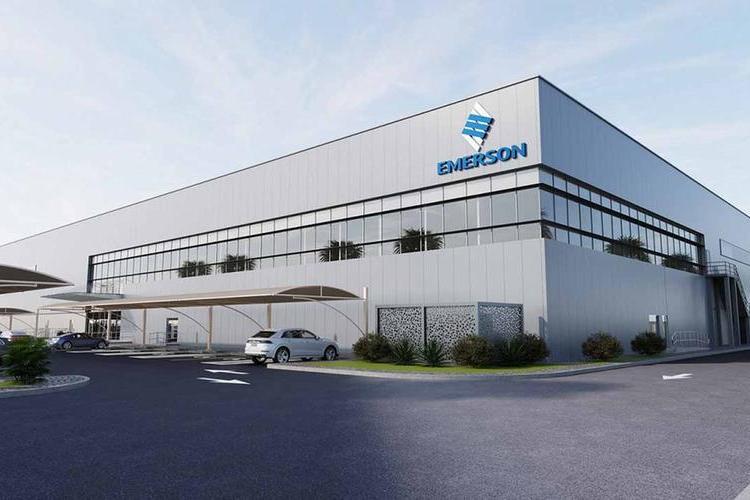
Emerson has announced plans to establish a new automation solutions service and operations center in Qatar, expanding its industrial automation capabilities across the Middle East and Africa. The new facility will be located in the Umm Alhoul Free Zone and is designed to provide a combination of automation services, technical training, measurement solutions, control system staging, spare parts distribution, and flow calibration capabilities.
The development represents another step in the expansion of regional industrial automation infrastructure. For companies operating complex process plants, energy facilities, manufacturing operations, and other industrial assets, access to local automation engineering and service capabilities can be an important factor in reducing project delays and equipment downtime.
The planned Emerson Middle East & Africa Service Center will cover approximately 3,500 square meters. One of its notable features will be a certified in-country flow calibration laboratory, which is planned to support large flow meters used in high-pressure and high-volume applications. Emerson said the facility is intended to help customers reduce operational disruptions, shorten service turnaround times, and accelerate project execution.
The center will also provide services associated with distributed control systems, measurement instrumentation, training, integration, and industrial automation equipment. These capabilities are particularly relevant to process industries where instrumentation and control systems need to remain available throughout the operating life of a plant.
A Regional Investment in Industrial Automation Services
Industrial automation systems are becoming increasingly important as manufacturers and process operators seek greater operational visibility, reliability, and efficiency. A modern industrial facility can include programmable logic controllers, distributed control systems, safety instrumented systems, industrial networks, measurement devices, variable frequency drives, human-machine interfaces, supervisory control systems, and plant asset management software.
While automation hardware is installed at the plant level, maintaining these systems often requires specialized technical support. Calibration, system staging, troubleshooting, spare parts availability, engineering services, and operator training can all influence the performance of an automation project.
Emerson's planned Qatar facility is intended to bring more of these capabilities closer to customers in the region.
According to the company's announcement, the facility will include measurement instrumentation solutions and skid training systems, inventory and spare parts distribution, a training and experience center for customer operations teams, and staging and integration services for distributed control systems. The combination of these capabilities creates a regional service model covering several stages of an industrial automation project.
For engineering companies and system integrators, local staging and integration capabilities can also be useful before equipment is shipped to a project site. Control system hardware can require configuration, testing, documentation, and integration with other plant systems before commissioning. Completing part of this work in a regional service center can potentially simplify field installation and reduce the amount of engineering work that must be performed during the final project stage.
Distributed Control Systems Remain Important in Process Industries
DCS technology continues to play an important role in industries where thousands of process variables must be monitored and controlled continuously. Oil and gas, refining, petrochemical, power generation, chemicals, water treatment, and other process industries commonly rely on distributed control architectures to coordinate complex operations.
Unlike a standalone machine controller, a DCS is typically designed to manage a large number of interconnected process loops, instruments, valves, motors, and other field devices.
A typical DCS environment may include controllers, operator stations, engineering stations, industrial communication networks, I/O systems, safety systems, historian functions, alarm management, and plant asset management tools.
Service infrastructure therefore needs to address more than individual replacement components. Engineers may need to work with control strategies, configuration databases, instrumentation, network architecture, I/O systems, and field devices.
The new Qatar service center is planned to include DCS staging and integration services, making it relevant to large process automation projects in the region.
Flow Measurement and Calibration
One of the more specialized capabilities planned for the new facility is a certified flow calibration laboratory.
Flow measurement is a critical part of many industrial processes. Flow meters can be used to measure liquids, gases, steam, hydrocarbons, chemicals, and other process media. Accurate measurement can influence process control, custody transfer, production accounting, energy management, and equipment protection.
Calibration is therefore an important maintenance activity.
Large flow meters used in high-pressure and high-volume applications can be difficult to remove from an operating facility and send to a distant laboratory. Establishing regional calibration capabilities can help reduce logistics requirements and potentially shorten service cycles.
For industrial operators, this type of infrastructure is closely connected to the broader concept of asset reliability. Instrumentation is not simply a collection of sensors; it forms part of the measurement layer that supplies data to PLC, DCS, SCADA, and other control systems.
If measurement data is inaccurate, downstream control decisions can also be affected.
Training Becomes More Important as Automation Systems Evolve
Another planned feature of the Qatar center is a training and experience facility for customer operations teams.
Industrial automation technology continues to evolve from traditional standalone control systems toward integrated digital architectures. Modern plants increasingly connect process control, asset management, industrial networking, analytics, cybersecurity, and enterprise systems.
This creates new requirements for operators and maintenance engineers.
A control engineer may need to understand PLC programming, DCS configuration, industrial Ethernet, instrumentation, alarm management, cybersecurity practices, and data integration. Maintenance teams may also need experience with diagnostics and digital tools that were not part of older control system architectures.
Training centers can provide a controlled environment where engineers can learn system functions before working on a live production plant.
For international projects, technical training can also help standardize operating practices across different sites.
Spare Parts and Automation Lifecycle Management
Industrial automation equipment has a long operating lifecycle. A factory or process plant may continue operating for many years after its original control system was installed.
During this period, components can require replacement because of normal wear, environmental conditions, electrical failures, obsolescence, or changes to plant requirements.
The availability of spare parts can therefore become an important part of automation lifecycle management.
A regional inventory center can support customers that require replacement components for control systems, measurement equipment, and related automation infrastructure. Faster access to replacement hardware can be particularly important when a failed component affects a production-critical system.
For users of PLC and DCS equipment, lifecycle planning should normally include an inventory of critical spare parts, current firmware and software information, system backups, replacement procedures, and documentation.
What the Qatar Automation Center Means for Industrial Projects
The planned center is scheduled to open in phases. Emerson said control system staging and measurement solutions services, spare parts inventory, and the training center are planned to begin operations in December 2026. The certified flow calibration laboratory is planned to open in early 2027.
This phased approach reflects the different technical requirements associated with industrial automation services.
For system integrators, EPC contractors, plant owners, and maintenance organizations, regional support infrastructure can influence how automation projects are planned and maintained.
The significance of the announcement is therefore broader than the construction of another service facility. It reflects the increasing need for localized industrial automation expertise as plants become more connected and technologically complex.
The Growing Role of Automation in the Middle East
The Middle East remains an important market for process automation because of its large energy, petrochemical, water, infrastructure, and industrial sectors.
Industrial facilities in these sectors often operate continuously and require high levels of reliability. Automation systems must monitor equipment, regulate processes, manage alarms, protect personnel, and maintain production within defined operating conditions.
As industrial organizations modernize their facilities, demand for automation technologies such as PLCs, DCS platforms, industrial sensors, safety systems, industrial communication networks, and asset management software is expected to remain closely connected to plant modernization.
The Qatar project provides a concrete example of how automation suppliers are expanding their regional service capabilities alongside the continued development of industrial infrastructure.
For automation engineers and procurement teams, the development also highlights an important part of the automation lifecycle: installing a control system is only one stage of a much longer process. Engineering, commissioning, calibration, training, maintenance, spare parts, troubleshooting, cybersecurity, and eventual modernization all contribute to the long-term performance of an industrial control system.
As industrial automation continues to develop, regional technical support and lifecycle services will remain an important component of successful PLC, DCS, instrumentation, and process control projects.
SEO Keywords: industrial automation, automation solutions, Emerson automation, Qatar automation, DCS systems, distributed control system, process automation, industrial control systems, flow calibration, automation service center, PLC systems, industrial instrumentation, Middle East automation