Schneider NT12H1 Circuit Breaker Overheating Troubleshooting and Fault Diagnosis
Time:2026-11-04 Browse: 1
Schneider NT12H1 Overheating: Identifying the Actual Fault
Overheating in a Schneider MasterPact NT12H1 1250A air circuit breaker is commonly associated with high contact resistance, loose primary connections, excessive loading, or deteriorated electrical contact surfaces. However, an elevated temperature reading does not automatically indicate an internal breaker failure.
The NT12H1 is a MasterPact NT circuit breaker with an H1 breaking-capacity classification of 42 kA at 440 V AC. It is designed for high-current power distribution applications where connection integrity and thermal performance are particularly important.
When an NT12H1 shows abnormal temperature increases, maintenance engineers should compare phase currents, inspect connection conditions, review operating history, and investigate temperature distribution before deciding whether the breaker requires repair or replacement.
NT12H1 Thermal Fault Symptoms in Industrial Switchboards
An overheating problem may develop gradually and remain unnoticed until a thermal inspection identifies an abnormal temperature pattern.
Common symptoms include:
Abnormally high temperature around one primary terminal.
Different temperatures between the three phases under comparable loading.
Discoloration or oxidation around connection surfaces.
Insulation deterioration near the breaker terminals.
Intermittent operation under high electrical load.
Abnormal thermal readings after extended operation.
Temperature alarms from an installed monitoring system.
One important diagnostic distinction is whether the heat originates inside the breaker or at the external busbar connection.
A localized hot spot near one terminal often suggests a connection problem, while a more widespread temperature increase may indicate excessive loading or multiple thermal issues.
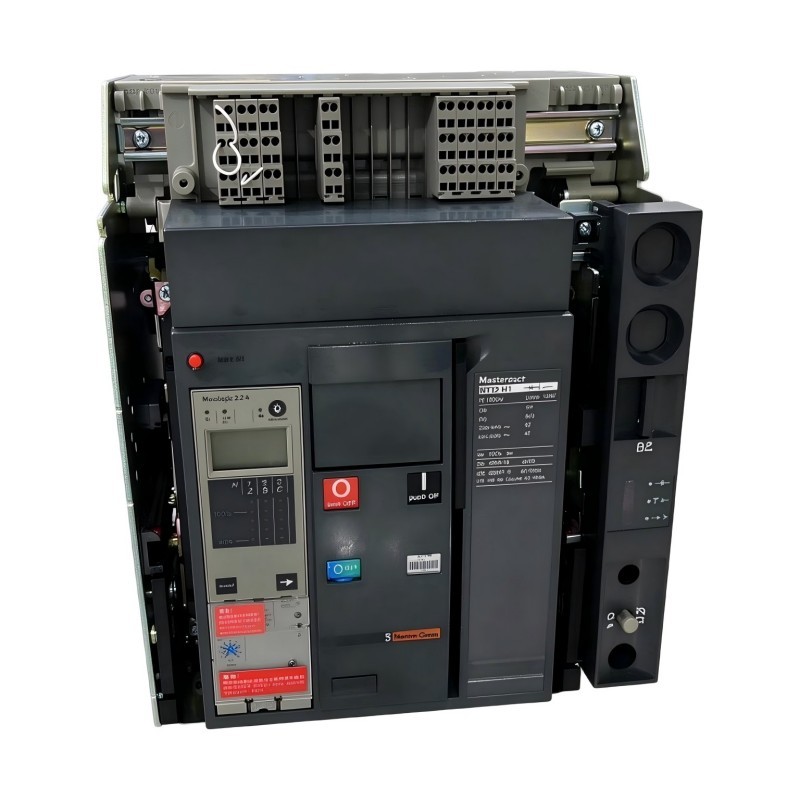
Schneider NT12H1 Thermal Fault Diagnosis: Compare Current and Temperature
The first diagnostic task is to establish whether the heating condition is related to electrical loading.
A thermal camera can identify abnormal temperature distribution, while a suitable current-measuring instrument provides the electrical information needed to interpret the thermal image.
Consider an illustrative maintenance investigation with the following measurements:
| Measurement | Phase A | Phase B | Phase C |
|---|---|---|---|
| Operating current | 760 A | 755 A | 765 A |
| Terminal temperature | 82°C | 54°C | 56°C |
These are hypothetical diagnostic values, not Schneider NT12H1 factory limits.
The three phase currents are relatively balanced, but Phase A has a substantially higher terminal temperature.
This observation changes the diagnostic direction. A general overload condition becomes less likely as the primary explanation for the localized heating.
The next investigation should focus on:
Phase A primary connection surfaces.
Busbar contact condition.
Terminal hardware.
Signs of oxidation or mechanical deformation.
Contact resistance, using an approved test procedure.
Temperature comparisons must account for ambient temperature, measurement location, operating load, and thermal stabilization time.
Why Schneider NT12H1 Primary Connections Overheat
High contact resistance is one of the important causes of localized heating in high-current circuit breakers.
Electrical connections generate heat according to the relationship:
[
P=I^2R
]
Where:
(P) = power dissipated as heat.
(I) = current flowing through the connection.
(R) = electrical contact resistance.
At high operating currents, even a relatively small increase in resistance can generate substantial localized heat.
For example, at 760 A, an additional contact resistance of 100 micro-ohms would theoretically produce approximately 57.8 W of additional heat.
This is a calculation illustrating the effect of resistance, not a measured NT12H1 connection value.
Possible contributing conditions include:
Insufficient connection torque: Incorrectly tightened hardware can reduce contact pressure and increase resistance.
Oxidized contact surfaces: Contamination or surface deterioration can affect electrical conductivity.
Mechanical misalignment: Incorrect busbar positioning may introduce stress and uneven contact pressure.
Thermal cycling: Repeated heating and cooling can affect connection stability over time.
Damaged connection hardware: Deformation or wear may prevent a reliable electrical connection.
The appropriate corrective action depends on the actual condition of the connection and the manufacturer's maintenance instructions.
NT12H1 Fault Investigation: When One Phase Runs Hotter Than the Others
A useful field troubleshooting approach is to compare temperature and current measurements at equivalent locations on all phases.
Suppose an NT12H1 has been operating under a relatively stable load, but a thermal inspection repeatedly identifies a hot spot on the Phase A terminal.
The investigation should proceed by examining the complete current path:
Inspect the upstream busbar connection.
Examine the breaker terminal interface.
Check for discoloration, oxidation, and physical damage.
Review historical thermal inspection records.
Compare contact resistance measurements where the prescribed test procedure permits.
Inspect the relevant internal contact assembly if external connections are not responsible.
The breaker must be isolated and verified de-energized before physical inspection or resistance testing.
If the external connection is found to be damaged, repair or replacement must follow the manufacturer's specified procedure.
If the abnormal resistance is associated with internal contact components, the breaker should be referred for appropriate service inspection.
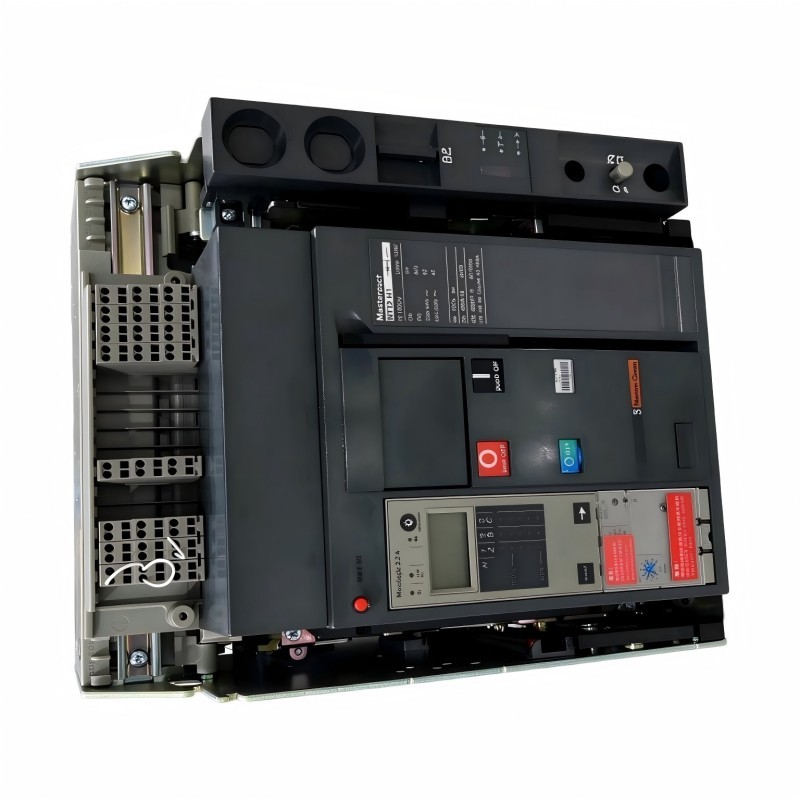
Schneider NT12H1 Overload and Protection Setting Problems
Not every overheating condition is caused by a defective connection.
An NT12H1 can also experience excessive operating temperatures when the protected circuit carries more current than the installation can safely accommodate.
The investigation should compare actual phase currents with:
The installed sensor rating.
Long-time protection pickup.
Long-time delay settings.
Cable and busbar current ratings.
Ambient temperature.
Ventilation conditions.
Downstream load characteristics.
A 1250 A frame does not mean that every installation should continuously operate at 1250 A regardless of environmental and installation conditions.
For example, an installation with a lower-rated cable or a restricted ventilation arrangement may require a lower permissible operating current.
Protection settings must not be increased simply to prevent nuisance tripping. The engineer should first determine whether the overload is genuine and whether the existing protection coordination remains appropriate.
NT12H1 Thermal Troubleshooting: Distinguishing Internal and External Faults
The location of the abnormal temperature provides useful diagnostic information.
| Thermal observation | Possible cause | Recommended investigation |
|---|---|---|
| One terminal is significantly hotter | High connection resistance | Inspect terminal and busbar interface |
| All phases show elevated temperature | Excessive load or poor ventilation | Check current and enclosure conditions |
| Temperature increases under high load | Load-related heating | Review load profile |
| Internal contact region is abnormal | Contact deterioration | Arrange breaker inspection |
| Heating appears after maintenance | Incorrect assembly or connection | Review installation records |
| Temperature fluctuates unexpectedly | Intermittent connection | Inspect contact stability and monitoring data |
Infrared measurements should be taken using consistent measurement points and appropriate instrument settings.
A thermal image alone cannot establish whether a breaker is defective. It identifies an abnormal condition that must be confirmed through electrical and mechanical inspection.
Schneider NT12H1 Repair and Corrective Maintenance
Once the cause has been established, the repair method should address the specific failure mechanism.
For external connection problems, the maintenance team should inspect the terminal and busbar assembly, replace damaged hardware where required, and reassemble the connection using the manufacturer's specified procedure.
For internal contact deterioration, the breaker may require specialized inspection, contact assessment, or replacement of approved service components.
For overload-related heating, investigate the load distribution and protection coordination rather than attempting to solve the problem through mechanical repairs.
The following maintenance principles are particularly important:
Never tighten live high-current connections.
Do not reuse damaged or deformed connection hardware.
Do not apply unauthorized contact lubricants or surface treatments.
Do not use generic resistance limits as Schneider acceptance criteria.
Do not bypass protection functions to maintain operation.
Record all thermal and electrical measurements before and after maintenance.
If there is evidence of insulation damage, carbonization, or significant internal contact deterioration, the breaker should remain out of service until the condition has been assessed and corrected.
NT12H1 Post-Repair Testing and Thermal Verification
After maintenance, the NT12H1 must undergo appropriate electrical and mechanical verification before returning to normal service.
The inspection should cover:
Primary circuit condition: Verify that all connections have been assembled according to the manufacturer's requirements.
Contact resistance: Perform the prescribed low-resistance measurement where applicable and compare the results with the relevant technical acceptance criteria.
Insulation condition: Conduct appropriate insulation tests in accordance with the manufacturer's instructions.
Protection operation: Verify the installed trip unit and required protection functions.
Functional operation: Check the opening and closing mechanism and auxiliary circuits.
Thermal performance: After the breaker has returned to service, compare temperature measurements under comparable load and ambient conditions.
A representative post-maintenance thermal record might show a reduction from 82°C to 59°C at the previously abnormal measurement point. Such figures are illustrative only; actual acceptance must be determined from the equipment documentation, environmental conditions, and applicable engineering standards.
The purpose of post-repair testing is not merely to confirm that the breaker can close. It is to establish that the original abnormal heating condition has been addressed.
Long-Tail Keywords for Schneider NT12H1 Troubleshooting and Repair
Schneider NT12H1 1250A circuit breaker overheating
MasterPact NT12H1 high temperature fault diagnosis
Schneider NT12H1 terminal overheating troubleshooting
NT12H1 primary contact resistance problems
Schneider MasterPact NT12H1 thermal inspection procedure
NT12H1 three-phase temperature imbalance
Schneider NT12H1 busbar connection repair
MasterPact NT12H1 overload troubleshooting
NT12H1 contact deterioration diagnosis
Schneider NT12H1 circuit breaker preventive maintenance
Engineering Conclusion: Preventing Repeated NT12H1 Thermal Faults
Repeated overheating should be treated as evidence of an unresolved electrical or mechanical condition rather than a routine maintenance issue.
For the Schneider NT12H1, the most useful troubleshooting approach combines current measurement, thermal inspection, contact-condition assessment, and protection-setting verification.
By distinguishing external connection problems from internal contact deterioration and genuine overload conditions, maintenance engineers can avoid unnecessary breaker replacement and make more reliable repair decisions.